

How much does AI agent software cost for restaurants?
How much does AI agent software cost for restaurants? Most operators pay between $99 and $2,000+ monthly, depending on restaurant size and required features. Setup fees run $1,000 to $4,000. Independent spots can start under $200/month, while multi-location chains budget $2,000 to $5,000 monthly for full-stack automation covering reservations, upselling, and guest communications.
AI Agent Software Pricing Ranges for Restaurants
Basic Subscription Plans Starting at $99 Monthly
Entry-level AI agent tools handle reservation confirmations, basic guest messaging, and no-show reminders. These suit independent cafes and quick-service restaurants processing under 200 covers daily. Expect limited POS integrations and no custom branding at this tier.
Mid-Tier Solutions for Casual Dining at $400–$1,200
This range unlocks upselling automation, loyalty program integration, and multichannel guest communication. Casual dining operators see the strongest ROI here, with platforms supporting OpenTable, Resy, and major POS systems natively.
Enterprise Options for Multi-Location Chains Above $2,000
Multi-unit operators require centralized dashboards, location-specific AI configurations, and dedicated account management. Pricing scales with location count, typically $400 to $800 per additional unit monthly.
One-Time Setup Fees from $1,000 to $4,000
| Restaurant Type | Monthly Subscription | Setup Fee | Best For |
|---|---|---|---|
| QSR / Independent | $99–$399 | $1,000–$1,500 | Reservations, reminders |
| Casual Dining | $400–$1,200 | $1,500–$2,500 | Upselling, loyalty |
| Fine Dining | $1,200–$2,000 | $2,500–$4,000 | Personalized guest journeys |
| Multi-Location Chain | $2,000–$5,000+ | $3,000–$4,000+ | Centralized AI management |
Total Cost of Ownership Breakdown for Restaurant AI Agents
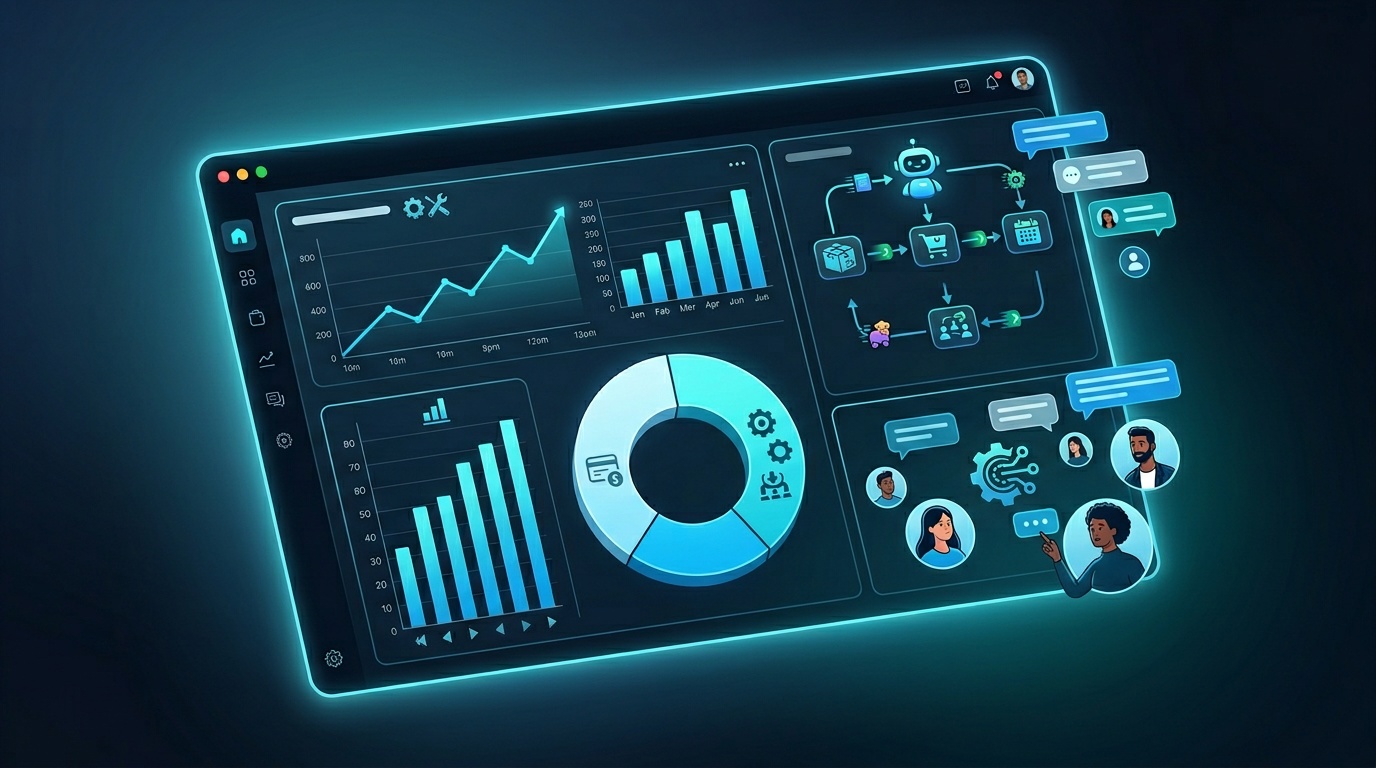
Recurring Subscription vs. Integration and Onboarding Costs
Subscription fees represent only 60% to 70% of true annual spend. Onboarding, staff training, and system configuration add $1,500 to $3,000 in year one. Budget for 40 to 60 hours of internal staff time during implementation.
Hidden Fees: POS, Reservation System, and Data Migration Expenses
POS integration fees range from $200 to $800 per system. Reservation platform connectors (OpenTable, Resy, SevenRooms) add $50 to $150 monthly per integration. Data migration from legacy systems costs $500 to $2,000 depending on historical data volume. For a detailed overview on the impact of AI systems in hospitality, see AI systems in hospitality.
Annual Maintenance Budgeting at 10%–15% of Initial Investment
AI agents require ongoing model updates, seasonal menu retraining, and periodic workflow adjustments. Allocate 10% to 15% of your initial implementation cost annually, typically $800 to $3,000 for most restaurant operators.
Build vs. Buy Decision Framework for Restaurants
Custom Development Costs: $40,000–300,000+ for Tailored Agents
Custom-built AI agents require machine learning engineers, hospitality domain specialists, and ongoing model maintenance. Development timelines run 6 to 18 months. This path makes financial sense only for chains with 50-plus locations and proprietary operational workflows. Academic research further supports the ROI considerations for customized AI investments in hospitality sectors custom AI development analysis.
Off-the-Shelf Tools vs. Enterprise Customization ROI Comparison
Off-the-Shelf Advantages
- Deploy in 2 to 4 weeks
- Proven hospitality integrations
- Predictable monthly costs
- Vendor handles model updates
Custom Build Tradeoffs
- $40,000 minimum entry cost
- 6 to 18 month deployment timeline
- Requires internal AI expertise
- Full maintenance responsibility
When Vynta AI Enterprise Agents Outperform DIY Solutions
Mid-market restaurant groups processing 500-plus covers daily get faster ROI from purpose-built hospitality AI than from custom development. Pre-trained reservation and upselling models eliminate the six-month data collection phase that custom builds require. How much does AI agent software cost for restaurants at this tier? Vynta AI hospitality solutions start at pricing aligned with the mid-tier benchmarks above, with implementation measured in weeks, not quarters.
Note: While Vynta AI specializes in hospitality, real estate, and recruitment automation, the AI-Powered Fundraising Platform demonstrates the same industry-specific methodology applied to donor outreach and investor relations. Restaurant operators expanding into event fundraising or community partnerships can apply the AI-Powered Fundraising Platform’s systematic outreach framework to drive sponsorship revenue.
Real-World ROI Analysis: Revenue Impact vs. AI Agent Costs
Case Study: 25% Reservation Increase and 15% Upsell Revenue Gain
A 120-seat casual dining operator implemented AI-driven reservation management and automated upselling workflows. Within 90 days, reservation fill rates climbed 25%, automated wine and dessert prompts generated 15% incremental revenue per cover, and no-show rates dropped from 18% to 7%. This case exemplifies operational benefits aligned with health and safety improvements studied in hospitality AI settings hospitality AI benefits study.
Payback Period Calculator for QSR, Casual, and Fine Dining
| Segment | Monthly AI Cost | Monthly Revenue Lift | Payback Period |
|---|---|---|---|
| QSR (200 covers/day) | $299 | $800–$1,200 | 1–2 months |
| Casual Dining (100 covers/day) | $699 | $2,000–$3,500 | 2–3 months |
| Fine Dining (60 covers/day) | $1,500 | $3,500–6,000 | 3–5 months |
Labor Savings and No-Show Reduction Metrics
AI agents handling reservation confirmations and guest communications reduce front-of-house administrative time by 8 to 12 hours weekly. At an $18/hour average labor cost, that equals $750 to $1,100 in monthly savings before counting revenue gains. No-show reduction from automated reminders typically recovers 3% to 5% of potential weekly revenue.
Choosing the Right AI Agent for Your Restaurant Size and Needs

QSR and Independent Spots: Cost-Effective Entry Points
Independent operators and quick-service restaurants should start with platforms in the $99 to $399 monthly range, prioritizing reservation reminders, no-show reduction, and basic guest messaging. These tools deliver measurable returns within 60 days without requiring dedicated IT staff. Focus on vendors offering native integrations with your existing POS before committing to any contract.
Multi-Unit Operations: Scalable Enterprise Pricing Models
Groups managing three or more locations need centralized reporting, location-specific AI configurations, and volume pricing. Budget $2,000 to $5,000 monthly across your portfolio, with per-location fees decreasing as unit count grows. Prioritize platforms with single-dashboard management; fragmented tools across locations eliminate the operational efficiency gains that justify the investment.
Next Steps: Schedule a Vynta AI Discovery Call for a Custom Quote
How much does AI agent software cost for restaurants at your specific scale? The answer depends on cover count, location footprint, and the workflows you automate first. Vynta AI’s hospitality team sizes solutions to your current operation with a clear path to expansion, so you pay for what you need now without being locked into enterprise pricing prematurely.
Restaurant groups also managing community events or corporate partnerships benefit from the same systematic outreach methodology found in the AI-Powered Fundraising Platform. The AI-Powered Fundraising Platform applies structured, AI-driven communication sequences to sponsorship and donor outreach, an approach that transfers directly to restaurant event revenue programs.
Ready to move from pricing research to implementation planning? Contact Vynta AI for a discovery call. Bring your current reservation volume, POS system details, and your biggest operational bottleneck. Most operators receive a scoped proposal within 48 hours.
Frequently Asked Questions
What is the typical monthly cost for AI agent software in restaurants?
For restaurants, AI agent software typically costs between $99 and over $2,000 monthly, depending on the size and features required. Independent restaurants or quick-service operations might start under $200 per month for basic features. Larger, multi-location chains often budget $2,000 to $5,000 monthly for comprehensive automation solutions.
Are there one-time setup fees for restaurant AI agents?
Yes, there are typically one-time setup fees for implementing AI agent software in restaurants. These fees generally range from $1,000 to $4,000, covering the initial configuration and integration work. This ensures the AI agent is tailored to your specific operational needs from the start.
How do AI agent software costs vary for different restaurant types?
AI agent software costs vary significantly based on the restaurant type and its operational scale. Quick-service or independent restaurants might pay $99 to $399 monthly, while casual dining establishments typically fall into the $400 to $1,200 range. Fine dining venues and multi-location chains, requiring more advanced features, can expect to pay $1,200 to over $5,000 monthly.
What other expenses should restaurants budget for beyond the subscription fee?
Beyond the monthly subscription, restaurants should budget for several other expenses. These include one-time costs for onboarding, staff training, and system configuration, often ranging from $1,500 to $3,000 in the first year. Additionally, there can be fees for POS and reservation system integrations, data migration, and an annual maintenance budget of 10% to 15% of the initial investment.
Is it more cost-effective for restaurants to build their own AI agent or buy off-the-shelf?
For most restaurants, purchasing off-the-shelf AI agent software is significantly more cost-effective than custom development. Building a custom AI agent can cost $40,000 to $300,000 or more, with development timelines of 6 to 18 months. Pre-built, purpose-designed hospitality solutions, like Vynta AI Agents, offer faster deployment and predictable monthly costs, making them ideal for mid-market groups.
What kind of return on investment (ROI) can restaurants expect from AI agent software?
Restaurants can expect a strong return on investment from AI agent software through various improvements. These include increased reservation fill rates, higher average guest spend through automated upselling, and a significant reduction in no-show rates. Many operators also see substantial labor savings by automating routine guest communications, often achieving payback periods within a few months. Vynta AI Agents, for example, can increase booking conversion by 50% and reduce operational costs by 30%.