

How much do AI agents for luxury restaurant bookings cost?
AI Booking Agents for Luxury Restaurants: True Cost Breakdown
Base fees for AI agents in luxury restaurants run between $400 and $2,500 per month, with total cost of ownership landing about 40% higher once integrations and premium features are included. That gap from consumer-grade tools priced at $99 isn’t arbitrary. Luxury operations require guest history access, deposit processing, multilingual support, and POS integration that standard booking chatbots simply weren’t built to handle.
Enterprise-Grade Pricing for High-End Establishments
Standard restaurant AI agents start at $99 per month. Luxury-tier solutions begin at $400 and can scale beyond $2,000 for multi-venue fine dining groups. The price difference reflects integration depth, not just feature count. A 50-seat Michelin-starred restaurant needs native connections to reservation platforms like SevenRooms or OpenTable, secure payment rails for chef’s table deposits, and voice agents trained on brand-specific service language. None of that ships in a generic package.
What’s Included in Base Monthly Fees
| Feature | Standard AI Agent ($99-$299/mo) | Luxury AI Agent ($400-$2,500/mo) |
|---|---|---|
| 24/7 voice booking | Yes | Yes |
| Guest history and VIP recognition | No | Yes |
| Deposit and payment processing | No | Yes |
| Multilingual support | Limited | Full |
| POS and reservation system integration | Basic | Native |
| Upselling workflows | Generic | Menu- and experience-specific |
Hidden Costs That Increase Your Investment
ROI Timeline: When Luxury Restaurants Break Even on AI Agents
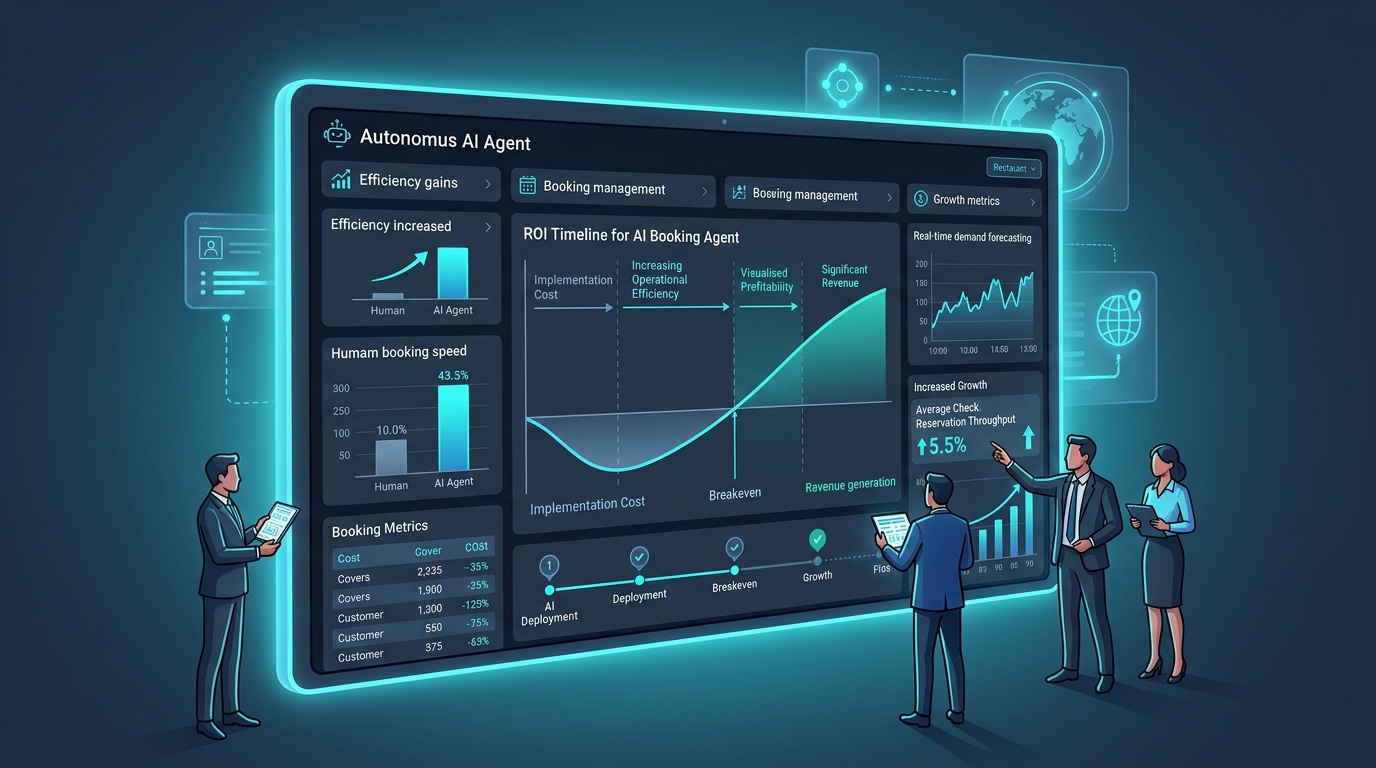
At a 150-seat fine dining venue averaging $120 per cover, recovering even two tables per week from after-hours booking capture generates $1,440 monthly in incremental revenue–often exceeding the AI agent’s entire monthly fee. The ROI question isn’t whether these tools pay for themselves. It’s how fast.
Labor Cost Displacement: Replacing $1,800 Per Month of Front Desk Work
A part-time reservationist covering evening and weekend calls costs $1,500-$1,800 per month. An AI agent handles comparable hours at $400-$600 per month, and it doesn’t call in sick on a Saturday night or deliver inconsistent service when the dining room is slammed. For many operations, labor savings alone fund the investment within the first billing cycle.
Revenue Acceleration Through Intelligent Upselling
Luxury AI agents don’t just capture bookings–they present champagne pairings, private dining room upgrades, and tasting menu commitments during the reservation flow itself. Embedding those offers at the booking stage, rather than relying on floor staff already managing service pressure, is where the revenue difference gets made. Venues report 15%-25% increases in pre-arrival revenue when upselling moves upstream to the booking conversation.
No-Show Reduction and Table Turnover Optimization
Automated deposit collection at booking reduces no-shows by 30%-40% on premium reservations. At a chef’s table priced at $200 per person for four guests, preventing one no-show per week recovers $3,200 monthly. That single metric can justify enterprise-tier pricing for high-demand establishments on its own.
Flat-Rate vs. Per-Minute Pricing: Which Model Works for Luxury Operations
The pricing model matters as much as the rate. High-volume venues frequently overpay under per-minute contracts once Friday and Saturday call surges begin–and the bills arrive after the damage is done.
Flat-Rate Advantage: Predictable Costs for High Call Volume
Flat-rate plans ranging from $400-$1,200 per month suit restaurants receiving 200 or more reservation inquiries monthly. Peak-night call clusters, standard in luxury dining, can push per-minute costs 60%-80% above base estimates. Flat-rate contracts eliminate that volatility entirely.
Per-Minute Pricing Trap: How Premium Restaurants Trigger Overage Fees
Per-minute pricing at $0.08-$0.15 per minute looks economical at low volumes. Run the math at scale: a 150-seat restaurant handling 300 monthly calls averaging four minutes each generates $96-$180 in usage fees before platform costs. Add weekend surges and that figure climbs fast. The break-even threshold sits at roughly 180 calls per month. Above that, flat-rate pricing is almost always the better option.
Beyond Base Fees: Integration, Setup, and Luxury-Specific Costs
The advertised monthly rate rarely reflects real operational cost. Luxury restaurants need capabilities that sit outside standard packages, and vendors price them accordingly.
POS and Reservation System Integration
Native integrations with SevenRooms, Resy, or Toast typically add $50-$200 per month. Custom API connections to proprietary POS systems cost more. Treat this as a fixed operating cost, not an optional upgrade. Guest history synchronization and live table-management data aren’t nice-to-haves in white-glove service–they’re the baseline.
One-Time Setup and Professional Onboarding
Professional onboarding ranges from $500 for self-guided setup to $2,500 for full implementation covering voice persona customization, menu training, and staff workflow integration. Luxury venues should allocate toward the higher end. Your AI agent handles the first interaction with every new guest–that’s not where you cut corners on the setup budget.
Feature-Based Pricing Tiers for Luxury-Specific Capabilities
Many vendors structure luxury tiers around capability unlocks rather than usage volume. Multilingual voice support, VIP guest recognition, and secure deposit processing often sit behind tier gates. A 50-seat fine dining room may need only a mid-tier plan at $600-$800 per month. A multi-venue group requiring centralized guest profiles and cross-property booking history typically needs enterprise licensing at $1,500 or more.
| Venue Size | Recommended Model | Estimated Monthly Cost | Key Reason |
|---|---|---|---|
| 50-seat boutique | Flat-rate mid-tier | $600-$900 per month | Predictable weekend call spikes |
| 150-seat fine dining | Flat-rate enterprise | $1,000-$1,500 per month | High volume makes per-minute pricing expensive |
| Multi-venue group | Enterprise contract | $1,800-$2,500 per month | Centralized guest profiles required |
Premium Features for High-End Experiences
Guest history access, multilingual support across French, Mandarin, and Spanish, and secure deposit processing for chef’s tables can each add $30-$100 per month per feature when purchased individually. Bundled luxury packages often fold these into a single tier price, which is why comparing vendors on the headline number alone will mislead your budgeting. Always review the full feature matrix before running a side-by-side cost comparison.
Why You Should Budget About 40% Beyond Advertised Pricing
How Luxury Restaurant AI Agents Drive Revenue Growth Beyond Cost Savings
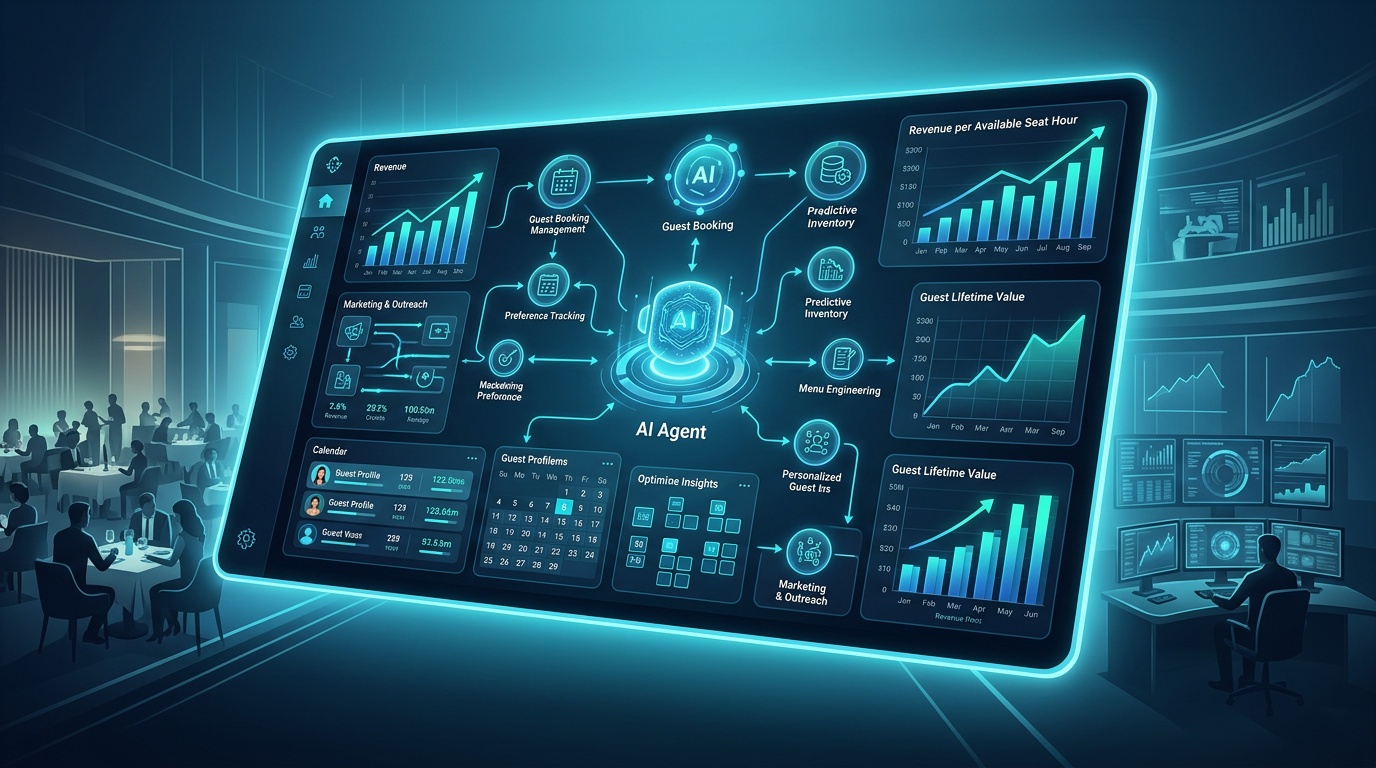
Framing AI agents as a cost line misses the point. These systems function as revenue infrastructure–and the numbers reflect that once you stop comparing monthly fees to monthly fees and start comparing them to revenue generated.
24/7 booking capture converts inquiries that would otherwise hit voicemail into confirmed reservations, with high-end venues reporting 25%+ conversion improvements on after-hours traffic. Guest preference learning–built from booking history, dietary notes, and prior visit data–reduces service friction and increases repeat visit rates among your highest-value guests. Deposit automation on private dining rooms and tasting menus protects revenue that traditional reservation flows lose to last-minute cancellations every week.
I’ve seen the same relationship-intelligence architecture that we built for donor engagement in our fundraising vertical translate directly into guest retention workflows. The logic is the same: personalized outreach, preference recall, and relationship depth drive retention whether you’re managing donors or dining guests. That cross-vertical experience informs how Vynta approaches guest data architecture for luxury hospitality.
Enterprise AI vs. Consumer Platforms: Why Luxury Restaurants Need Specialized Solutions
Generic booking automation handles volume. Luxury hospitality requires discretion, brand consistency, and hospitality-specific KPIs that off-the-shelf tools weren’t designed to optimize. Deploying the wrong platform doesn’t just underperform–it actively erodes the guest trust you’ve spent years building. That’s a cost that doesn’t show up in any monthly subscription comparison.
Enterprise-grade hospitality AI addresses payment data security requirements, white-glove integration standards, and the performance metrics that actually matter in fine dining: guest satisfaction scores, reservation completion rates, and average check growth. Generic platforms optimize for throughput. Luxury operations optimize for experience quality and revenue per cover. Those are genuinely different design objectives.
Hospitality KPIs That Specialized AI Optimizes
Guest satisfaction scores, reservation completion rates, repeat-visit frequency, average check growth–these require AI systems trained on hospitality workflows, not repurposed customer service bots. Hospitality-specific platforms track relationship quality and revenue per guest across the full booking lifecycle. That distinction becomes obvious within the first month of operation when you compare implementation outcomes side by side.
Vynta AI’s hospitality vertical applies that industry expertise across guest experience management, reservation optimization, and upselling automation. It’s what separates a strategic partner from a technology vendor–and it’s why I’d always recommend requiring a hospitality-specific case study before signing with any AI booking provider.
Making the Final Decision: Vendor Selection and Implementation Priorities
Vendor fit matters as much as pricing. The right partner reduces implementation friction and speeds time to positive ROI. The wrong one adds hidden costs that compound every month–and they usually surface after you’ve already gone live.
What Separates Qualified Vendors from Generic Providers
Evaluate vendors on three non-negotiable criteria: native integration with your existing reservation stack, demonstrated hospitality-specific training data, and transparent total cost disclosure before contract signature. Any vendor unwilling to provide a complete first-year cost projection–including integrations, onboarding, and feature tiers–is signaling a pricing model built on post-sale upsells. Walk away.
Hospitality-specific AI vendors price higher than generic alternatives for legitimate reasons. Guest history architecture, VIP recognition workflows, and secure deposit rails require specialized development that general-purpose platforms don’t prioritize. That specialization is what you’re purchasing at the $600-$1,500 per month price point.
Implementation Sequencing That Protects Guest Experience
Phase your rollout. Start with after-hours booking capture–where the AI handles calls your team would miss anyway–before expanding to upselling workflows and deposit automation. This lets staff adapt without service disruption and gives your AI agent time to build guest preference data before it handles peak-night volume independently.
Expect four to six weeks for full integration with SevenRooms, Resy, or Toast. Budget the $1,500-$2,500 onboarding investment rather than choosing self-guided setup. At a venue where a single chef’s table generates $800 per sitting, one misconfigured booking workflow costs more than the onboarding fee you were trying to avoid.
Capabilities Coming in 2026 and Beyond
Multimodal AI agents–handling text, voice, and web chat from a single platform–are entering luxury hospitality pricing tiers in 2026. Expect consolidated pricing that replaces separate voice and chat subscriptions. Guest sentiment analysis, drawn from post-visit feedback and reservation patterns, will move from enterprise-only add-ons into mid-tier packages within 18 months. Operators who build clean guest data architecture now will extract significantly more value from these capabilities as they reach more accessible price points. The time to get your data house in order is before the tools arrive, not after.
Total Cost Summary and Actionable Recommendations
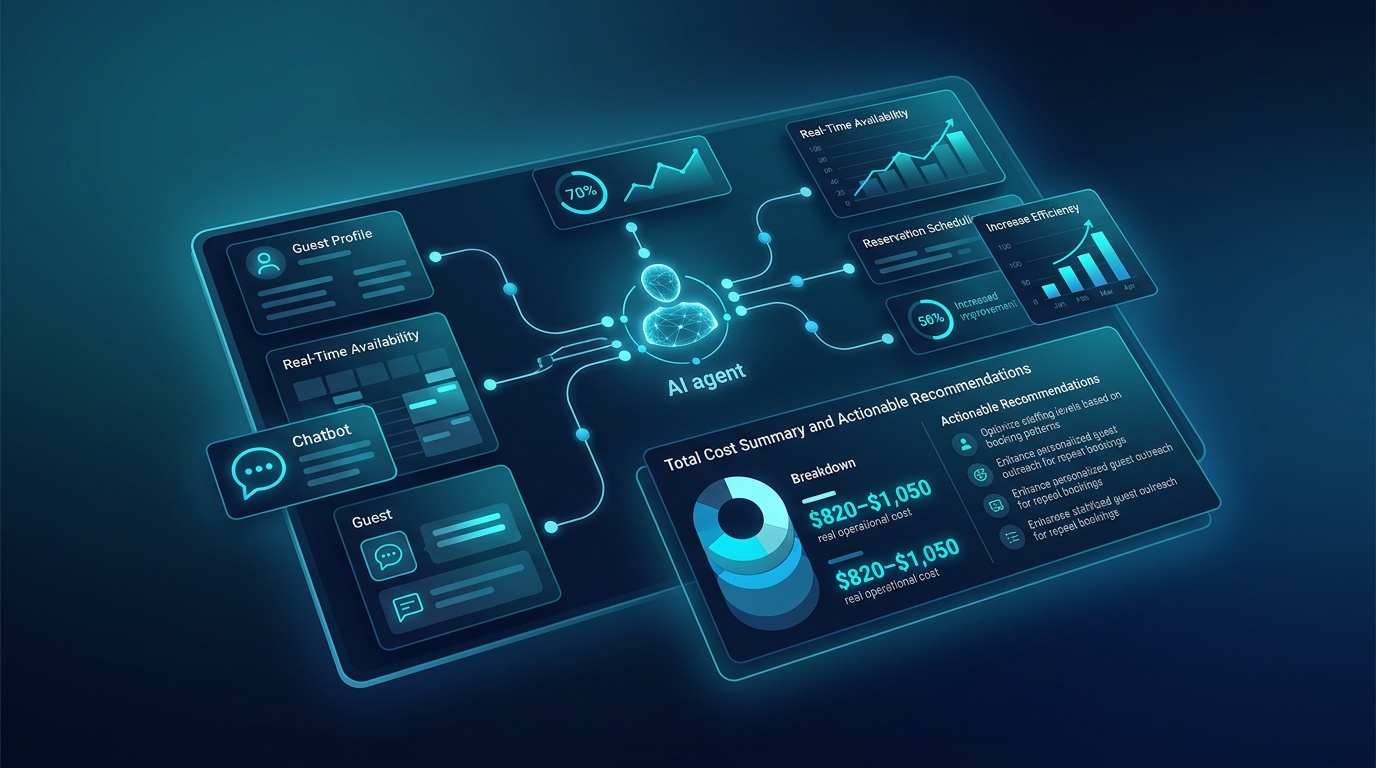
Real operational costs break down like this: $820-$1,050 per month for a 50-seat boutique, $1,400-$1,900 per month for a 150-seat fine dining venue, and $2,200-$3,000 per month for multi-venue groups. These figures include base fees, integrations, amortized onboarding, and premium feature licensing–not just the number on the vendor’s pricing page.
For any establishment averaging $100 or more per cover, the business case is straightforward. Labor savings, no-show reduction, and pre-arrival upselling return the investment within three to four months for most luxury operations. The real risk isn’t overpaying for AI. It’s underinvesting in hospitality-specific capabilities, deploying a generic tool, and watching it erode the guest experience it was purchased to protect.
Vynta AI’s hospitality vertical is built for exactly this operational profile: mid-market fine dining and boutique hotel restaurants that need enterprise-grade guest intelligence without enterprise-scale procurement complexity. Specialized investment in hospitality AI pays. Generic automation repurposed for dining does not.
Frequently Asked Questions
What is the average cost of an AI agent for luxury restaurant bookings?
Base fees for AI agents in luxury restaurants typically range from $400 to $2,500 per month. When accounting for necessary integrations and premium features, the total cost of ownership can be about 40% higher. This pricing reflects the specialized capabilities required for high-end operations.
Can AI agents handle restaurant reservations for luxury venues?
Yes, AI agents are specifically designed to manage reservations for luxury restaurants. They provide 24/7 booking capture, access guest history for VIP recognition, process deposits, and offer full multilingual support. Vynta AI Agents integrate in real-time with CRMs like SevenRooms, synchronizing guest data and reservations automatically.
How are AI agents for luxury restaurant bookings typically priced?
AI agents for luxury restaurants are often priced with flat-rate plans, which can range from $400 to $1,200 per month. This model offers predictable costs, particularly for venues with high call volumes and frequent peak-night surges. Per-minute pricing can quickly become costly for busy establishments.
How much does an AI call agent cost for a luxury restaurant?
For luxury restaurants, an AI call agent, which includes 24/7 voice booking capabilities, falls within the $400 to $2,500 per month range for base fees. This cost covers advanced features like guest history access, deposit processing, and integration with existing reservation systems, which are essential for high-end service.
How do AI agents help reduce no-shows and operational costs for luxury restaurants?
AI agents reduce no-shows by automating deposit collection during the booking process, which can prevent cancellations. They also displace labor costs by handling routine reservation inquiries, allowing human staff to focus on more complex tasks. Vynta AI Agents can reduce operational costs by 30% while ensuring VIP guests receive human care via escalation.
What specific features are included in the base monthly fees for luxury AI agents?
Luxury AI agent base fees include 24/7 voice booking, guest history and VIP recognition, and deposit and payment processing. They also offer full multilingual support, native POS and reservation system integration, and menu- and experience-specific upselling workflows. These features are tailored to the demands of high-end dining.
What are the hidden costs associated with implementing AI agents for luxury restaurants?
Beyond the advertised monthly rate, luxury restaurants should budget for additional costs such as integration fees, typically $50-$200 per month, and one-time professional onboarding fees ranging from $500-$2,500. These add-ons and premium features can push first-year costs about 40% above the base pricing.