

workflow optimization
What Workflow Optimization Means for Mid-Market Businesses
Workflow optimization is the systematic process of identifying, redesigning, and automating business processes to eliminate waste, reduce errors, and accelerate outcomes. For mid-market SMEs, it translates directly into revenue gained and hours recovered.
Core Definition and Business Impact
Workflow optimization isn’t about working harder. It’s about building processes that produce consistent results without proportional headcount growth. When a recruitment firm cuts its screening cycle from five days to one, or a boutique hotel converts 50% more reservation inquiries automatically, the financial impact is immediate and measurable.
Why Mid-Market SMEs Need It Now
Mid-market businesses occupy a difficult position: too large for manual processes, too lean for enterprise software teams. AI-powered workflow optimization closes that gap, giving operations directors access to automation that was previously reserved for companies with dedicated technology departments.
Common Roadblocks in Sales, Marketing, and Operations
Three friction points show up repeatedly across the mid-market businesses we work with. First, repetitive manual tasks consume skilled staff time that should be directed at higher-value work. Second, inconsistent follow-up causes lead and candidate drop-off that never shows up on a dashboard. Third, siloed data prevents teams from acting on real-time signals. Each issue is solvable through structured workflow optimization automation services.
AI-Driven Workflow Gains in Real Estate, Recruitment, Fundraising, and Hospitality
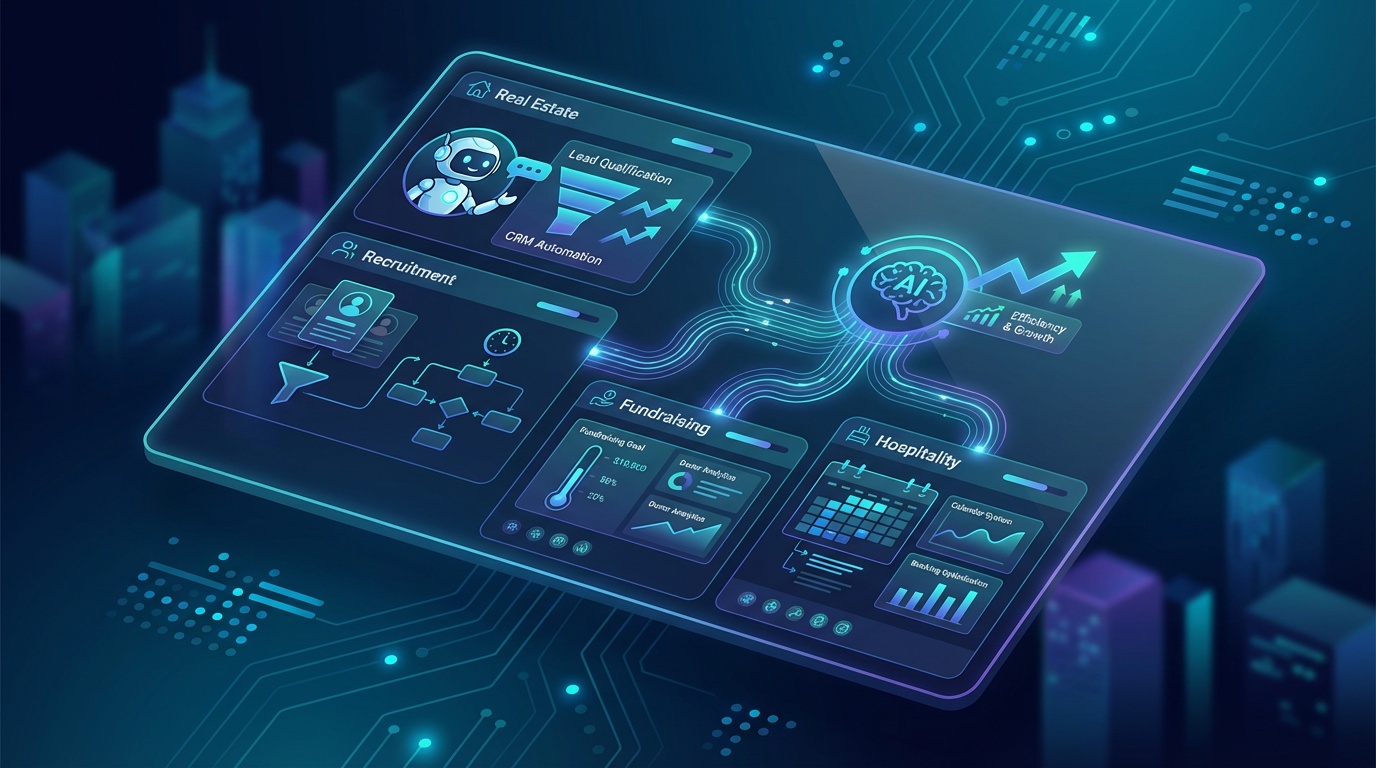
Real Estate: Faster Lead Qualification and CRM Automation
Real estate agencies lose revenue when agents spend hours qualifying cold leads. AI agents score inbound inquiries against property criteria, update CRM records automatically, and route only sales-ready prospects to agents. The result is a faster conversion cycle and agents focused on closing, not sorting. Learn more about the agentic systems for real estate that make this possible.
Recruitment: Smarter Candidate Screening and Scheduling
Recruitment firms using AI for initial screening reduce time-to-hire by over 60%. AI agents parse resumes against role requirements, send structured pre-qualification questions, and schedule interviews without coordinator involvement. Shortlists improve because consistent, structured criteria are applied at scale–no human bias, no bottlenecks. Explore our agentic systems for recruitment designed to optimize hiring workflows.
Fundraising: Targeted Investor Outreach and Campaign Tracking
Fundraising organizations managing investor pipelines manually miss follow-up windows. AI agents personalize outreach sequences based on investor profiles, track engagement signals, and flag warm prospects for relationship managers. Campaign tracking becomes real-time rather than retrospective. Recent research on AI-powered fundraising automation documents the measurable gains organizations are reporting from this shift.
Hospitality: Reservation Management and Guest Upsell Automation
Vynta AI Agents for Hospitality integrate in real time with CRMs such as SevenRooms, synchronizing guest data, reservations, tags, and updates automatically. The system can increase booking conversion by up to 50% and reduce customer inquiry abandonment by up to 60%, depending on traffic mix and baseline performance. Average guest spend can rise by up to 25% through brand-safe upselling tailored to individual guest profiles.
| Vertical | Primary Automation | Key Metric |
|---|---|---|
| Real Estate | Lead scoring, CRM updates | Faster conversion |
| Recruitment | Resume screening, scheduling | Over 60% hiring cycle reduction |
| Fundraising | Investor outreach sequences | Systematic pipeline coverage |
| Hospitality | Reservation and upsell automation | Up to 50% booking conversion increase |
Steps to Implement AI Workflow Optimization Without Adding Headcount
Map Your Current Processes and Spot Inefficiencies
Before selecting any tool, document every step in your highest-volume workflows. Identify where tasks stall, where manual handoffs occur, and where data entry duplicates effort. This process map becomes the foundation for each automation decision. Skip it, and you’re automating the wrong things.
Select AI Agents Tailored to Your Industry Vertical
Generic automation tools apply generic logic. An AI agent built for hospitality understands the nuance of a guest upsell conversation differently from one handling candidate screening. Match your agent selection to your vertical’s specific decision points and compliance requirements–the difference in output quality is significant.
Test, Measure, and Scale with Clear KPIs
- Define baseline metrics before launch: response time, conversion rate, or time-to-hire.
- Run a 30-day pilot on one workflow segment with a defined success threshold.
- Review KPI movement weekly and adjust automation rules based on real data.
- Scale proven automations across additional workflow segments.
Overcome Adoption Hurdles in Service Industries
Pros
- Staff reclaim hours spent on repetitive tasks.
- Consistent process execution reduces errors.
- Scales without proportional cost increases.
Cons
- Initial process mapping requires a time investment.
- Staff training is needed for oversight and escalation.
- ROI visibility can take 60-90 days to fully materialize.
Real Results: Metrics and Case Studies from Vynta AI Clients
Quantified Wins Across Four Verticals
Across real estate, recruitment, fundraising, and hospitality, clients implementing structured workflow optimization report operational cost reductions of up to 30% alongside measurable revenue gains, depending on baseline process maturity. In hospitality specifically, Vynta AI Agents for Hospitality reduce inquiry abandonment by up to 60% while maintaining the personal service standard guests expect.
ROI Calculation: Time Saved Is Revenue Gained
A recruitment firm that recovers hours previously lost to manual screening can recapture tens of thousands of dollars annually from a single workflow change. Redirect that capacity to business development, and the return compounds quickly. For independent context on the scale of these gains, see time-to-hire reductions documented in recent peer-reviewed research.
Human-AI Teamwork in Action
AI agents handle volume. Human experts handle judgment. Clients retain full control through dashboards that allow manual viewing, pausing, and live conversation takeover at any point. Strict escalation rules ensure VIP guests and sensitive negotiations always reach the right person. For a deeper look at how this plays out operationally, the workflow optimization case study published in WJARR walks through real-world implementation detail.
Next Steps: Partner with Vynta AI for Tailored Workflow Automation
Match AI Agents to Your Business Challenges
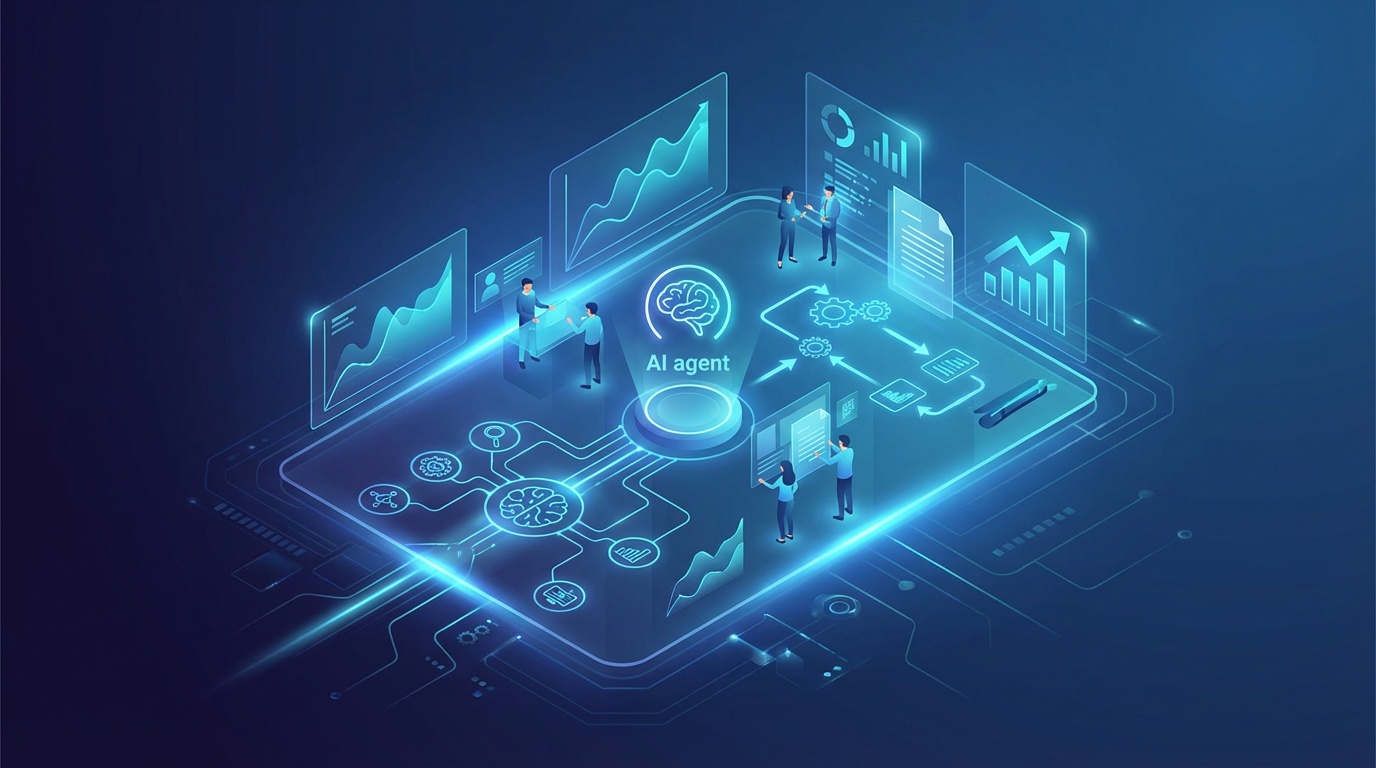
The starting point for effective workflow optimization is always the same: find the highest-volume process where skilled staff are doing repeatable work that a well-configured AI agent could handle. Vynta AI maps that assessment directly to industry-specific agent configurations built for your vertical’s decision points and compliance requirements–whether you manage a recruitment pipeline, an investor outreach program, a property portfolio, or a hospitality venue.
What to Expect from Implementation
Implementation includes NDA signing, data privacy compliance setup, CRM integration, and brand tone configuration before any agent goes live. Clients define operating hours, escalation rules, and content controls from day one. For hospitality clients, Vynta AI Agents for Hospitality support multilingual communication across WhatsApp, SMS, Instagram, and email, with channel-specific personalization configured to your brand standards. No agent operates outside the parameters your team sets.
Start Measuring Your Optimization ROI Today
Pick one high-volume workflow that consumes disproportionate staff time. That single process is your entry point. Contact Vynta AI to map it against proven automation frameworks across all four verticals and calculate your baseline ROI before committing to full deployment.
The firms seeing the biggest efficiency gains didn’t overhaul everything at once. They started with one process, measured the outcome, and scaled based on evidence. AI automation services by Vynta AI are built for exactly that measured, outcome-first approach–across hospitality, recruitment, real estate, and fundraising.
Frequently Asked Questions
What is workflow optimization?
Workflow optimization is a systematic approach to identifying, redesigning, and automating business processes. Its goal is to remove waste, reduce errors, and speed up outcomes, allowing businesses to achieve consistent results without needing to grow their headcount proportionally. For mid-market companies, this directly translates into gained revenue and recovered operational hours.
Why is workflow optimization important for mid-market businesses?
Mid-market businesses often find themselves in a challenging position, too large for manual tasks but too lean for extensive enterprise software teams. Workflow optimization, particularly with AI, bridges this gap by providing access to automation previously exclusive to larger corporations. This allows operations directors to achieve significant productivity gains, often 20-25%, without increasing staff.
What are the typical challenges businesses face with inefficient workflows?
Many businesses struggle with repetitive manual tasks that consume valuable skilled staff time, preventing them from focusing on strategic work. Inconsistent follow-up often leads to lost leads or candidates, impacting conversion rates. Additionally, siloed data prevents teams from having a unified view, hindering timely and informed decision-making.
How does AI automation contribute to workflow optimization?
AI automation is a game-changer for workflow optimization, especially for mid-market businesses. It allows for the automation of high-volume, repetitive tasks, freeing up skilled staff. AI agents can score leads, screen candidates, manage reservations, and personalize outreach, leading to faster cycles and improved outcomes across sales, marketing, and operations.
What steps should a business take to implement AI workflow optimization?
To implement AI workflow optimization, first, map your current processes to identify inefficiencies and bottlenecks. Next, select AI agents specifically tailored to your industry vertical, as generic tools often lack the necessary context. Finally, define clear KPIs, conduct a pilot, measure results against your baseline, and then scale proven automations across your business.
Can you provide examples of AI workflow gains in specific industries?
Absolutely. In real estate, AI agents can qualify leads and update CRM records automatically, focusing agents on closing. For recruitment, AI screens candidates and schedules interviews, reducing time-to-hire by over 60%. In hospitality, Vynta AI Agents can increase booking conversion by up to 50% and reduce inquiry abandonment by up to 60%, even increasing average guest spend by up to 25% through tailored upsells.