
ai agents use cases
AI Agents Use Cases: Real-World Applications for Mid-Market Businesses
AI agents autonomously complete business workflows–from qualifying leads to managing reservations–without requiring constant oversight. Real-world ai agents use cases deliver 50% higher booking conversions in hospitality, 35% error reduction in operations, and 25% revenue increases through intelligent upselling. Mid-market businesses in real estate, recruitment, fundraising, and hospitality deploy AI agents to automate lead qualification, candidate screening, donor outreach, and guest services while preserving human capacity for strategic relationship-building.
What AI Agents Are and How They Differ from Basic Chatbots
Core Definition of AI Agents in Business Terms
AI agents are software systems that perceive their environment, make decisions, and execute tasks autonomously to achieve specific business goals. Unlike static automation, agents adapt to changing conditions and learn from interactions. An AI agent might qualify a real estate lead, schedule property viewings, update your CRM, and follow up with personalized messages based on prospect behavior–all while your team focuses on closing deals.
Key Differences from Chatbots: Action vs. Response
Chatbots answer questions. AI agents complete workflows.
A chatbot tells a restaurant guest about menu options when asked. An AI agent handles the entire reservation process: checks availability across integrated systems, applies upselling logic based on guest history, confirms bookings, sends reminders, and escalates VIP requests to human staff. The distinction matters because agents drive revenue and efficiency, not just customer service convenience.
| Feature | Traditional Chatbot | AI Agent |
|---|---|---|
| Primary Function | Responds to questions | Completes business processes |
| System Integration | Limited or none | Real-time CRM, ATS, PMS sync |
| Decision Making | Rule-based scripts | Contextual, adaptive logic |
| Business Impact | Support efficiency | Revenue growth, cost reduction |
Why Mid-Market Businesses Need Agents for Operations
Mid-market SMEs face a scaling paradox: they need enterprise-level operational efficiency but lack the internal AI resources or budgets of large corporations. AI agents solve this by delivering round-the-clock operational capacity without hiring proportionally. A recruitment firm screens hundreds of candidates simultaneously. A boutique hotel manages multilingual guest inquiries across WhatsApp and Instagram. A fundraising organization maintains systematic investor outreach. Existing staff concentrate on relationship-building rather than administrative tasks.
AI Agents in Sales and Marketing: Proven Business Results
Automating Lead Qualification and Outreach
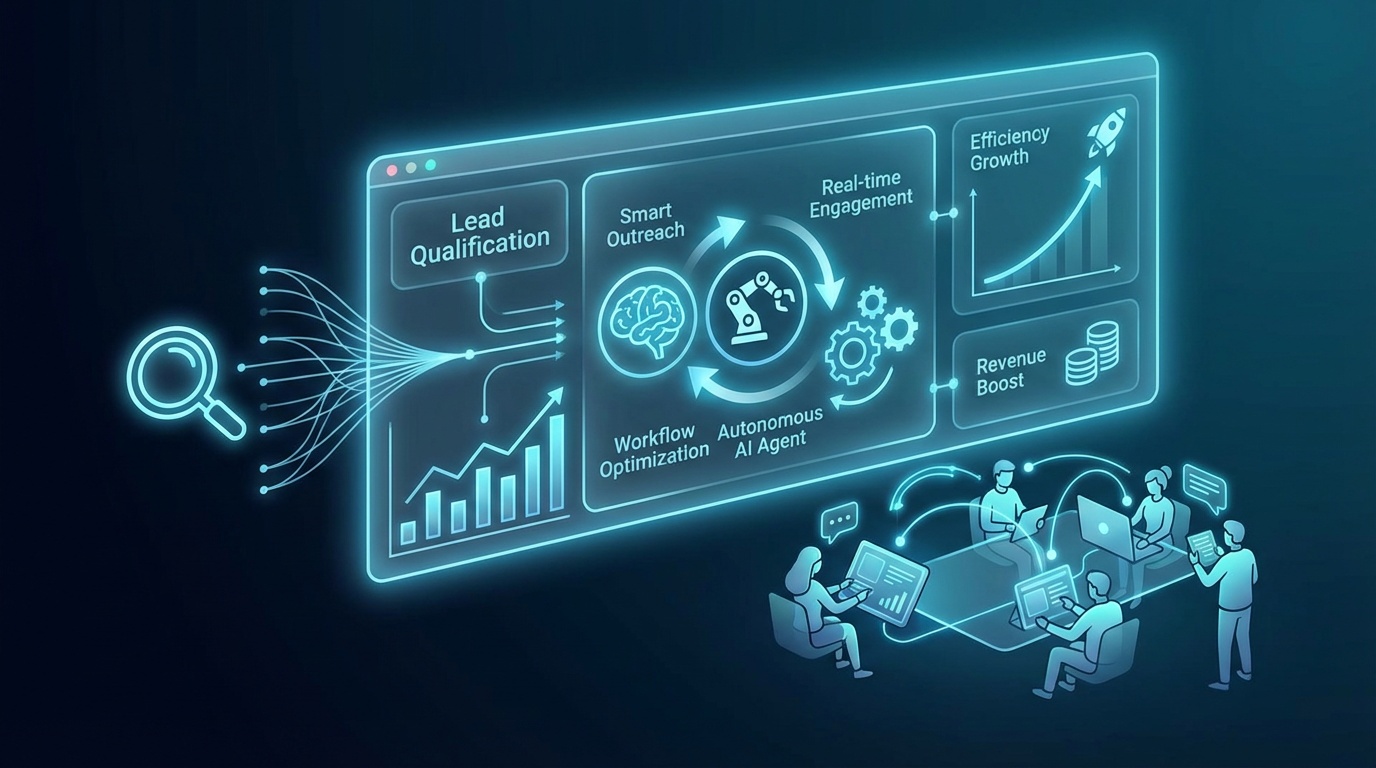
AI agents transform sales pipelines by identifying high-intent prospects and engaging them immediately. In real estate, agents analyze inquiry sources, property preferences, and response patterns to prioritize leads worthy of human attention. A fundraising organization uses agents to research potential investors, personalize outreach based on investment history, and schedule discovery calls. Sales teams spend more time on qualified conversations and less time on data entry.
CRM Integration for Revenue Growth
Vynta AI Agents for Hospitality sync guest data, reservations, and preferences with platforms like SevenRooms in real time. When a repeat guest messages about a birthday dinner, the agent accesses past visit history, suggests premium table options, and applies upselling logic tailored to spending patterns. This channel-specific personalization across WhatsApp, SMS, and email drives up to 25% increases in average guest spend.
Real-World Metrics: Conversion Rate Improvements
Data from deployed ai agents use cases shows concrete performance gains:
- 50% higher booking conversions when agents respond within minutes
- 60% reductions in inquiry abandonment through natural, human-like timing
- 30% operational cost savings as agents handle routine inquiries during peak hours
Staff focus on VIP guests and complex requests that require human judgment.
Implementation Reality: These results require proper setup. Agents need clear escalation rules, brand tone customization, and defined operating hours. Vynta clients set strict parameters so VIP guests always receive human care while the AI manages high-volume, routine interactions that would otherwise overwhelm staff or go unanswered.
AI Agents for Operations and Efficiency Gains Across Industries
Streamlining Recruitment and Candidate Matching
Recruitment firms deploy AI agents to screen resumes, match candidates to job requirements, and coordinate interview scheduling across multiple stakeholders. The agent parses applicant tracking systems, identifies skill gaps, sends personalized follow-ups, and flags top talent for human review. Agencies report improvements in candidate matching accuracy and reductions in time to first interview. Recruiters shift from administrative coordination to relationship-building with both clients and candidates, directly impacting placement rates and client retention.
Optimizing Hospitality Guest Services and Reservations
Luxury restaurants, beach clubs, and premium bars use Vynta AI Agents for Hospitality to manage the entire guest journey from first inquiry to post-visit follow-up. The system operates during client-defined hours, responds with natural timing that mimics human conversation, and handles multilingual inquiries across Instagram, WhatsApp, and SMS.
When a guest asks about availability, the agent checks real-time reservation data, suggests optimal seating based on party size and preferences, confirms bookings, and escalates VIP requests to staff. This prevents inquiry abandonment during off-hours while maintaining brand standards through customizable tone and strict content controls.
| Operational Metric | Manual Process | AI Agent Automation |
|---|---|---|
| Response Time | 2-12 hours (business hours only) | Under 3 minutes (around the clock) |
| Inquiry Abandonment | 45-60% overnight/weekend | 10-15% with instant response |
| Staff Time on Routine Tasks | 60-70% of working hours | 20-30% with agent handling volume |
| Upselling Consistency | Varies by staff knowledge and mood | 100% application of brand-safe logic |
Case Examples: Time Savings and Cost Reductions
A boutique hotel implementing AI agents reduced front desk inquiry volume by 55%, allowing staff to focus on in-person guest experiences rather than repetitive booking questions. Guest satisfaction scores increased because human staff had capacity to deliver personalized service during check-in and throughout stays. The agent handled routine requests, dietary preference logging, and pre-arrival communications, then escalated special occasions or complaints to human managers. This human-AI collaboration model scales service quality without proportional cost increases.
Integration Reality: Success requires real-time system connectivity. Vynta AI agents sync with CRMs like SevenRooms, updating guest tags, reservation details, and preferences automatically. Clients maintain full visibility through dashboards where they can view, pause, or take over conversations manually. This oversight ensures brand control while capturing efficiency gains.
Industry-Specific Use Cases Tailored for Mid-Market SMEs
Real Estate: Property Matching and Lead Handling
Real estate agencies use AI agents to qualify inbound leads by budget, location preferences, and timeline urgency. The agent asks clarifying questions, searches property databases, sends relevant listings, and schedules viewings with available agents. High-intent prospects receive immediate attention while lower-priority leads receive automated nurture sequences. Agencies report increases in qualified appointments and reductions in lead response time, directly impacting conversion rates in competitive markets. Explore how Agentic Systems for Real Estate can transform your workflows.
Recruitment: Screening and ATS Automation
Recruitment firms deploy agents to parse resumes against job descriptions, conduct initial screening interviews via chat, and coordinate availability between candidates and hiring managers. The agent updates applicant tracking systems with candidate notes, flags skill mismatches, and sends rejection or advancement notifications. Recruiters focus on relationship management and client strategy while the agent handles applications that don’t meet basic requirements, improving time to hire. Discover more about our Agentic Systems for Recruitment.
Fundraising: Investor Outreach and Donor Tracking
Fundraising organizations use AI agents to research potential investors, personalize outreach based on past giving patterns, and maintain systematic follow-up cadences. The agent logs all interactions in CRM systems, identifies warm leads based on engagement signals, and schedules discovery calls. Development directors report increases in meeting bookings and improvements in donor retention through consistent, personalized communication that would be impossible to maintain manually across large prospect lists. Read about the AI-Powered Fundraising Platform that revolutionizes donor management.
Hospitality: Upselling and No-Show Prevention
Vynta AI Agents for Hospitality analyze guest profiles to suggest premium menu items, table upgrades, or bottle service based on past spending and occasion type. The agent sends pre-arrival reminders that reduce no-shows, confirms dietary restrictions, and collects preferences that staff use to personalize in-person service. This brand-safe upselling drives up to 25% increases in average guest spend, since suggestions align with guest history and channel context.
Implementing AI Agents: Steps, Challenges, and ROI Realities
Build vs. Buy: Why Partnering Makes Sense for SMEs
Mid-market businesses often lack the AI talent and infrastructure needed to build agents internally. Open-source ai agent project github repositories require data science expertise, ongoing maintenance, and months of customization. Partnering with specialized providers delivers industry-specific solutions in weeks, not quarters. Vynta AI provides bespoke agents tailored to hospitality operations, complete with CRM integrations, multilingual support, and brand tone customization that generic tools can’t match.
Overcoming Integration Hurdles with CRM and ATS
The primary implementation challenge is connecting agents to existing systems without disrupting workflows. Successful deployments require API access to CRMs, clear data mapping, and escalation protocols for edge cases. Vynta signs NDAs and follows strict data privacy protocols, addressing security concerns that often stall ai agents use cases reddit discussions. Clients define operating hours, content restrictions, and VIP escalation rules, maintaining control while capturing automation benefits.
Measuring Success: KPIs and Next Steps with Vynta.ai
Track conversion rates, response times, inquiry abandonment, and cost per interaction to quantify agent impact. Hospitality clients monitor booking conversion, average spend, and guest satisfaction scores. Recruitment firms measure time to hire and placement rates. Real ROI comes from staff reallocation to high-value activities, not only cost reduction. Vynta provides dashboards showing conversation volume, escalation frequency, and revenue attribution, enabling data-driven optimization of agent behavior and business rules over time.
Real-World Deployment Patterns That Maximize Agent Impact
Phased Rollout Strategy for Risk Mitigation
Successful AI agent implementations start narrow and expand based on performance data. Begin with a single high-volume, low-complexity workflow:
- Lead qualification for real estate
- Initial candidate screening for recruitment
- Reservation confirmations for hospitality
Monitor accuracy, escalation rates, and business outcomes for 30 days before adding complexity. This approach builds internal confidence, identifies integration issues early, and demonstrates ROI to stakeholders skeptical about AI reliability. Businesses that deploy agents across all workflows simultaneously often face staff resistance and integration failures that undermine adoption.
Human-AI Handoff Protocols That Maintain Quality
The most effective ai agents use cases define clear escalation triggers based on conversation complexity, customer value, or emotional tone. Vynta AI Agents for Hospitality escalate VIP guests, complaint keywords, or requests outside defined parameters to human staff with full conversation context. The agent handles routine inquiries during peak hours but routes a guest asking about proposal arrangements to a manager who can deliver personalized service. This protocol ensures automation scales volume without sacrificing relationship quality, which differentiates premium service businesses.
Staff Enablement: Train teams to view agents as capacity multipliers, not replacements. Show front-line staff how agents handle repetitive tasks so they can focus on complex problem-solving and relationship-building. Recruitment agencies find that consultants freed from resume screening spend more time coaching candidates and advising clients, directly improving placement quality and retention.
Continuous Optimization Through Feedback Loops
AI agents improve through systematic review of escalated conversations, conversion metrics, and customer feedback. Monthly analysis reveals which questions trigger unnecessary escalations, where upselling logic needs refinement, or how tone adjustments improve response rates. Vynta clients use conversation dashboards to identify patterns, then adjust business rules, content restrictions, or operating hours based on actual performance data. This iterative optimization compounds ROI over time as agents become more accurate and autonomous.
Future Considerations as AI Agent Capabilities Evolve
Predictive Capabilities Enable Proactive Outreach
Next-generation agents will anticipate needs before customers ask. A hospitality agent might message a repeat guest about reservation availability for a usual Friday dinner before an inquiry. Recruitment agents could identify passive candidates whose career trajectories suggest openness to new opportunities. Real estate agents might alert buyers when properties matching their criteria hit the market before public listings. This shift from reactive response to proactive engagement will redefine competitive advantage in service industries.
Multi-Agent Orchestration for Complex Workflows
Businesses will deploy specialized agents that collaborate on multi-step processes. A fundraising organization might use one agent to research prospects, another to draft personalized outreach, and a third to coordinate meeting logistics, with all three sharing context and handing off seamlessly. This orchestration enables automation of sophisticated workflows that currently require human coordination across multiple systems and stakeholders.
Ethical Transparency Requirements Shape Design
As ai agents use cases expand, regulatory frameworks will require clear disclosure when customers interact with AI versus humans. Forward-thinking businesses already design agents that identify themselves appropriately while maintaining natural conversation flow. Vynta AI Agents for Hospitality can be configured to introduce their automated nature upfront or operate transparently within defined parameters, allowing brands to align with evolving customer expectations and compliance requirements.
Actionable Recommendations for AI Agent Adoption
Start with a Measurable Pilot Project
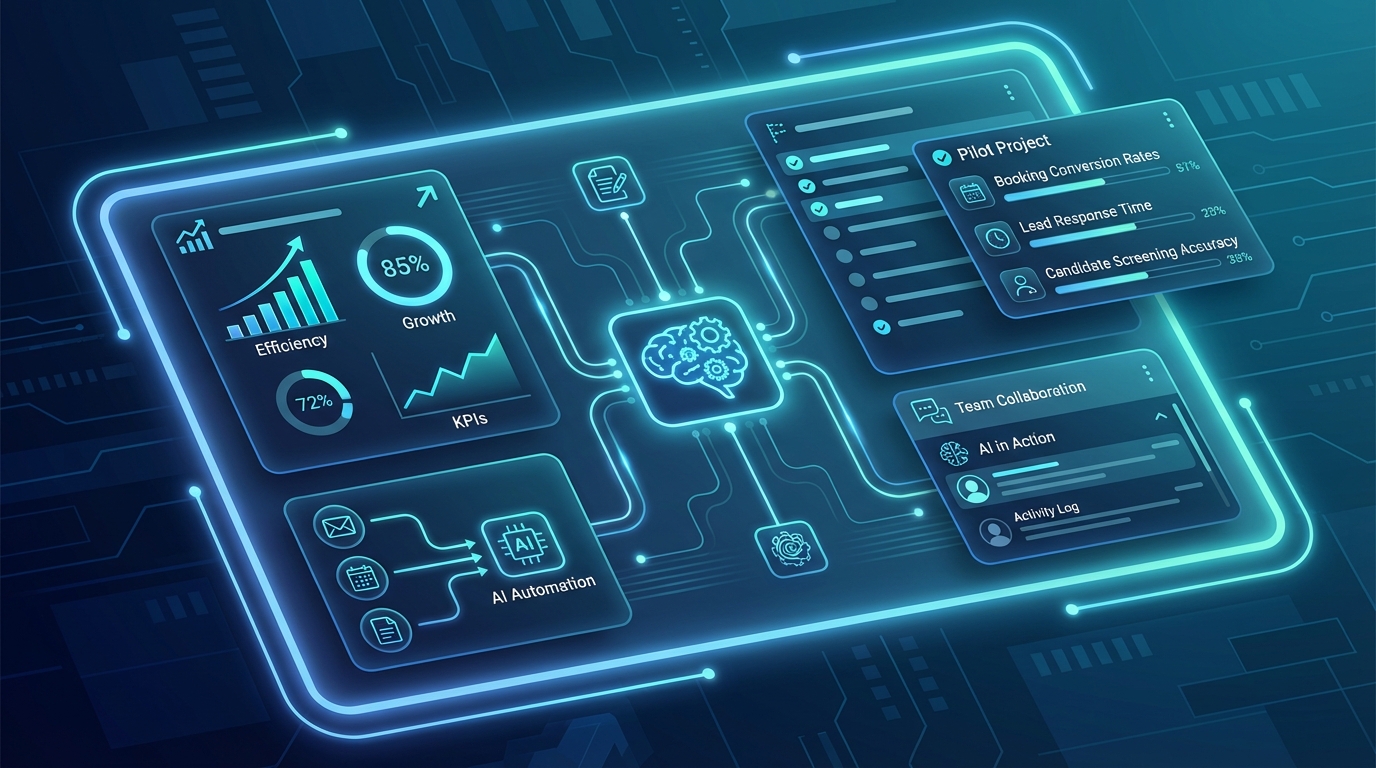
Choose one workflow with clear KPIs: booking conversion rates, lead response time, candidate screening accuracy, or inquiry abandonment. Deploy an agent focused solely on that process, establish baseline metrics, and measure impact over 60 days. This contained scope limits risk while generating concrete evidence to justify broader investment.
Real estate agencies should pilot lead qualification. Recruitment firms should pilot initial screening. Hospitality venues should pilot reservation management.
Prioritize Integration Over Features
An AI agent that syncs seamlessly with your existing CRM, ATS, or property management system delivers more value than one with advanced capabilities but poor connectivity. Evaluate providers based on their integration depth with your core business systems. Vynta AI’s real-time synchronization with platforms like SevenRooms exemplifies this priority, ensuring guest data, reservations, and preferences update automatically without manual reconciliation.
For deeper insight into AI agent technology and its impact on the digital economy, researchers can explore comprehensive studies that analyze agentic AI applications.
Invest in Internal AI Literacy
Staff who understand agent capabilities and limitations become better collaborators. Provide training on when to override agent recommendations, how to review conversation logs, and what performance metrics indicate success. This literacy transforms AI adoption from a top-down technology initiative into a team capability that improves continuously through front-line insights and feedback.
Partner with Industry Specialists
Generic automation platforms require extensive customization to address industry-specific workflows, terminology, and customer expectations. Providers specializing in your vertical deliver pre-configured solutions that understand real estate showing logistics, recruitment compliance requirements, fundraising donor sensitivities, or hospitality service standards. This specialization reduces implementation time and improves accuracy from day one.
ROI Timeline: Expect measurable efficiency gains within 30 days and revenue impact within 90 days. Booking conversion improvements, cost reductions, and staff time savings appear quickly. Longer-term benefits like improved customer retention, higher average transaction values, and competitive differentiation compound over quarters as agents learn from interactions and businesses optimize workflows around AI capabilities.
Partnerships between humans and intelligent agents highlight the evolving skill requirements in an AI-driven workforce.
Frequently Asked Questions
How do AI agents operate autonomously within a business context?
AI agents perceive their environment, make decisions, and execute tasks autonomously to achieve specific business goals. They adapt to changing conditions and learn from interactions, operating continuously without constant human oversight. For example, an AI agent can qualify a real estate lead, schedule property viewings, and update your CRM. This frees human teams to focus on closing deals and high-value interactions.
Why are AI agents particularly beneficial for mid-market businesses?
Mid-market businesses gain 24/7 operational capacity without proportional headcount growth, addressing their need for enterprise-level efficiency. AI agents allow existing staff to focus on high-value interactions and relationship-building instead of administrative tasks. This helps mid-market SMEs scale operations efficiently and compete effectively.
What measurable outcomes can businesses expect from implementing AI agents?
AI agents deliver concrete performance gains, such as 50% higher booking conversions in hospitality and 35% error reduction in operations. Businesses also see 25% revenue increases through intelligent upselling and 60% reductions in inquiry abandonment. These results free staff to focus on complex requests that require human judgment.
How do AI agents improve sales and marketing processes?
AI agents transform sales pipelines by identifying high-intent prospects and engaging them immediately. They analyze inquiry sources, property preferences, and response patterns to prioritize leads, allowing sales teams to focus on qualified conversations. This leads to increased average guest spend through channel-specific personalization across platforms like WhatsApp, SMS, and email.
Can AI agents streamline recruitment and candidate matching?
Yes, AI agents streamline recruitment by screening resumes, matching candidates to job requirements, and coordinating interview scheduling across multiple stakeholders. The agent parses applicant tracking systems, identifies skill gaps, and flags top talent for human review. This shifts recruiters from administrative coordination to relationship-building with both clients and candidates, directly impacting placement rates.
How do Vynta AI Agents specifically assist real estate agencies?
Vynta’s Agentic Systems for Real Estate help agencies handle more properties, convert more leads, and close more deals without expanding their team. The system converts property inquiries into viewings and sales through instant 24/7 engagement, AI-driven qualification, and personalized follow-up across multiple channels. This maximizes agent productivity, saving over 20 hours per week and resulting in over 30% more deals closed.
What specific actions do AI agents take in hospitality guest services?
In hospitality, AI agents manage the entire guest journey from first inquiry to post-visit follow-up. They check real-time reservation data, suggest optimal seating based on party size and preferences, confirm bookings, and escalate VIP requests to staff. This 24/7 operational capacity prevents inquiry abandonment during off-hours while maintaining brand standards.