

ai workflow automation tools
Why AI Workflow Automation Tools Deliver Business Results Now
Mid-market businesses lose 20-30% of revenue potential to manual tasks that AI workflow automation tools handle in seconds. Real estate agencies spend hours qualifying leads that’ll never convert. Recruitment firms manually screen hundreds of unqualified candidates. Fundraising teams chase cold investor lists without systematic outreach. Hospitality managers juggle reservation confirmations while missing upsell opportunities.
These aren’t minor inefficiencies. They’re competitive disadvantages that compound daily.
The Revenue Drain: What Manual Workflows Actually Cost
Real estate agents waste 60% of their time on leads outside target criteria. That’s 24 hours per week chasing prospects who can’t afford your properties or want locations you don’t serve. Recruitment coordinators spend 15 hours weekly on interview scheduling–calling candidates, checking calendars, sending confirmations. Fundraising directors track investor interactions across disconnected spreadsheets, losing follow-up momentum when a warm lead goes cold for three weeks. Hotel staff handle the same reservation questions 40 times daily instead of building relationships that drive repeat bookings.
Each manual touchpoint costs money. And creates friction where automation delivers instant, personalized responses.
Real Numbers from Real Businesses
Vynta AI clients across four verticals report measurable outcomes within 60 days:
- Real estate teams: 30% higher lead conversion through automated CRM matching and qualification
- Recruitment agencies: 50% reduction in time-to-hire via intelligent candidate screening integrated into existing ATS platforms
- Fundraising organizations: 25% boost in donor retention through systematic outreach automation
- Hospitality businesses: 18% increase in revenue per guest via reservation optimization and automated upselling sequences
Reality Check: Generic automation platforms require months of configuration and technical expertise. AI Automation Services delivers industry-specific agents that understand real estate property matching, recruitment candidate scoring, fundraising pitch timing, and hospitality guest preferences. No generic workflow builders.
Scaling Without Hiring: How AI Agents Multiply Capacity
Traditional scaling means hiring more people to handle increased volume. AI workflow automation tools flip this model.
One custom agent handles lead qualification for 500+ monthly inquiries. Another screens 1,000+ candidate applications. A third manages investor outreach sequences for 200+ prospects. A fourth optimizes reservations across multiple properties.
Your team focuses on high-value conversations while agents execute repetitive processes with consistent quality. The best AI workflow automation tools don’t replace human judgment–they multiply human capacity by handling tasks that don’t require strategic thinking.
Top AI Workflow Automation Tools Compared for Mid-Market Needs
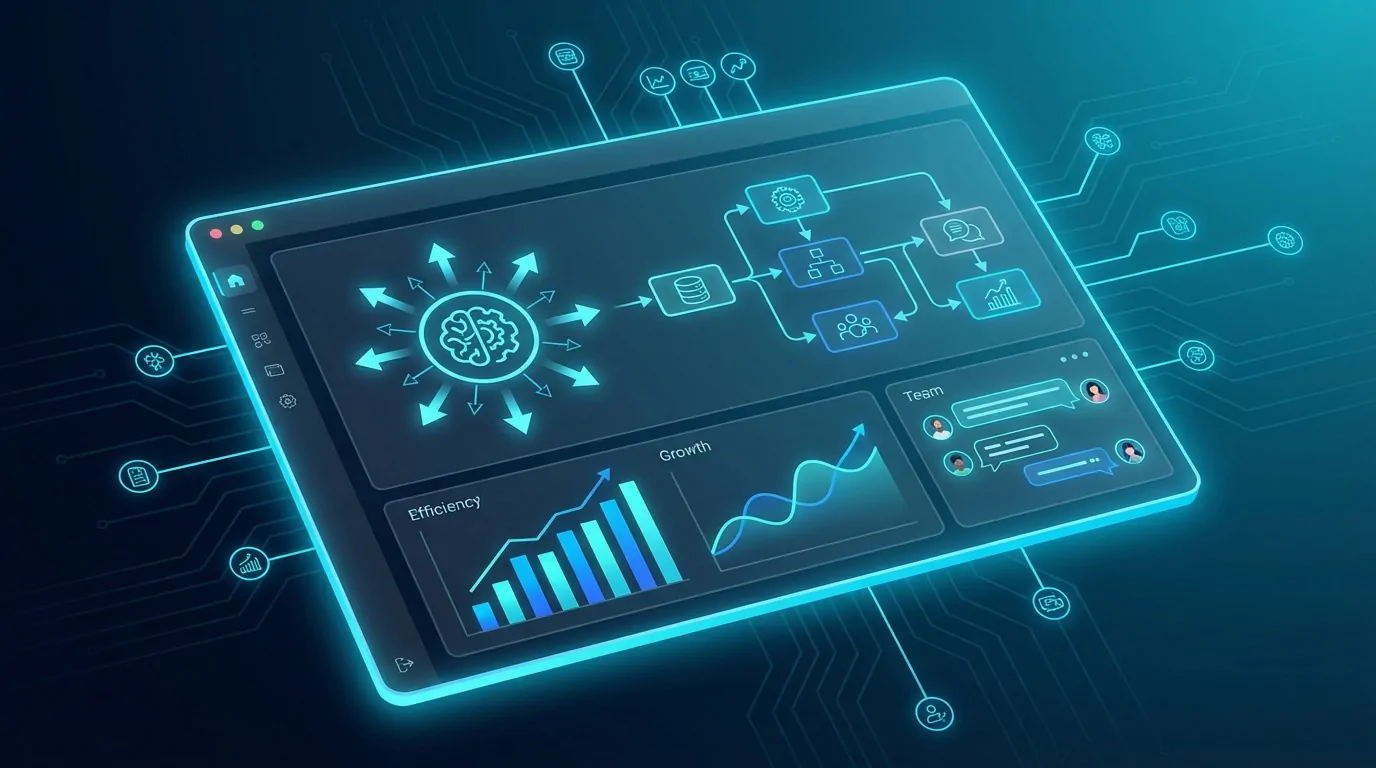
Most comparisons focus on features. This analysis examines what actually matters: implementation complexity, industry specialization, and total cost of ownership for SMBs managing 10-100 employees.
Zapier vs. n8n vs. Make: Where They Excel and Where They Fall Short
Zapier offers the simplest interface with 5,000+ pre-built integrations, making it accessible for teams without technical skills. The problem? Pricing escalates fast. Workflows exceeding 750 tasks monthly push you into $50-$300 per month tiers.
Make (formerly Integromat) provides visual workflow design with more complex logic at competitive pricing–ideal for teams comfortable with conditional branching.
Open source AI workflow automation tools like n8n remove subscription costs but require self-hosting expertise and ongoing maintenance. You’re trading monthly fees for technical debt.
All three share a critical limitation: they’re connection tools, not intelligent agents. They move data between apps based on triggers but lack contextual decision-making and natural language processing. You’re still building the logic. They’re just executing it.
Enterprise Options: When Workato and Gumloop Make Sense
Workato targets enterprise clients with strong API management and compliance features. Pricing starts at $10,000+ annually. It excels at complex multi-system integrations for companies with dedicated IT resources.
Gumloop brings AI capabilities into workflow design, allowing natural language instructions to generate automation sequences. Both platforms deliver power at a cost: implementation timelines stretch 3-6 months, requiring technical specialists to configure industry-specific logic.
For mid-market teams? These platforms add complexity most teams don’t need, with pricing models designed for Fortune 500 budgets rather than agile SMBs.
Vynta.ai Custom AI Agents: Built for Your Industry, Not Generic Workflows
AI Automation Services removes the configuration burden through custom agent development designed for specific verticals.
Rather than connecting apps with trigger-action logic, Vynta builds intelligent agents that understand real estate property criteria, recruitment candidate qualifications, fundraising investor profiles, and hospitality guest preferences.
A real estate agent qualifies leads by analyzing inquiry details against your ideal client profile, scoring prospects, and updating your CRM with contextual notes. A recruitment agent screens resumes against job requirements, schedules qualified candidates, and integrates with existing ATS platforms.
Implementation happens in weeks. Not months. With ongoing optimization included.
| Platform | Best For | Implementation Time | Industry Specialization | Monthly Cost Range |
|---|---|---|---|---|
| Zapier | Simple app connections | Days | None | $20-$300 |
| Make | Visual workflow design | 1-2 weeks | None | $9-299 |
| n8n | Technical teams wanting control | 2-4 weeks | None | Self-hosted costs |
| Workato | Enterprise multi-system integration | 3-6 months | Customizable | $10,000+ annually |
| Vynta.ai | Real estate, recruitment, fundraising, hospitality | 2-4 weeks | Vertical-specific agents | Custom pricing |
Real Estate, Recruitment, Fundraising, and Hospitality Use Cases That Drive Revenue
Workflow automation only matters when it drives measurable outcomes. These AI workflow automation examples show how intelligent agents turn manual bottlenecks into revenue-generating systems.
Real Estate: Automated Lead Qualification Delivers 30% Higher Conversions
A boutique real estate agency receives 200+ monthly inquiries from website forms, social media, and referral partners. Manual qualification takes 10 minutes per lead–33 hours monthly while hot prospects wait.
An AI agent analyzes each inquiry against property inventory, budget parameters, location preferences, and timeline urgency. Within seconds.
Qualified leads receive personalized responses with matching listings and calendar links. Unqualified leads get courteous redirects to appropriate resources. The CRM updates automatically with scoring, notes, and next-action recommendations.
Result? Agents spend time on conversations, not data entry. Converting 30% more leads through faster response times and better matching accuracy.
Discover how Agentic Systems for Real Estate streamline lead qualification and CRM automation for faster closing.
Recruitment: Cut Time-to-Hire by 50% with Intelligent Screening
Recruitment firms drowning in applicant volume lose top candidates to faster competitors. An AI agent screens resumes against job requirements, evaluating experience, skills, and cultural-fit indicators.
Qualified candidates receive automated interview scheduling with calendar integration. The agent updates your ATS with candidate scores, highlights key qualifications, and flags potential concerns.
Recruiters review pre-screened talent pools instead of reading 100+ resumes per role. Time-to-hire drops from 45 days to 22 days, improving client satisfaction and placement fees.
Explore tailored solutions with Agentic Systems for Recruitment to accelerate candidate screening and ATS workflows.
Fundraising: Boost Donor Retention 25% Through Systematic Outreach
Fundraising directors manage relationships with 200+ investors and donors across different engagement stages. Manual tracking in spreadsheets misses follow-up timing and personalization opportunities.
An AI agent monitors investor interactions, triggers outreach sequences based on engagement signals, and personalizes messaging using historical preferences. Donor retention increases by 25% through systematic touchpoints that feel personal, not automated.
The agent flags high-priority relationships that need human attention while maintaining consistent communication with broader networks.
See how the AI-Powered Fundraising Platform helps fundraising teams boost donor retention with intelligent automation.
Hospitality: Increase Revenue Per Guest 18% with Smart Upselling
Boutique hotels and upscale restaurants lose revenue to manual reservation management and missed upsell opportunities.
An AI agent handles reservation confirmations, pre-arrival communications, and personalized recommendations based on guest history. It identifies upsell opportunities for room upgrades, spa services, or premium dining experiences–presenting them at optimal moments.
Guest satisfaction scores improve by 15% through faster responses and personalized service. Revenue per guest increases by 18% through systematic upselling that feels helpful, not pushy.
Learn about Vynta AI Agents for Hospitality, specialized to optimize reservations and increase guest spend.
Implementation Reality: Generic platforms require your team to become workflow architects. Custom AI agents from Vynta.ai arrive pre-trained on industry processes, eliminating months of trial-and-error configuration while delivering measurable results from week one.
Implementation Steps and Common Concerns for AI Workflow Success
Adoption fails when businesses skip assessment and jump straight to tool selection. Successful deployments follow a structured approach that addresses security, integration complexity, and team adoption before committing resources.
Step-by-Step Setup: From Assessment to ROI Measurement
Start with process mapping. Identify your three highest-volume manual tasks that follow predictable patterns.
Real estate teams typically choose lead qualification, follow-up sequences, and CRM updates. Recruitment firms prioritize candidate screening, interview scheduling, and ATS synchronization. Fundraising organizations focus on investor outreach, donor segmentation, and engagement tracking. Hospitality businesses target reservation confirmations, guest communications, and upsell automation.
Document current time investment and error rates to establish baseline metrics. Select tools or partners that specialize in your vertical–not generic platforms requiring extensive customization.
Deploy in phases. Measure conversion rates, time savings, and cost reductions against your baseline every 30 days.
Security, Costs, and Integration: What You Actually Need to Know
Security concerns stop many AI adoption conversations before they start. Legitimate questions about data privacy, compliance, and system access need clear answers.
The best AI workflow automation tools maintain SOC 2 compliance, encrypt data in transit and at rest, and provide audit logs for regulatory requirements.
Cost anxiety stems from unclear pricing models. Subscription platforms advertise low entry prices but charge overage fees when workflows scale. Open source AI workflow automation tools remove licensing costs but create hidden expenses in hosting, maintenance, and technical expertise.
Integration complexity varies dramatically. Connecting three apps with simple data transfer takes days. Building intelligent agents that understand industry context takes weeks with specialized partners.
Vynta.ai Partnership: Hands-Off Deployment with Guaranteed Outcomes
AI Automation Services removes implementation burden through discovery, expert development, and ongoing optimization.
The discovery phase maps your current processes, identifies automation opportunities, and projects ROI before development begins. Expert implementation builds custom agents tailored to real estate property matching logic, recruitment candidate evaluation criteria, fundraising investor scoring models, or hospitality guest preference patterns.
Deployment happens within weeks, integrating with existing CRM, ATS, or reservation systems without replacing your current tech stack. Continuous monitoring tracks performance against agreed metrics, with optimization reviews ensuring agents improve as your business evolves.
You gain automation expertise without hiring data scientists or workflow architects.
Pros of Custom AI Agent Development
- Industry-specific intelligence built into agent logic from day one
- Hands-off implementation with expert development and deployment
- Ongoing optimization included, adapting to changing business needs
- Integration with existing systems without platform replacement
- Measurable ROI tracking against baseline metrics
Cons of Generic Workflow Platforms
- Months of configuration required to match industry processes
- No contextual intelligence, only trigger-action connections
- Hidden costs from overage fees and technical support needs
- Ongoing maintenance burden falls on your team
- Generic templates require extensive customization
Choose the Right AI Workflow Path for Your Business Growth
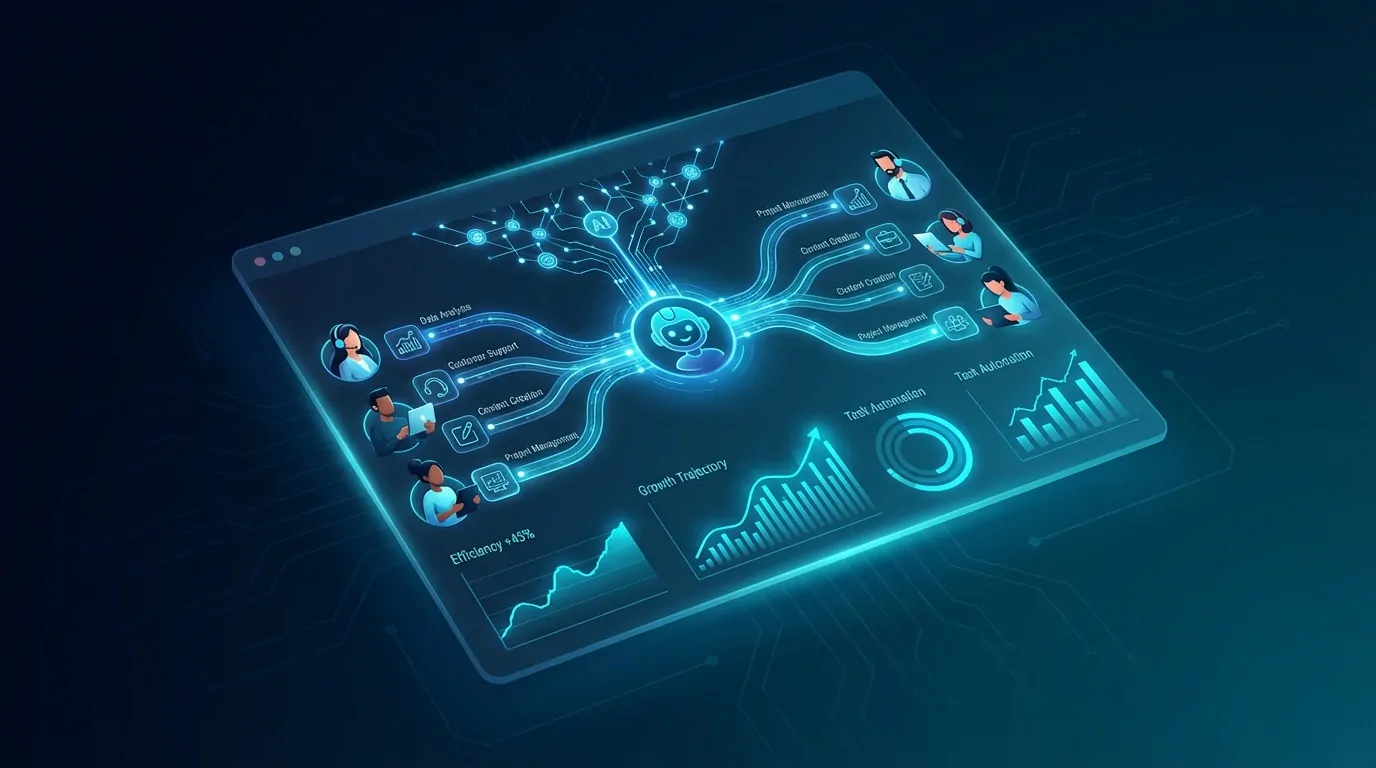
The workflow automation tools list grows monthly, but selection clarity comes from matching tool capabilities to your business constraints: team size, technical resources, budget, and industry specialization needs. Learn more about workflow to understand process optimization.
Matching Tools to Team Size and Budget
Teams under 20 employees with simple app connections benefit from Zapier or Make, accepting their limitations around intelligent decision-making.
Organizations with dedicated IT staff exploring AI workflow automation tools free options can evaluate n8n for self-hosted control.
Mid-market businesses in real estate, recruitment, fundraising, or hospitality need vertical-specific intelligence that generic platforms can’t deliver without extensive customization.
Enterprise organizations with complex compliance requirements and multi-system integrations can justify Workato’s investment.
Many SMBs sit in the mid-market category: large enough to need sophisticated automation but lacking resources to build and maintain custom solutions internally.
Building Human-AI Teams That Win in Service Industries
Competitive advantage in service industries comes from combining human judgment with AI execution speed.
Real estate agents who focus on relationship building while agents handle qualification outperform competitors doing everything manually. Recruiters who spend time on candidate conversations rather than resume screening place better matches faster. Fundraising directors who concentrate on high-value investor relationships while systematic outreach runs automatically improve retention rates. Hospitality managers who build guest relationships instead of managing reservation logistics create memorable experiences that drive repeat business.
The future belongs to businesses that augment human capabilities with intelligent automation, not those trying to replace people entirely or refusing to adopt AI.
Your Next Step: See What Custom AI Agents Can Do
Generic workflow platforms force you to become an automation architect. AI Automation Services delivers industry-tailored agents that understand your vertical from deployment day one.
Schedule a discovery call to:
- Map your highest-impact automation opportunities
- Review ROI projections specific to real estate, recruitment, fundraising, or hospitality operations
- See custom agent demos built for businesses like yours
Your competitors are already multiplying their capacity with automation. The question isn’t whether to adopt AI workflow automation tools–it’s which approach delivers measurable results fastest with the least implementation burden for your team.
Frequently Asked Questions
What are AI workflow automation tools and why are they important for mid-market businesses?
AI workflow automation tools are intelligent systems that automate repetitive business processes, freeing teams from manual tasks. For mid-market businesses, these tools are essential because they address significant revenue loss, often 20-30%, caused by inefficiencies. By automating tasks, businesses can reclaim lost potential and gain a competitive advantage.
How do AI workflow automation tools specifically help industries like real estate, recruitment, fundraising, and hospitality?
In real estate, AI qualifies leads and matches properties, saving agents significant time. Recruitment firms use AI for intelligent candidate screening and scheduling, cutting time-to-hire. Fundraising teams automate donor outreach and tracking, improving retention. Hospitality businesses optimize reservations and upsell opportunities, increasing revenue per guest.
What measurable results can businesses expect from implementing AI workflow automation?
Our Vynta AI clients see tangible outcomes within 60 days. Real estate teams achieve 30% higher lead conversion rates. Recruitment agencies reduce time-to-hire by 50%. Fundraising organizations boost donor retention by 25%, and hospitality businesses increase revenue per guest by 18%.
How do AI automation services differ from generic automation platforms?
Generic platforms like Zapier or Make are connection tools that move data, requiring extensive configuration and technical skill. AI automation services, particularly Vynta AI, deliver industry-specific agents that understand the nuances of your business, like property matching or candidate scoring. This means less configuration burden and more specialized intelligence from the start.
Can AI workflow automation tools truly scale operations without adding staff?
Absolutely. AI workflow automation tools allow businesses to scale operations by multiplying human capacity, not replacing human judgment. One custom AI agent can handle hundreds or thousands of inquiries or applications, allowing your team to focus on high-value conversations and strategic tasks. This approach enables growth without the traditional need for increased headcount.
What are some common AI workflow automation platforms, and how do they compare for mid-market needs?
Zapier is simple for basic connections, Make offers visual workflow design, and n8n provides open-source control for technical teams. Enterprise options like Workato are powerful but complex and costly for mid-market. The key difference is that these are primarily connection tools, lacking the contextual decision-making of custom AI agents.
How does Vynta AI provide a tailored solution for businesses?
Vynta AI develops custom AI agents specifically designed for each vertical, removing the configuration burden. Our agents understand specific industry criteria, like real estate property matching or recruitment candidate qualifications. This approach delivers intelligent automation that integrates seamlessly and provides measurable outcomes in weeks, not months.