

Agentic Systems for Real Estate reviews
Agentic Systems for Real Estate Reviews: ROI Analysis & Implementation Guide
What Agentic Systems Mean for Real Estate Operations
Agentic systems represent a fundamental change in how real estate agencies handle property inquiries, qualification, and client engagement. Unlike traditional automation that follows rigid scripts, these systems make autonomous decisions based on context and learn from each interaction. When a property inquiry arrives at 9 PM, they don’t just send a canned response–they analyze the prospect’s budget, preferences, and urgency, match suitable properties, and schedule viewings without human intervention.
Defining Agentic Systems in Business Terms
An agentic system acts as an intelligent assistant that operates independently within defined parameters. For real estate, this means software that captures leads across WhatsApp, SMS, email, and website chat, qualifies prospects by asking relevant questions, matches properties using advanced algorithms, and coordinates calendars for viewings. The system responds in under 60 seconds, engages round-the-clock, and personalizes each interaction based on client data.
This autonomy separates agentic systems from chatbots that require constant human oversight.
How Agentic Systems Differ from Traditional AI Tools
| Feature | Traditional AI Tools | Agentic Systems |
|---|---|---|
| Decision Making | Rule-based responses | Context-aware autonomous actions |
| Lead Qualification | Basic form collection | Intelligent multi-turn conversations |
| Property Matching | Manual agent review | Automated algorithm-driven suggestions |
| Follow-up | Scheduled email sequences | Personalized timing based on engagement |
| Integration | Limited CRM sync | Deep workflow automation across systems |
Why Mid-Market Real Estate Firms Need Them Now
Mid-market agencies face a major challenge: competing with larger firms that have dedicated teams for lead response and qualification. When inquiries arrive outside business hours or during peak periods, manual processes create delays that cost conversions.
The numbers are clear. Agencies report automating 80% of repetitive tasks and saving more than 20 hours per week per agent. Qualified pipeline grows by up to 3x, with conversion rates reaching 85% when prospects receive fast, relevant responses. For agencies managing 50 to 500 properties, this technology delivers enterprise capabilities without enterprise costs or complexity.
Real-World Use Cases: Agentic Systems Driving Real Estate Revenue

Practical applications extend across every stage of the real estate sales cycle, from initial contact through closing and retention.
Lead Qualification and Property Matching Automation
When a prospect messages about a three-bedroom home in a specific neighborhood, the system immediately asks qualifying questions about budget, timeline, and must-have features. Based on responses, it searches inventory, sends personalized recommendations with virtual tours, and books viewing appointments. Automated reminders reduce no-shows, and post-viewing feedback refines future suggestions.
This workflow converts inquiries into viewings and sales through fast engagement and strong qualification, often increasing deal volume by more than 30%. The concept of an intelligent agent is foundational to how these systems operate autonomously and effectively.
CRM Integration for Scalable Operations
Agentic systems sync with existing CRM platforms to maintain complete client histories. Every conversation, property viewing, and preference gets logged automatically. Agents access enriched profiles showing which properties a client viewed, response patterns, and the best contact times.
This integration allows agencies to handle more properties and convert more leads without expanding teams or increasing administrative costs. Client retention can rise sharply because follow-up becomes consistent rather than sporadic.
Revenue Impact: Agencies generate more revenue per agent through faster response times, higher conversion rates, and improved client satisfaction.
Compliance and Risk Management in Lending and Multifamily
For agencies handling rental properties or working with mortgage brokers, agentic systems monitor compliance requirements and flag potential risks. The software tracks tenant application documentation, verifies income statements, and maintains consistent fair-housing workflows.
In multifamily portfolio management, these systems analyze occupancy patterns, predict maintenance needs, and support pricing decisions using market data. This reduces processing time and improves occupancy rates while maintaining audit trails that satisfy regulatory requirements. Recent studies on compliance and risk emphasize the importance of integrating AI-driven analytics in these settings (source).
Implementation Guide: Deploy Agentic Systems Without Disruption
Successful deployment requires strategic planning rather than rushed adoption. Mid-market agencies benefit most when they approach implementation as a phased transformation.
Steps for Secure Setup and CRM/ATS Integration
Begin with discovery to map existing workflows, identify bottlenecks, and define success metrics. Connect the agentic system to current CRM platforms, ensuring data flows bidirectionally without duplicates. Configure communication channels (WhatsApp, SMS, email, website chat) with brand-appropriate messaging and response templates. Test qualification logic with sample inquiries before going live.
This phased approach prevents disruption to ongoing operations while building team confidence in the new system. Learn more about integrating advanced automation in our AI Automation Services.
Governance and Human Oversight Best Practices
Agentic systems assist agents by automating tasks, not replacing human judgment. Establish clear parameters for when the system escalates to human review–high-value prospects, complex property requirements, or sensitive negotiations. Monitor conversation logs weekly to identify improvement opportunities and refine matching algorithms.
Create feedback loops where agents report system errors or missed opportunities, enabling continuous optimization. This human-and-AI collaboration ensures the technology supports agent expertise rather than operating in isolation. Advanced research on agentic system governance and oversight highlights best practices to balance autonomy and control (full paper).
Overcoming Common Adoption Barriers in Real Estate
Advantages of Agentic Systems
- Response times under 60 seconds increase inquiry-to-viewing conversion
- Round-the-clock availability captures leads outside business hours
- Automated qualification saves more than 20 hours per week per agent
- Personalized property matching improves client satisfaction
- Deep CRM integration maintains complete client histories
Implementation Considerations
- Initial setup requires workflow mapping and system configuration
- Team training clarifies when to override automated actions
- Ongoing monitoring refines qualification logic
- Integration complexity varies based on existing tech stack
- Change management helps teams shift from manual to automated processes
Why Vynta AI Delivers Superior Results for Real Estate Teams
Vynta AI specializes in mid-market real estate agencies that need enterprise-grade automation without prohibitive costs or complexity. Our agentic systems are built specifically for property sales workflows, not adapted from generic business tools.
Case Studies: ROI from Lead Conversion to Market Analysis
Agencies using Vynta AI report qualified pipeline increases of up to 3x and conversion rates as high as 85%. One mid-market firm handling 200 properties saw agent productivity rise by 30%, closing additional deals that generated significant revenue per agent annually.
Client retention improved because the system ensures inquiries receive timely responses and follow-up occurs at appropriate times. These outcomes come from purpose-built workflows that reflect real estate buyer behavior rather than generic chatbot scripts.
Mid-Market Focus vs. Enterprise Overkill
Enterprise platforms often require dedicated IT teams and six-figure budgets. Generic automation lacks real estate-specific features like property matching and viewing coordination. Vynta AI bridges this gap with industry-focused capabilities at mid-market pricing.
Our systems integrate with existing CRMs, deploy without disrupting operations, and scale as your portfolio grows. You get intelligent qualification and personalized follow-up without hiring additional staff.
Next Steps to Scale Your Operations Today
Ready to Transform Your Agency? Early adopters gain competitive advantages through faster response times and higher conversion rates. Schedule a discovery call to see how Vynta AI can automate repetitive tasks, grow your qualified pipeline, and improve agent productivity.
Strategic Partnership Over Technology Vendor
Vynta AI positions itself as a strategic partner invested in your agency’s growth, not a software vendor selling licenses. We bring deep real estate expertise–property cycles, buyer psychology, and market dynamics. We configure systems based on your inventory mix, geographic markets, and client demographics.
After deployment, we monitor performance metrics and refine workflows to improve conversion rates and agent productivity. This consultative approach ensures the technology adapts to your business model rather than forcing you to change proven processes.
Final Verdict: Choosing the Right Agentic System for Your Agency
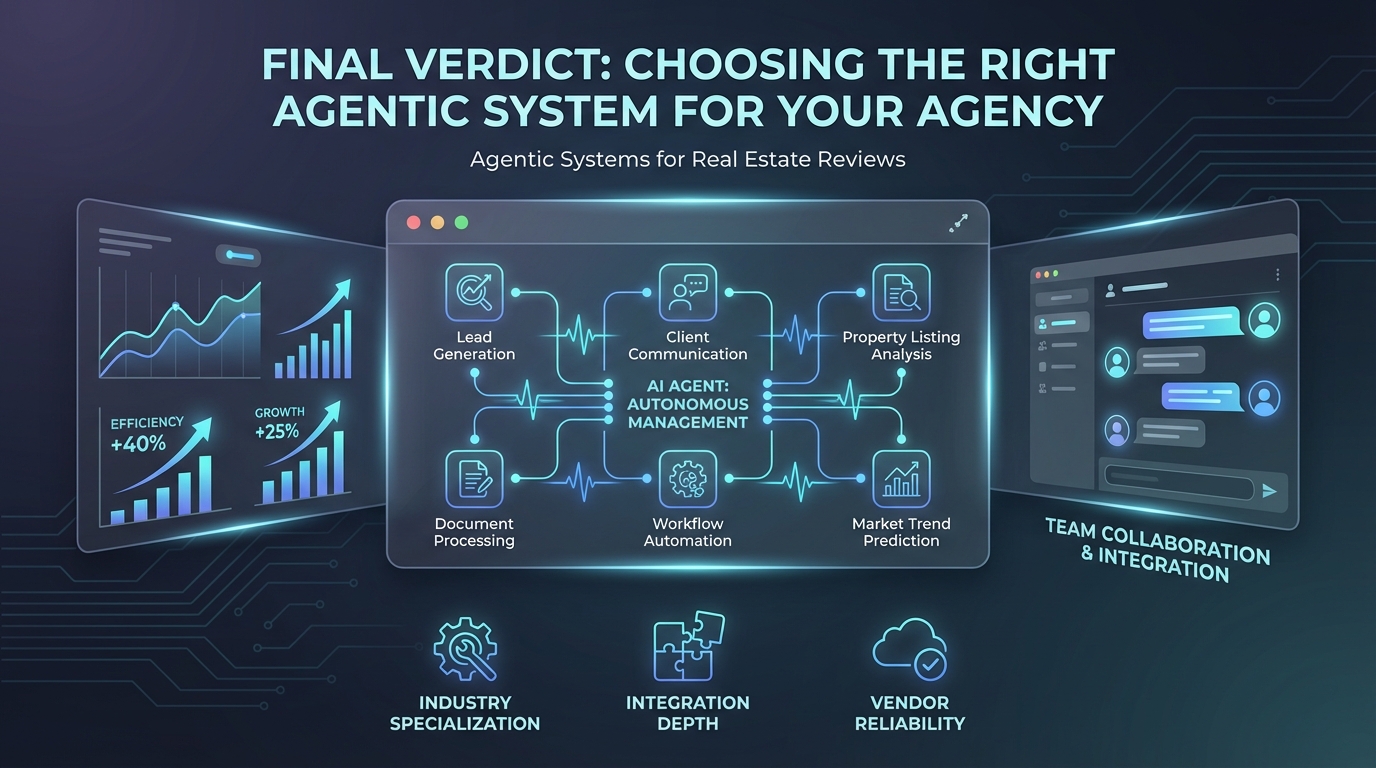
Successful adoption depends on three factors: industry specialization, integration depth, and vendor support. Generic automation tools lack property-matching logic and viewing coordination features required by real estate workflows. Enterprise platforms deliver broad capabilities but demand resources that mid-market agencies can’t justify.
The best-fit solution balances advanced functionality with a practical implementation plan. For organizations considering cross-industry deployments, explore how our Agentic Systems for Recruitment provide tailored automation in hiring workflows.
What to Prioritize in Your Selection Process
Assess vendors based on measurable outcomes rather than feature lists. Can the system demonstrate response times under 60 seconds? Does it increase qualified pipeline by at least 2x? Will it integrate with your existing CRM without data migration headaches?
Request case studies from agencies managing similar property volumes and client segments. Test the qualification logic with real inquiries from your pipeline to evaluate conversation quality. Verify that human oversight mechanisms allow agents to intervene when needed, maintaining the personal relationships that differentiate your agency.
Realistic Timeline Expectations
Proper deployment includes discovery, strategy, and implementation phases. Discovery and strategy identify workflow bottlenecks and define success metrics. Configuration maps your property types, buyer personas, and communication preferences into the platform. Integration testing ensures data flows correctly between the agentic system and your CRM. Agent training builds confidence in trusting automation and taking manual control when required.
Plan a phased rollout that starts with a subset of inquiries before scaling to full operations.
Implementation Reality Check: Agencies that invest adequate time in setup and training see strong conversion gains within three months. Agencies that rush deployment struggle with misaligned qualification logic and agent resistance, delaying ROI.
Future-Proofing Your Real Estate Operations
The trajectory of agentic systems points toward increasingly sophisticated market analysis and predictive capabilities that extend beyond lead management.
Emerging Capabilities on the Horizon
Next-generation systems will analyze neighborhood trends, predict property appreciation, and recommend listing strategies based on comparable sales data. Imagine an agentic system that monitors mortgage rate changes and proactively contacts clients with pre-approvals nearing expiration, or one that identifies buyers whose saved searches match newly listed properties before public marketing begins.
These predictive features will shift agentic systems from reactive inquiry handling to proactive revenue generation by identifying opportunities agents might miss.
How Early Adoption Creates Lasting Advantages
Agencies deploying agentic systems now build competitive advantages that compound over time. The system learns from each interaction, refining property matching and qualification logic specific to your market. Clients experience consistently fast, personalized service that builds loyalty and referrals. Agents freed from repetitive tasks focus on high-value negotiations and relationship building.
Competitors relying on manual processes can’t match response speed or conversion rates and feel pressure to compete on commission reductions rather than service quality. This advantage becomes harder to replicate as your system accumulates interaction data and optimization insights.
Your Next Steps
Begin by auditing current lead response times and conversion rates to establish baseline metrics. Document how agents spend their hours, identifying tasks suitable for automation. Schedule demos with vendors specializing in real estate and bring sample inquiries to test qualification logic.
Calculate potential ROI using conservative estimates: if automating 80% of tasks saves 20 hours per week, what revenue could agents generate with that recovered time?
I’ve seen agencies delay adoption and risk falling behind competitors who treat automation as a strategic priority rather than an optional upgrade. The question isn’t whether to deploy agentic systems, but how quickly you can implement them to capture market share before competitors do.
Frequently Asked Questions
What exactly are agentic systems in real estate?
Agentic systems for real estate are intelligent assistants that operate independently, making autonomous decisions based on context and learning from each interaction. They capture leads across multiple channels like WhatsApp, SMS, email, and website chat, then qualify prospects and match properties using advanced algorithms. These systems respond in under 60 seconds, engage 24/7, and personalize each interaction to streamline operations.
How do agentic systems help real estate agents?
Agentic systems significantly boost agent productivity by automating about 80% of repetitive tasks, saving agents over 20 hours each week. This allows agents to focus on building client relationships and closing deals, rather than administrative work. As a result, agencies often see over 30% more deals closed.
What measurable results can real estate agencies expect from using agentic systems?
Real estate agencies adopting agentic systems can see their qualified pipeline grow by up to 3x, with conversion rates reaching 85% due to fast, relevant responses. These systems also improve client retention by 85% and client satisfaction by 27%. Ultimately, agencies can generate over $100k in additional revenue per agent per year.
How do agentic systems handle lead qualification and property matching?
When a lead comes in, agentic systems immediately ask qualifying questions about budget, timeline, and property features. Using advanced algorithms, the system then matches suitable properties, sends personalized recommendations with virtual tours, and books viewing appointments. Automated reminders reduce no-shows, and post-viewing feedback helps refine future suggestions, converting inquiries into viewings and sales.
Is it difficult to implement agentic systems into an existing real estate agency?
Implementing agentic systems is a phased transformation, not an instant switch, ensuring minimal disruption. It begins with discovery to map workflows and define success metrics, followed by connecting the system to your existing CRM for seamless data flow. You then configure communication channels and test the qualification logic thoroughly before going live. This strategic approach builds team confidence and ensures smooth adoption.
How do agentic systems support compliance in real estate operations?
Agentic systems play a key role in compliance by monitoring requirements and flagging potential risks within real estate operations. They track tenant application documentation, verify income statements, and help maintain consistent fair-housing workflows. For multifamily portfolio management, these systems analyze occupancy patterns and support pricing decisions, ensuring regulatory adherence and reducing processing time.
What makes agentic systems different from standard chatbots?
Agentic systems differ from standard chatbots by making autonomous, context-aware decisions and continuously learning from interactions. While chatbots follow rigid, rule-based scripts and often need human oversight, agentic systems engage in intelligent, multi-turn conversations. They provide automated, algorithm-driven property suggestions and personalize follow-ups, integrating deeply across your workflows.