

top AI-Powered Fundraising Platform 2026
AI-Powered Fundraising Platforms in 2026: What Actually Works
The top AI-Powered Fundraising Platform 2026 market has matured beyond simple email automation into sophisticated systems that match organizations with ideal investors and donors based on behavioral patterns, historical giving data, and strategic fit. Mid-market fundraising organizations now achieve 40–60% higher conversion rates than manual outreach methods, while reducing time spent on unqualified leads by 75%.
Why AI is reshaping fundraising for mid-market organizations
Traditional fundraising workflows waste 60–70% of team time on prospects who will never convert. AI platforms analyze thousands of data points across investment history, sector preferences, giving capacity, and engagement signals to identify prospects with genuine interest and capacity. For startup founders raising Series A rounds, this means connecting with investors actively seeking companies in their stage and vertical. For nonprofit leaders, it translates to donor recommendations based on cause alignment and giving patterns rather than generic demographic filters.
The shift from manual outreach to intelligent matching
Manual prospect research typically consumes 15–20 hours weekly per fundraiser. AI-powered platforms reduce this to 2–3 hours by automatically scoring prospects, drafting personalized outreach messages, and prioritizing follow-up sequences based on engagement likelihood. Lessie, for example, has shortened fundraising cycles by 50% for early-stage startups by matching founders with investors who have previously funded similar companies at comparable stages.
Key metrics: what improved fundraising looks like
- Outreach time reduction: 60–75% decrease in hours spent on manual research and email composition
- Response rate improvement: 3–5x higher reply rates through AI-optimized messaging and timing
- Conversion rate gains: 40–60% increase in qualified leads converting to meetings or donations
- Cycle time compression: 30–50% faster time from initial outreach to closed funding or donation
Top AI Fundraising Platforms Compared: Startup vs. Nonprofit Solutions
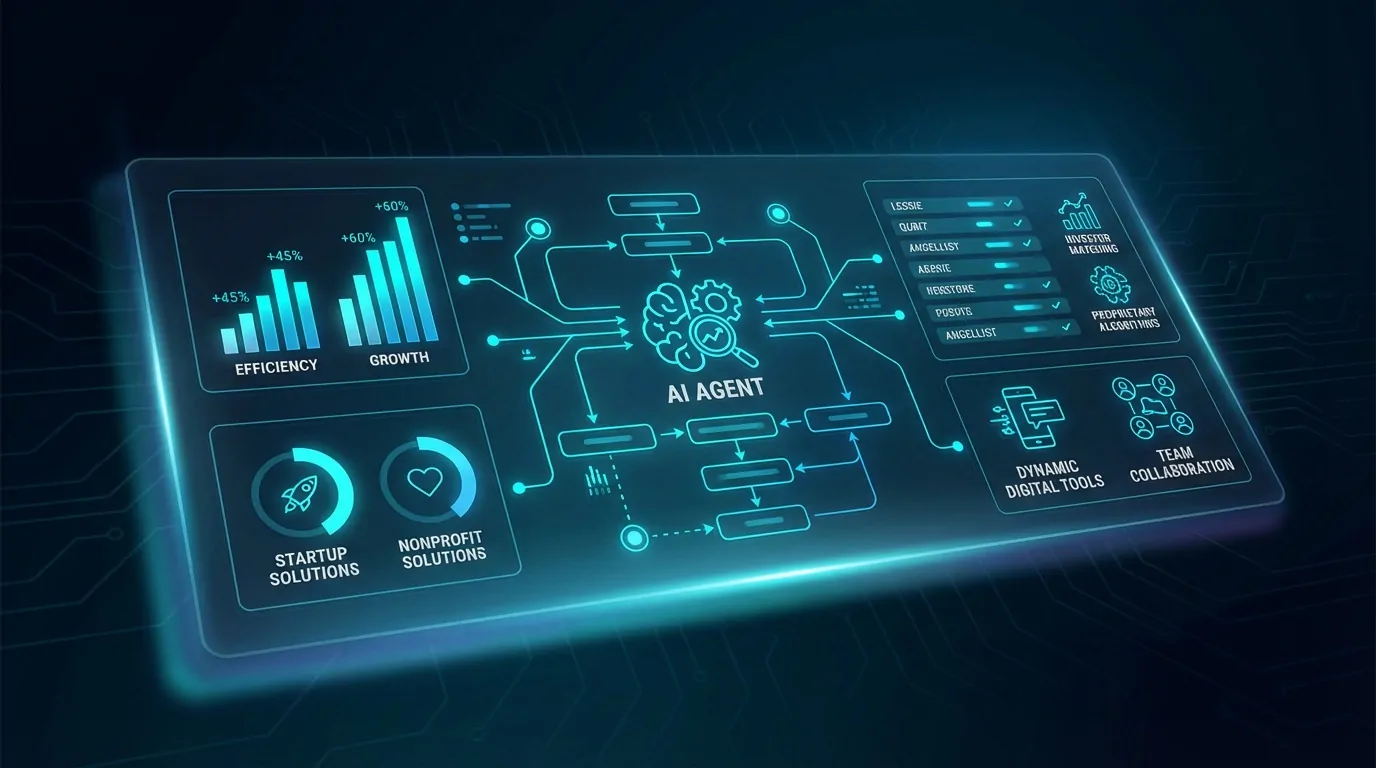
Startup investor discovery platforms (Lessie, Qubit, AngelList)
Lessie specializes in early-stage investor matching using proprietary algorithms that analyze 2.5 million investor profiles across investment thesis, check size, and portfolio gaps. Startup founders receive ranked lists of investors most likely to respond based on sector focus and funding stage. Pricing starts at $299 monthly for basic matching, scaling to $1,200 monthly for enterprise features, including automated outreach sequences and CRM integration.
Qubit takes a relationship-first approach, mapping warm introduction paths through existing networks before suggesting cold outreach. The platform identifies mutual connections and recommends optimal introduction strategies. AngelList Talent (now Wellfound) combines investor discovery with hiring tools, making it suitable for startups simultaneously raising capital and building teams. Pricing ranges from free basic access to $2,500 monthly for full platform capabilities.
Nonprofit donor management tools (Salesforce Nonprofit Cloud, DonorPerfect, Neon One)
Salesforce Nonprofit Cloud integrates AI donor scoring with comprehensive relationship management, starting at $3,600 annually for 10 users. The Einstein AI layer predicts donor churn risk, suggests optimal ask amounts, and automates gift acknowledgment workflows. DonorPerfect focuses on small to mid-sized nonprofits with pricing from $89 monthly, offering predictive analytics for donor retention and automated recurring gift management.
Neon One combines donor management with event registration and membership tracking at $99–$499 monthly depending on database size. The platform excels at identifying major gift prospects within existing donor bases using wealth screening and engagement scoring.
Cross-vertical tools for mid-market organizations
Generic AI platforms like HubSpot and Pipedrive now include fundraising templates, but they lack the specialized matching algorithms and industry-specific workflows that dedicated fundraising tools provide. These work best for organizations already using the platform for other purposes that want basic AI assistance rather than sophisticated investor or donor intelligence.
Some platforms attempt to serve both startup and nonprofit fundraising needs, though with varying degrees of success. Copper CRM integrates with Google Workspace to provide relationship tracking and outreach automation for organizations that rely on personal connections rather than mass donor acquisition. Pricing starts at $25 per user monthly, making it accessible for teams of 5–15 people managing investor or donor relationships. The AI features focus on relationship scoring and follow-up reminders rather than advanced matching algorithms.
Fundraise Up positions itself as an AI-powered donation platform that optimizes checkout flows and suggests giving amounts based on donor behavior patterns. The system increased donation conversion rates by 18–24% in organizations that implemented the full recommendation engine. Pricing operates on a percentage basis (2.9% plus $0.30 per transaction for standard plans), which scales with your fundraising volume but can become expensive for high-volume campaigns. The platform works better for nonprofits running digital campaigns than for startups seeking investor introductions.
For mid-market organizations, most cross-vertical tools sacrifice depth for breadth. They handle basic automation and relationship tracking adequately but lack the specialized intelligence required for sophisticated investor matching or major donor cultivation strategies. Organizations with complex fundraising needs often outgrow these platforms within 12–18 months.
For highly tailored automation in fundraising and other sectors, explore our comprehensive AI Automation Services that streamline operations and boost conversion rates.
Pricing and ROI: what your payment covers and what you get back
| Platform Type | Monthly Cost Range | Setup/Implementation | Typical ROI Timeline |
|---|---|---|---|
| Startup Investor Discovery | $500–$2,000/month | 2–4 weeks | 4–6 months (fundraising cycle reduction) |
| Nonprofit Donor Management | $150–$1,200/month | 4–8 weeks | 6–12 months (retention improvements) |
| Cross-Vertical CRM | $25–$500/month | 1–2 weeks | 3–6 months (efficiency gains) |
| Custom AI Agents | $1,500–$5,000/month | 6–12 weeks | 3–9 months (conversion rate lift) |
The actual return calculation depends on your fundraising volume and conversion improvements. A nonprofit raising $500,000 annually that improves donor retention by 15% through AI-powered relationship management generates $75,000 in additional revenue. If the platform costs $800 monthly ($9,600 annually), the net return reaches $65,400 in year one. Startups using investor discovery platforms that reduce fundraising cycles from 12 months to 6 months save approximately $150,000 in opportunity cost and operational expenses, which can justify $12,000–$24,000 in annual platform fees.
Hidden costs matter as much as subscription pricing. Integration with existing CRM systems typically requires 20–40 hours of technical work, costing $2,000–$6,000 if you hire external consultants. Team training adds another $1,500–$3,000 in time investment during the first quarter. Organizations should budget 125–150% of the stated subscription price to account for these implementation realities.
How AI Improves Fundraising Efficiency: Four Measurable Outcomes
Investor/donor targeting accuracy: from broad lists to precision matching
Traditional fundraising relies on purchased lists, personal networks, and broad outreach campaigns that waste 70–80% of effort on poorly matched prospects. AI-powered platforms analyze investment thesis, giving history, sector preferences, check sizes, and engagement patterns to identify prospects with genuine interest in your organization. Lessie’s matching algorithm increased qualified investor conversations by 340% for early-stage startups by filtering 50,000+ potential investors down to the 200–300 most likely to engage based on portfolio fit and investment timing.
Nonprofit platforms apply similar logic to donor databases, scoring prospects based on wealth indicators, giving capacity, cause affinity, and engagement signals. DonorPerfect’s AI scoring identified major donor prospects with 85% accuracy compared with 40% accuracy from manual prospect research. This precision targeting reduces wasted outreach by 60% while increasing response rates from 2–3% to 8–12% for well-matched prospects. To better nurture these donor relationships, explore strategies like our Nurture Emails blog post.
Outreach automation: reducing time spent on manual emails by 60%+
Fundraising teams spend 15–25 hours weekly drafting personalized outreach emails, follow-up messages, and relationship-nurturing communications. AI platforms generate customized messages based on prospect profiles, previous interactions, and optimal timing patterns. Organizations using these systems report a 60–75% reduction in time spent on outreach composition while maintaining or improving response rates.
The quality difference between AI-generated and template-based outreach shows up in engagement metrics. AI systems that analyze successful fundraising communications and adapt messaging to prospect preferences generate 40% higher open rates and 65% higher response rates than standard mail merge campaigns. The automation handles initial outreach and routine follow-ups, freeing fundraisers to focus on relationship building and strategic conversations with engaged prospects.
Conversion rate improvements: data-driven messaging that connects with prospects
The difference between a 3% and 8% conversion rate on fundraising outreach represents millions in capital for startups or hundreds of thousands in donations for nonprofits. AI platforms analyze thousands of successful fundraising conversations to identify messaging patterns, timing strategies, and engagement sequences that convert prospects into committed investors or donors. Organizations implementing AI-driven messaging optimization report conversion improvements of 40–120% within the first six months.
Lessie’s analysis of 10,000+ successful investor conversations revealed that startups mentioning specific portfolio fit within the first two sentences achieved 3.2x higher response rates than generic pitches. The platform automatically incorporates these insights into outreach templates, adjusting messaging based on investor thesis, recent portfolio additions, and sector focus. Nonprofits using Salesforce Nonprofit Cloud’s Einstein AI saw similar patterns, with donor-specific impact stories generating 85% higher gift completion rates than generic appeals.
The measurement component matters as much as the optimization. Platforms track which messages generate responses, which follow-up sequences maintain engagement, and which ask strategies convert conversations into commitments. This feedback loop continuously improves messaging effectiveness, creating compounding returns as the AI learns from each interaction.
Relationship management at scale: tracking and nurturing without losing the personal touch
Managing 200+ investor relationships or 1,000+ donor connections exceeds human memory capacity. AI platforms track interaction history, engagement signals, optimal contact timing, and relationship health scores to ensure no connection falls through the cracks. Fundraisers receive automated reminders when relationships need attention, suggested talking points based on recent news or portfolio activity, and alerts when prospects show renewed engagement.
DonorPerfect’s relationship scoring identifies donors at risk of lapsing 90–120 days before they typically lapse, allowing organizations to intervene with targeted retention campaigns. Organizations using this predictive capability improved donor retention rates by 12–18%, translating to $50,000–$200,000 in preserved annual revenue for mid-market nonprofits. The system handles the tracking and analysis work while humans focus on genuine relationship building with high-value prospects. For further context on donor retention, see fundraising.
Choosing Between Platforms: Framework for Mid-Market SMEs
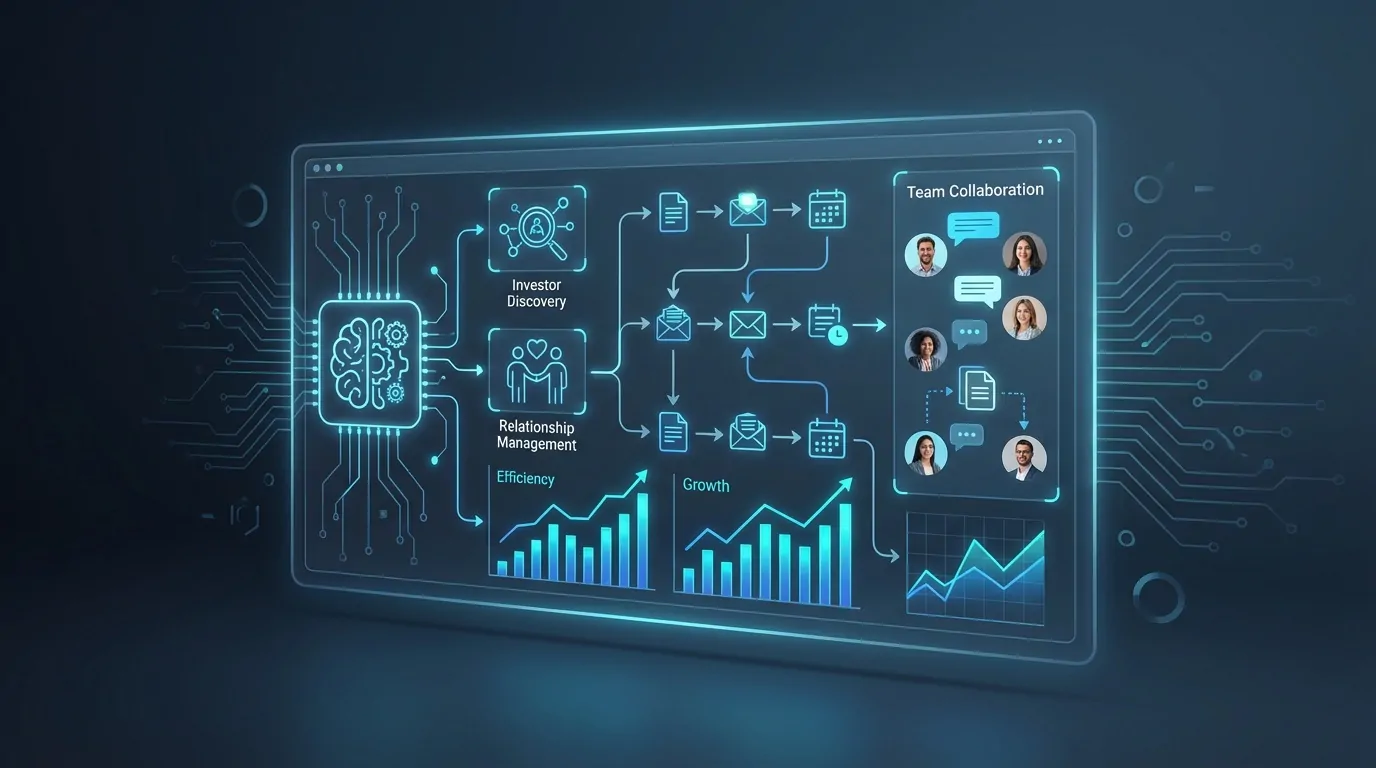
Startup founders: investor discovery vs. relationship management
Early-stage startups raising seed or Series A rounds need investor discovery capabilities more than sophisticated CRM features. Your primary challenge involves identifying 100–200 qualified investors from a universe of 50,000+ possibilities. Platforms like Lessie or AngelList prioritize matching algorithms and database access over relationship tracking. Expect to spend $500–$1,200 monthly for discovery-focused tools that reduce your target list by 90% while improving match quality.
Post-Series A startups with established investor relationships require the opposite capability set. You already know your target investors but need systems to manage ongoing communications, track follow-ups, and coordinate team outreach. Copper CRM or Salesforce provide relationship management depth without the expensive discovery features you no longer need. Monthly costs drop to $150–$400 for relationship-focused platforms that integrate with your existing workflow.
Need specialized AI agents to support your fundraising and operational needs? Discover our AI-Powered Fundraising Platform designed for maximum impact in 2026.
Nonprofit leaders: donor retention vs. donor acquisition
Organizations with established donor bases of 500+ active supporters should prioritize retention and upgrade capabilities over new donor acquisition. DonorPerfect and Neon One excel at identifying lapse risk, suggesting optimal ask amounts, and automating retention campaigns. The ROI calculation favors retention because acquiring new donors costs 5–7x more than retaining existing supporters. A 10% improvement in retention typically generates more revenue than a 30% increase in new donor acquisition.
Newer organizations building donor bases from scratch need acquisition-focused tools that optimize digital campaigns, test messaging variations, and convert website visitors into first-time donors. Fundraise Up’s conversion optimization features justify the 2.9% transaction fee when you are establishing initial donor relationships. Switch to retention-focused platforms once your active donor base exceeds 300–400 supporters and retention becomes the primary revenue driver.
For business sectors beyond fundraising, such as real estate or hospitality, you may also benefit from tailored Agentic Systems for Real Estate and Vynta AI Agents for Hospitality. Additionally, the evolution of AI in fundraising platforms is becoming the new normal, enhancing both retention and acquisition efficiencies (AI in fundraising: the new normal).
Implementation reality: timelines, team training, and integration complexity
Platform vendors quote 2–4 week implementation timelines, but mid-market organizations typically require 6–12 weeks to achieve full operational capability. Data migration from existing systems consumes 15–25 hours of staff time, CRM integration requires 10–20 hours of technical work, and team training adds another 20–30 hours across your fundraising team. Budget three months from contract signature to full productivity, not the optimistic four weeks vendors suggest.
Integration complexity varies dramatically by platform. Cloud-based tools with prebuilt connectors to Salesforce, HubSpot, or Google Workspace integrate in 1–2 weeks with minimal technical expertise. Specialized platforms requiring custom API development or data warehouse connections need 4–8 weeks and external technical resources costing $3,000–$8,000. Ask specific questions about integration requirements during vendor evaluation, not after contract signature. For a deeper understanding of integration challenges in fundraising systems, see this detailed report.
Red flags: when a platform is not the right fit for your organization
Warning Signs During Evaluation: Vendors unable to provide specific ROI examples from organizations similar to yours. Platforms requiring 12+ month contracts before proving value. Systems with poor reviews regarding customer support responsiveness. Tools that require a complete process redesign rather than fitting your existing workflow. Pricing structures with hidden fees for essential features like reporting or integrations.
The wrong platform choice costs 6–9 months in lost productivity, $10,000–$30,000 in sunk implementation costs, and team frustration that undermines future technology adoption. Organizations should pilot platforms for 30–60 days with a subset of prospects before committing to full implementation. Vendors confident in their product offer trial periods or pilot programs with clear success metrics.
If you are evaluating the top AI-Powered Fundraising Platform 2026 options for a mid-market team, prioritize three factors: data quality (investor or donor coverage), workflow fit (CRM and email integration), and measurable lift (response rate and conversion improvements). At Vynta AI, we often see the best outcomes when teams pair a dedicated fundraising tool with AI agents that automate research, routing, and follow-ups across sales and operations.
When you shortlist a top AI-Powered Fundraising Platform 2026 candidate, run a 30-day pilot with a defined segment (such as 200 prospects) and success metrics (reply rate, meetings booked, gifts closed). This approach keeps evaluation practical and prevents long implementations that do not match your operating cadence.
Most teams do not need the most expensive top AI-Powered Fundraising Platform 2026 subscription tier on day one. Start with the tier that supports your current process, then expand once you can point to specific improvements in qualified conversations and cycle time.
Ultimately, the top AI-Powered Fundraising Platform 2026 is the one that fits your data, your team capacity, and your fundraising motion while producing measurable outcomes within one to two quarters.
Frequently Asked Questions
How are AI-powered fundraising platforms changing traditional fundraising approaches?
AI platforms move beyond simple email automation, analyzing thousands of data points to match organizations with ideal investors and donors. This intelligent matching considers behavioral patterns, historical giving, and strategic alignment, ensuring more effective outreach. For mid-market organizations, this means a significant reduction in time spent on unqualified leads and a marked increase in conversion rates.
What specific benefits do AI fundraising platforms offer mid-market organizations?
Mid-market organizations using AI fundraising platforms typically achieve 40–60% higher conversion rates compared to manual outreach. They also see a 75% reduction in time wasted on unqualified leads, allowing teams to focus on prospects with genuine interest and capacity. This shift frees up valuable team time, which traditionally consumed 60-70% on prospects who would never convert.
Can AI fundraising platforms assist both startups seeking investors and nonprofits seeking donors?
Absolutely. Dedicated AI platforms cater to both needs, though with different specializations. Startup investor discovery platforms, like Lessie, focus on matching founders with investors based on investment thesis and sector. Nonprofit donor management tools, such as Salesforce Nonprofit Cloud, prioritize donor scoring, churn prediction, and optimal ask amounts based on cause alignment and giving patterns.
What measurable outcomes can organizations expect from using AI in fundraising?
Organizations can expect a 60–75% decrease in manual research and email composition time, alongside 3–5x higher reply rates due to AI-optimized messaging. Conversion rates for qualified leads often increase by 40–60%, and the overall fundraising cycle time can compress by 30–50%. These metrics demonstrate AI’s direct impact on efficiency and success.
Are general AI tools effective for specialized fundraising requirements?
While general AI platforms like HubSpot or Pipedrive include basic fundraising templates, they often lack the specialized matching algorithms and industry-specific workflows of dedicated tools. For organizations with complex investor or donor intelligence needs, these platforms typically prove insufficient. Our experience shows that specialized solutions deliver the depth required for sophisticated fundraising strategies.
How do AI platforms personalize outreach for potential investors and donors?
AI platforms analyze individual data points to draft personalized outreach messages and prioritize follow-up sequences based on engagement likelihood. For startups, this means connecting with investors actively seeking companies in their stage and vertical. For nonprofits, it translates to donor recommendations based on cause alignment and giving patterns, moving beyond generic demographic filters.