

Agentic Systems for Recruitment reviews
Recruitment agencies face mounting pressure to fill roles faster while maintaining placement quality. Agentic Systems for Recruitment reviews show how autonomous AI agents transform candidate sourcing, screening, and engagement workflows. These systems make intelligent decisions throughout the hiring pipeline—from initial outreach to interview scheduling—without constant supervision. Mid-market recruitment firms report over 60% reductions in hiring cycles and significantly lower bad-hire costs when they deploy specialized agents. This review examines proven platforms, real-world results, and the factors that separate industry-specific solutions from generic alternatives.
The best solutions integrate with existing ATS platforms and deliver measurable ROI through reduced time-to-hire and improved candidate quality. Vynta AI builds custom agents tailored to agency-specific challenges, delivering stronger outcomes for SMEs than one-size-fits-all platforms.
What Agentic Systems Mean for Recruitment Agencies
Core Capabilities in Candidate Sourcing and Screening
Agentic systems operate as autonomous digital recruiters that identify, evaluate, and engage candidates. They scan job boards including CV Library, Indeed, Reed, TotalJobs, and LinkedIn to surface qualified talent, then apply role-specific criteria to rank applicants. These agents adapt their approach based on candidate responses and market conditions—they’re not following rigid scripts. They parse resumes for technical skills, screen for cultural-fit indicators, and conduct preliminary assessments through conversational AI interfaces. Many vendors report screening in under 10 seconds with roughly 85% matching accuracy, though results vary by role definition and data quality.
The system runs full recruitment cycles with minimal human input. Agents initiate outreach campaigns, respond to candidate inquiries within seconds, schedule interviews by coordinating multiple calendars, and send personalized follow-ups based on engagement patterns. When a candidate shows interest, the system progresses them through screening stages, flags top prospects for human review, and maintains communication until placement. This continuous operation removes bottlenecks that occur when recruiters juggle multiple open roles.
Vynta AI Approach: Tailored Agents for Recruitment Challenges
Vynta AI builds agents trained on recruitment firm workflows rather than offering generic automation. Each implementation addresses unique challenges, such as high-volume technical hiring or executive search that requires nuanced communication. The platform integrates with ATS systems such as Bullhorn and Greenhouse, maintaining data consistency while automating up to 80% of repetitive tasks. Agencies gain dedicated agents that reflect their vertical, candidate personas, and hiring manager preferences.
Industry Insight: Recruitment agencies using specialized agentic systems often report larger qualified candidate pipelines and higher contact-to-interview conversion rates than manual processes. Outcomes depend on role clarity, messaging quality, channel mix, and review checkpoints.
Real Results: Time Savings and Cost Reductions in Hiring
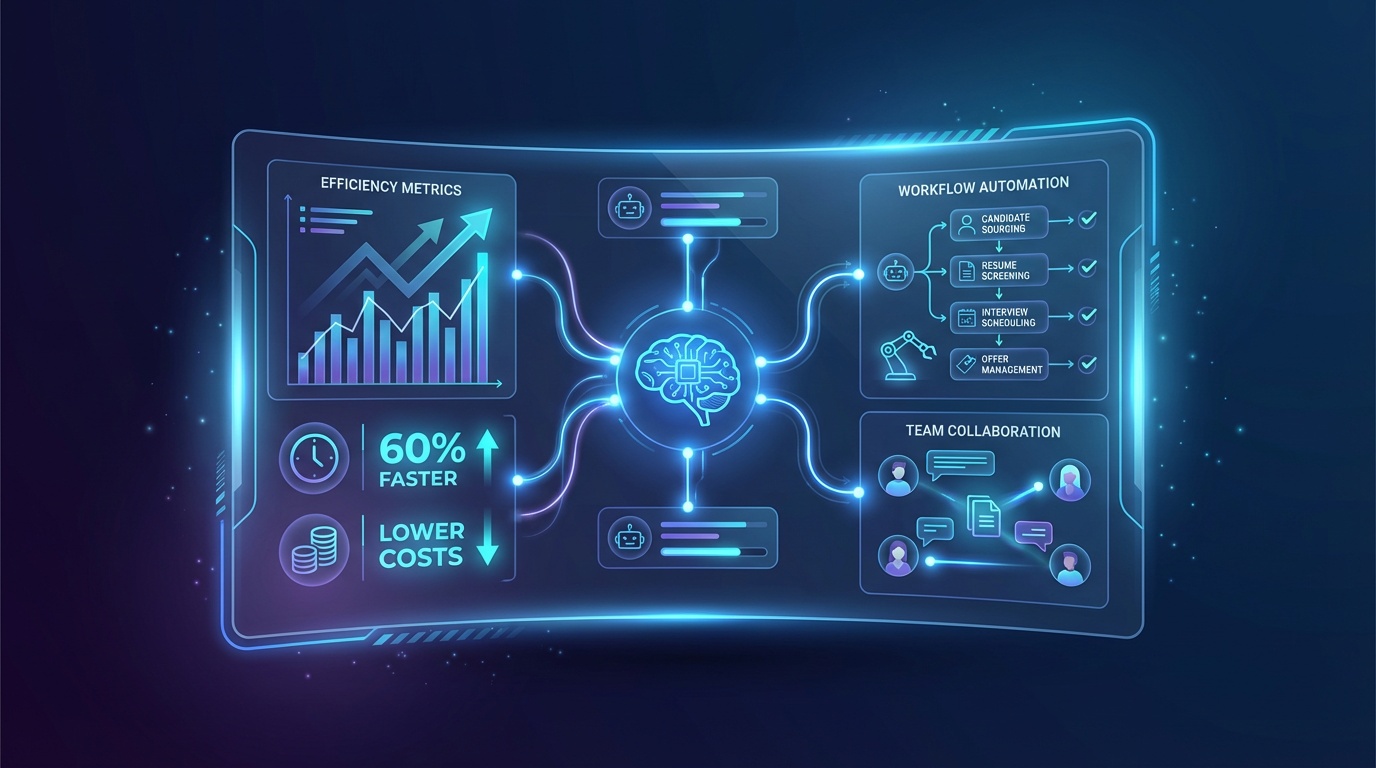
Metrics That Matter: Faster Hiring Cycles and Lower Bad-Hire Costs
Agencies implementing agentic systems reduce hiring cycles by over 60% across many roles. This acceleration comes from faster candidate engagement, automated screening that surfaces top talent within hours, and coordinated interview scheduling that removes back-and-forth email chains. Teams commonly report saving about two hours per hire and reclaiming more than 20 hours per week across recruiters. Bad-hire costs, often estimated at $17,000 per failed placement, drop when agents apply consistent evaluation criteria and flag risks during preliminary conversations.
| Metric | Manual Process | With Agentic Systems |
|---|---|---|
| Hiring Cycle Reduction | Baseline | Over 60% faster |
| Response Time | 4–24 hours | Under 60 seconds |
| Qualified Pipeline Size | Baseline | Up to 3x larger |
| Recruiter Hours Saved | N/A | 20+ per week |
Case Examples from Recruitment Firms Using Agentic AI
A 25-person technical recruitment firm in Austin deployed agentic systems to manage software developer sourcing. Within four months, they doubled their active candidate pipeline while reducing sourcing-coordinator headcount by two positions. The agents handled initial outreach, skills verification, and availability screening. Senior recruiters focused on client relationships and final candidate presentations. Another agency specializing in healthcare placements reduced no-show rates for phone screens from 32% to 8% through automated reminders and rescheduling managed by an AI agent.
ROI Projections for Mid-Market Agencies
Mid-market firms with 10–50 recruiters often see payback within six months. Savings come from reduced administrative staffing needs, faster placements that bring forward fee collection, and fewer replacement costs tied to failed placements. An agency placing 120 candidates annually at a $25,000 average fee may see about $180,000 in additional revenue from improved placement velocity and the capacity to handle more requisitions without adding headcount. Implementation costs often range from $15,000 to $50,000 depending on customization depth and ATS integration complexity.
| Metric | Manual Process | With Agentic Systems | Improvement |
|---|---|---|---|
| Hiring Cycle Time | Baseline | Reduced significantly | Over 60% faster |
| Candidate Response Rate | 12–18% | 45–52% | About 3x higher |
| Recruiter Administrative Time | 22 hours/week | 4 hours/week | 80% reduction |
| Interview No-Show Rate | 28–35% | 6–9% | About 75% decrease |
Top Agentic Systems Reviewed for Recruitment in 2026
Key Players: hireEZ, Findem, and ExcelHire Performance Breakdown
HireEZ performs well for technical talent sourcing with integrations into GitHub and Stack Overflow, which suits agencies focused on engineering roles. Its agents parse public profiles and repositories to identify active developers, although customization can be limited for nontechnical positions. Findem offers broader industry coverage and diversity-sourcing features, using AI to surface underrepresented candidates who match role requirements. ExcelHire targets high-volume hiring with agents designed for retail, hospitality, and call center recruitment, processing large application volumes daily with consistent screening rules.
ATS Integration and Scalability Scores
Native ATS integration often determines implementation success. HireEZ connects with Lever and Greenhouse but may require custom API work for Bullhorn users. Findem supports more than 15 major ATS platforms, which reduces setup time to under two weeks. ExcelHire prioritizes volume scalability, handling 500+ concurrent requisitions without major performance issues. That fits staffing agencies managing rapid-turnover clients. Many platforms still struggle with legacy ATS systems built before 2015, requiring middleware that adds cost and complexity.
Vynta AI vs Competitors: Why Custom Agents Win for SMEs
Generic platforms push agencies to adapt their process to software constraints. Vynta AI builds agents around existing workflows, industry specialization, and client relationship dynamics. A boutique executive search firm needs different automation from a high-volume contract staffing agency. Vynta AI agents are configured to match agency-specific candidate personas, client communication preferences, and operating rules. Agencies that migrate from generalized tools often report higher candidate-quality scores and higher client satisfaction, though outcomes depend on data hygiene, change management, and governance.
SME Advantage: Mid-market recruitment firms often benefit from tailored agentic systems because differentiation comes from specialization. Custom agents preserve that differentiation, while generic tools compress processes into the same templates used by competitors.
| Platform | Best For | ATS Integration | Customization | SME Suitability |
|---|---|---|---|---|
| hireEZ | Technical talent sourcing | Lever, Greenhouse native | Limited | Moderate |
| Findem | Diversity hiring, broad coverage | 15+ platforms supported | Template-based | Good |
| ExcelHire | High-volume hiring | Major platforms, some lag | Volume-focused only | Low for specialized |
| Vynta AI | Industry-specific recruitment | Custom integration | Fully tailored | Excellent |
Risks, Limitations, and How to Avoid Common Pitfalls
Addressing Bias, Accuracy Issues, and Integration Hurdles
Agentic systems can inherit biases present in training data, screening out qualified candidates based on historical patterns rather than capability. Agencies should audit agent decisions regularly by comparing demographic distributions in automated screening to distributions in final placements. Accuracy issues arise when agents misread nuanced requirements such as “startup experience” or subjective screening labels, leading to false positives. Integration challenges occur when legacy ATS systems lack modern APIs, forcing manual data transfers that weaken automation gains. Strong implementations include human-review checkpoints at key stages and ongoing retraining based on placement outcomes. Effectiveness also depends on clean integration with existing applicant tracking systems.
Real-World Limitations from Agency Feedback
Agencies report three consistent limitations across Agentic Systems for Recruitment reviews. First, agents reduce administrative work but rarely replace human consultants, especially in executive search that depends on relationships and discretion. Second, specialized technical roles with fast-changing skill requirements may need frequent retraining. Third, candidate experience can suffer when agents miss emotional cues in text responses, alienating passive candidates who expect a personal touch. Many firms address these limits by using agents for high-volume, clearly defined roles while reserving human time for complex placements.
Steps to Ensure Compliance and Fair Hiring Practices
Compliance requires documented decision logic and audit trails that show why candidates were advanced or rejected. Configure agents to record the criteria that triggered each screening decision and avoid vague labels such as “poor fit.” Conduct quarterly bias audits that compare candidate demographics at each pipeline stage against local labor-market composition. Offer an appeal process that allows candidates to request human review of automated rejections. Work with legal counsel to confirm that screening criteria align with EEOC guidance and local employment laws. Vynta AI can build compliance monitoring into custom agents and generate audit-ready reports.
Risk Mitigation: Agencies using agentic systems should keep about 20% human oversight capacity to review edge cases, manage escalations, and improve agent performance through structured feedback.
Get Started: Implementation Roadmap for Your Agency
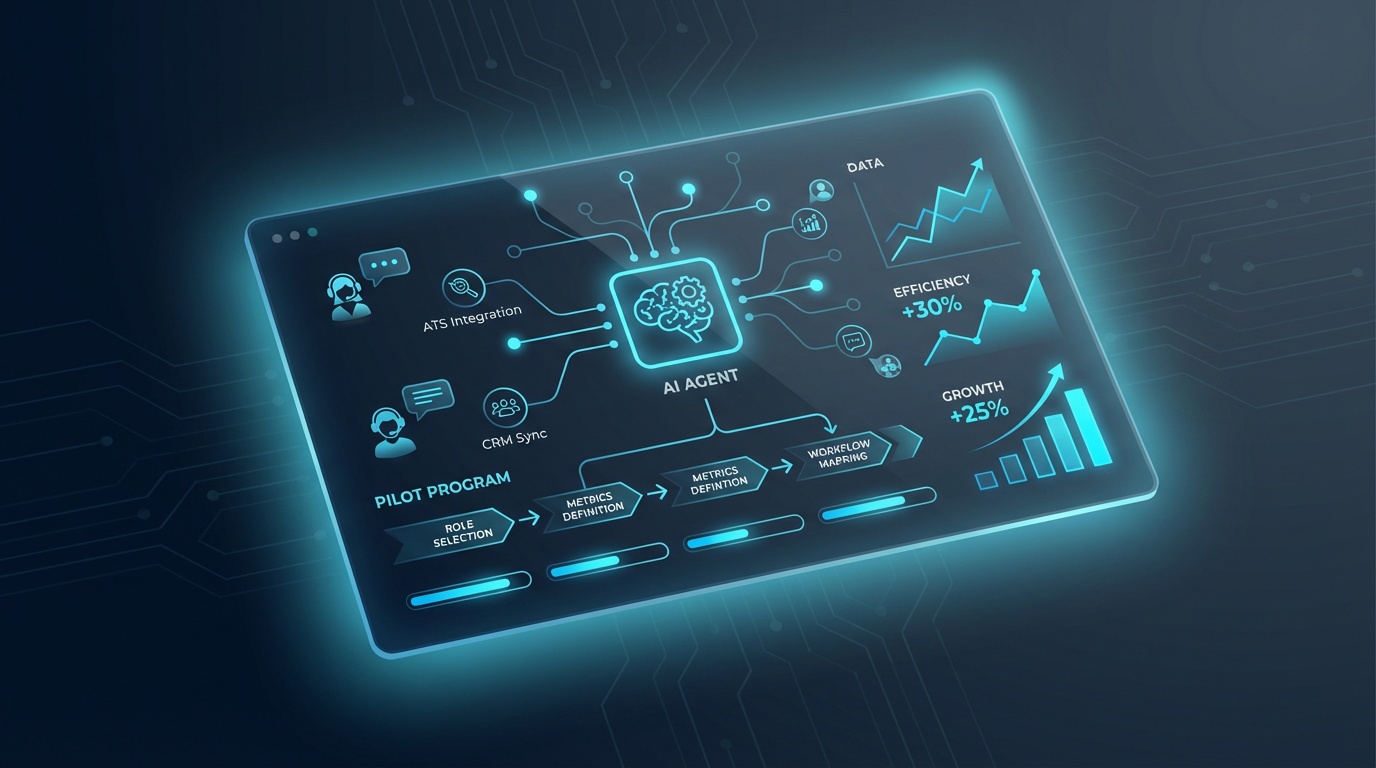
Step-by-Step Setup with ATS and CRM Tools
Start with a pilot focused on one high-volume role type with clear success metrics. Map current workflows from job posting through candidate submission and identify the repetitive tasks that consume the most recruiter time. Connect the agentic system to your ATS via API, with bidirectional data flow so the agents can read requisition details and write candidate updates. Configure screening criteria using historical placement data to define what “qualified” means for your context. Run parallel processes for 30 days and compare agent-sourced candidates with those sourced through standard methods before full deployment. Expand to additional role types as confidence builds and results stay consistent.
Measuring Success: KPIs to Track Post-Launch
Track hiring cycle reduction as a primary indicator—measure days from requisition open to candidate acceptance. Monitor candidate quality through client feedback and 90-day retention for placed candidates. Evaluate productivity by tracking placements per recruiter per month before and after launch. Measure candidate experience through surveys and application completion rates. Compare cost per hire, including subscription and integration fees, with prior manual process costs. Most agencies see measurable improvements within 60 days: faster response times, larger qualified pipelines, and fewer administrative tasks. Some teams report administrative workload reductions of about one-third and placement increases above 50%, depending on role mix and process maturity.
Why Partner with Vynta AI for Recruitment Automation
Vynta AI delivers custom-built agents designed around your recruitment vertical, whether technical staffing, healthcare placement, or executive search. Vynta AI builds automation that fits your workflows and client relationships. Delivery typically includes discovery sessions that map constraints and goals, a prioritized automation plan, and ongoing optimization tied to placement outcomes. Mid-market agencies get enterprise-grade AI capabilities without enterprise complexity. The team can also provide ROI projections during discovery. Schedule a consultation to evaluate how tailored agentic systems can improve recruitment operations while protecting the specialized expertise that sets your firm apart.
Transform Your Recruitment Operations
Discover how Vynta AI builds custom agentic systems tailored to your agency’s unique challenges. Book a strategy session to identify automation opportunities that deliver measurable ROI within 90 days.
Contact Vynta AI today to begin your implementation roadmap.
Understanding Agentic AI and Intelligent Agents
The concept of agentic systems is deeply rooted in the principles of intelligent agents, which are autonomous entities capable of perceiving their environment and taking actions to achieve specified goals. These agents use advanced algorithms to adapt dynamically to changing recruitment needs. For those interested in the theoretical foundation of intelligent agents, more information can be found on intelligent agents.
Recent Research and Developments in Agentic AI
Recent studies highlight how agentic AI systems are pushing the boundaries of autonomous decision-making. Innovations focus on strengthening contextual understanding, improving response accuracy, and scaling applications across industries including recruitment. One pivotal study sheds light on novel approaches enriching agentic AI capabilities, available for review on arXiv.
Risks and Responsible Strategies in Agentic AI Deployment
While agentic AI presents substantial benefits, experts emphasize the importance of risk assessment and responsible adoption. Discussions around balancing the power of agentic AI with ethical considerations, safety, and governance are ongoing in the research and policy community. Comprehensive analysis of risks and mitigation strategies can be explored through resources like CSET’s publication on agentic AI.
Frequently Asked Questions
What is agentic AI for recruiting?
Agentic AI for recruiting refers to autonomous AI agents that transform how recruitment agencies source, screen, and engage candidates. Unlike traditional automation, these systems make intelligent decisions throughout the hiring process, from initial outreach to interview scheduling, without constant human oversight. They operate as digital recruiters, identifying and evaluating talent across various channels.
Does agentic AI actually work in recruitment?
Yes, agentic AI demonstrably works in recruitment. Mid-market firms report over 60% reductions in hiring cycles and significantly lower bad-hire costs. These systems assist human recruiters by automating repetitive tasks, allowing them to focus on client relationships and final candidate presentations.
What success rates can recruitment agencies expect with agentic AI?
Recruitment agencies using agentic AI commonly see over 60% faster hiring cycles and reduced bad-hire costs. They often achieve up to a 3x larger qualified candidate pipeline and save recruiters more than 20 hours per week on administrative tasks. Screening can occur in under 10 seconds with high matching accuracy, depending on role definition.
Is it better for candidates to apply directly or through an agency using agentic systems?
Applying through an agency utilizing agentic systems can offer candidates several advantages. These systems provide instant 24/7 engagement, faster responses to inquiries, and personalized follow-ups, streamlining the application process. Agencies also bring specialized market knowledge and access to a wider range of opportunities, often matching candidates to roles they might not find independently.
How do agentic systems help recruitment agencies save time and reduce costs?
Agentic systems significantly save time by automating up to 80% of repetitive tasks, such as candidate sourcing, initial screening, and interview scheduling. This leads to over 60% faster hiring cycles and allows recruiters to reclaim more than 20 hours per week. Cost reductions come from fewer bad hires, as agents apply consistent evaluation criteria and flag risks early.
How do agentic systems differ from traditional recruitment automation tools?
Agentic systems differ from traditional automation because they make intelligent decisions and adapt their approach throughout the hiring process, rather than following rigid, rule-based scripts. They operate autonomously, managing full recruitment cycles from initial outreach to interview coordination with minimal human input. This allows for more dynamic and responsive candidate engagement.
Can agentic systems integrate with existing ATS platforms?
Yes, effective agentic systems are designed to integrate seamlessly with existing Applicant Tracking Systems (ATS) like Bullhorn and Greenhouse. This integration maintains data consistency and allows the agents to automate tasks while working within an agency’s established workflows. It ensures a smooth operation and maximizes the benefits of automation.