

how to use Agentic Systems for Recruitment
How to Use Agentic Systems for Recruitment
Recruitment agencies face mounting pressure to fill roles faster while managing overwhelming candidate volumes. Manual screening burns hours, response rates lag, and top talent slips away. Agentic systems let recruitment firms automate repetitive tasks while keeping the human touch that closes placements. Here’s how to screen candidates faster, coordinate interviews automatically, and increase placements without expanding your team.
Key Takeaways
- Agentic systems empower recruitment agencies to automate repetitive tasks, freeing up human recruiters for strategic work.
- Firms can significantly speed up candidate screening and interview coordination using AI automation.
- Implementing agentic AI allows recruitment teams to increase placement rates without expanding their current staff.
- AI automation in recruitment helps maintain the essential human connection while streamlining operational workflows.
Agentic systems are AI-powered automation platforms that handle end-to-end recruitment workflows: CV processing, candidate screening, personalized outreach, and interview scheduling. They integrate with your existing ATS, process high CV volumes, screen candidates in seconds, and improve matching quality when configured correctly. Implementation means assessing your current workflow, integrating with platforms like Agentic Systems for Recruitment and LinkedIn, and training agents on your qualification criteria to shorten hiring cycles and cut manual work.
What Are Agentic Systems and Why They Matter for Recruitment
Defining Agentic Systems in Business Terms
Agentic systems are AI platforms that execute complete recruitment workflows with minimal oversight—from sourcing to placement preparation. Unlike basic automation that follows rigid rules, these systems make contextual decisions, learn from outcomes, and adapt based on candidate responses and hiring manager feedback. They operate continuously across multiple channels, handling tasks that typically consume 40-60% of consultant time.
Agentic Systems vs Traditional AI Tools
| Feature | Traditional AI Tools | Agentic Systems |
|---|---|---|
| Scope | Single-task automation (resume parsing only) | End-to-end workflow management |
| Decision-Making | Rule-based responses | Contextual judgment and adaptation |
| Integration | Limited to one platform | Multi-platform coordination (ATS, job boards, WhatsApp) |
| Learning | Static algorithms | Continuous improvement from placement outcomes |
| Communication | Template-based messages | Personalized outreach that can improve response rates |
Core Capabilities That Drive Recruitment Results
Agentic systems deliver three capabilities agencies need most:
Candidate matching based on skills, experience, and cultural fit indicators. Automated engagement through always-on communication via WhatsApp Business API and email. Workflow orchestration that coordinates screening, scheduling, and documentation across your tech stack.
These capabilities cut admin time by 30-50% and help consultants stay focused on relationship-driven activities that actually close placements.
Key Use Cases of Agentic Systems in Recruitment Workflows
Automated Candidate Sourcing and Screening
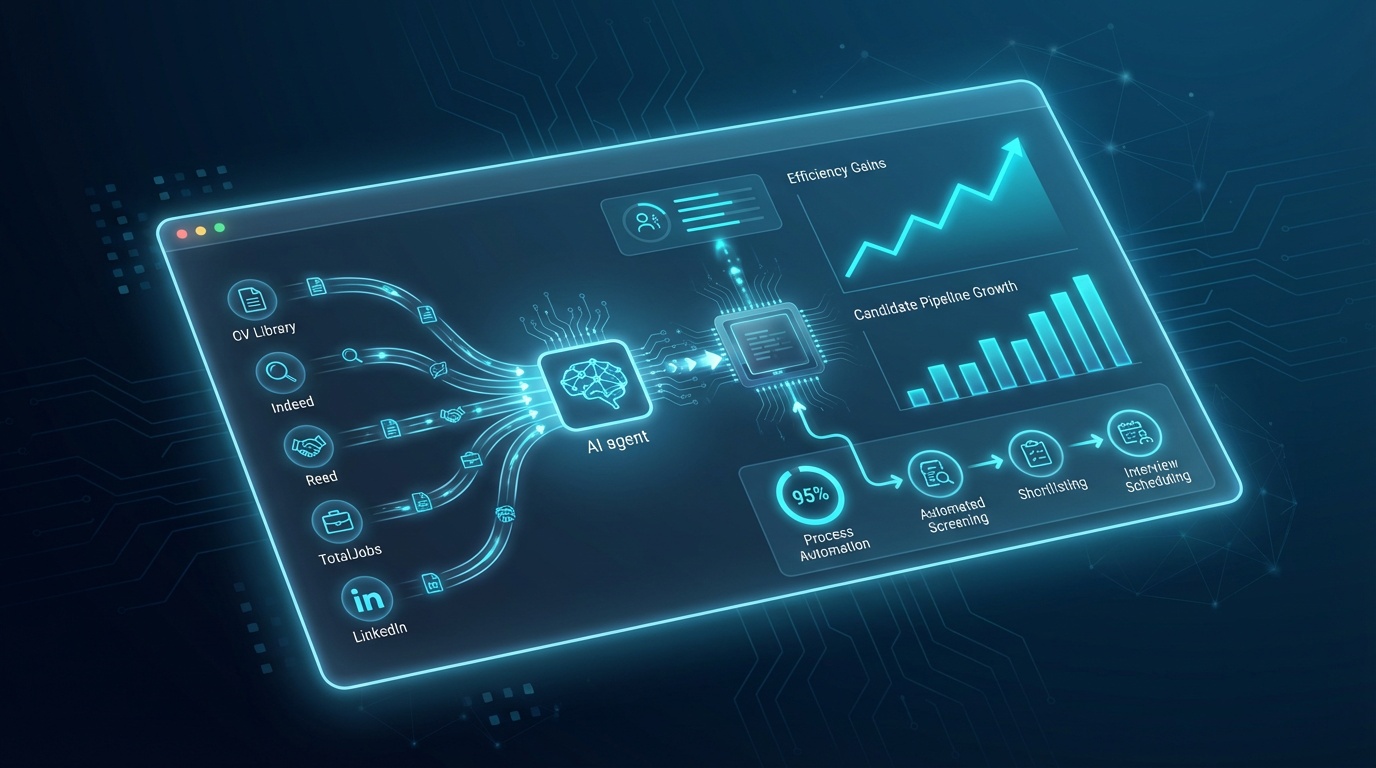
Agentic systems collect applications from CV Library, Indeed, Reed, TotalJobs, and LinkedIn recruitment integration simultaneously. The system screens each candidate within seconds, evaluates qualifications against your criteria, and ranks candidates by fit. This removes the CV review bottleneck, letting consultants jump straight to qualified candidates ready for client presentation.
Dormant Database Reactivation: Agentic systems identify and re-engage candidates in your existing ATS who match new roles, helping you recover talent you already paid to acquire.
Personalized Outreach and Engagement
The system generates individualized messages based on candidate background, role requirements, and engagement history. Automated follow-ups keep momentum going without constant consultant intervention. Availability through WhatsApp means candidates get timely responses across time zones. This approach typically lifts response rates 20-40% compared with generic templates.
Interview Scheduling and Onboarding Support
Automation of interview coordination removes the back-and-forth calendar tennis between candidates and clients. The system sends confirmations, reminders, and preparation materials, which cuts no-shows and improves candidate experience. After selection, it generates branded candidate profiles and submission documents, slashing manual documentation time per placement.
Step-by-Step Guide to Implement Agentic Systems for Recruitment
Assess Your Current Recruitment Process
Start by mapping where consultants spend time: CV screening, candidate communication, interview coordination, or documentation. Identify bottlenecks where qualified candidates drop out due to slow response times or manual processing delays. Calculate your current time-to-hire, placement rates, and administrative hours per role.
This baseline establishes measurable targets and helps you prioritize which workflows to automate first.
Select and Integrate with ATS and CRM Systems
Agentic systems integrate with your applicant tracking system to access candidate data and update records automatically. Connect job board feeds from CV Library, Indeed, Reed, TotalJobs, and LinkedIn to support multi-source intake. Configure WhatsApp Business API for candidate engagement when it fits your operating model and compliance requirements.
Integration timelines vary by stack and data quality. Plan for validation, testing, and access controls before going live.
Set Goals, Train Agents, and Monitor Performance
Define outcomes you can measure: reduced screening time, improved outreach response rates, or higher conversion from shortlist to interview. Train the system by reviewing its initial matches and giving structured feedback on accuracy. Over time, the system adapts its screening criteria based on which candidates progress.
Monitor key metrics weekly—match quality, time saved per hire, and placement volume. Adjust agent settings based on performance data to keep results on track.
Scale with Vynta AI Customization
As your team gains confidence, expand automation to additional workflows: client updates, candidate nurturing campaigns, and market intelligence collection. AI automation services from Vynta AI offer recruitment-specific customization, including screening criteria for technical roles, executive search workflows, and documentation support for regulated industries.
Request a demo to see how agentic systems integrate with your current stack.
Measurable Benefits and Real Results from Agentic Systems
Time Savings and Cost Reductions Without Added Headcount
Recruitment agencies typically cut 30-50% of time spent on CV processing and interview coordination when they deploy agentic systems correctly. Candidate reactivation and status updates become more consistent, freeing consultants to focus on business development and closing.
If you regularly handle high application volumes, automation helps you absorb spikes without immediately adding staff.
Improved Placement Rates and Candidate Quality
When matching and outreach are tuned to your niche, agentic systems improve shortlist quality and increase the number of qualified candidates moving through the funnel. Faster candidate responses and shorter scheduling loops cut time-to-hire by 20-35%, which translates to more filled roles and stronger client retention.
Case Studies from Recruitment Agencies
| Metric | Before Agentic Systems | After Implementation |
|---|---|---|
| CV Screening Time | Manual review per role | Minutes to seconds depending on setup |
| Candidate Response Rate | Varies by niche and channel | Often improves with personalization and faster follow-up |
| Dormant Candidate Reactivation | Manual, inconsistent | More systematic outreach and tracking |
| Placements Per Consultant | Baseline | Can rise as admin time drops |
Overcome Challenges and Get Started with Agentic Systems
Common Adoption Barriers in Recruitment
Recruitment firms often worry that automated communication will feel impersonal. In practice, agentic systems handle routine coordination while consultants own the conversations that build trust and close placements. Integration concerns are usually addressed through standard ATS connectors and controlled data access.
ROI becomes clearer when you quantify time saved and the opportunity cost of slow response times.
Best Practices for Human-AI Collaboration
Position agentic systems as your team’s administrative assistant, not a consultant replacement. Let AI handle CV intake, scheduling, and documentation while consultants own client relationships, candidate interviews, and negotiations.
During rollout, review AI-generated shortlists daily to refine criteria. Use time savings to expand into new sectors or add higher-margin services.
Next Steps with Vynta AI: See how agentic systems work with your recruitment workflows. Request a demo to explore ATS integration, candidate screening quality, and customization options for your agency’s specializations. You’ll also see how to increase capacity without doubling your team.
Advanced Strategies to Maximize Agentic System ROI
Optimize Multi-Channel Candidate Pipelines
Deploy your agentic system across all sourcing channels to create a unified candidate pipeline. Configure different screening parameters by platform: LinkedIn for passive candidates who need warmer outreach, CV Library and Reed for active job seekers ready to move, and your ATS database for quick-fill roles.
This approach reduces missed matches while keeping screening standards consistent across sources.
Implement Continuous Learning Feedback Loops
The strongest teams treat agentic systems as improving assets. When consultants mark candidates as strong fits or poor matches, the system refines its understanding of your standards. Track which messages get the best responses and let the AI test variations within your brand guidelines.
Monitor placement outcomes to identify which criteria predict success, then adjust agent settings accordingly.
Extend Automation to Client Relationships
Once candidate workflows are stable, extend agentic systems into client communication. Automate routine check-ins with hiring managers, send market updates on talent availability, and generate candidate presentations with branded profiles. You’ll maintain consistent service quality at scale while consultants keep control of strategy and stakeholder management.
The Future of Recruitment Automation: What’s Coming in 2026
Predictive Candidate Matching Evolution
Agentic systems are moving beyond reactive screening to predictive talent mapping. Some platforms now identify candidates who may be open to new roles before they actively apply, using career patterns and engagement signals.
For agencies, that means building talent pools earlier and responding faster when requisitions land.
Integration with Video Assessment Tools
The next generation of agentic systems will coordinate video interviews, summarize candidate responses, and provide structured evaluation notes for consultants. This pushes automation deeper into the funnel while keeping final decisions with humans. Expect broader adoption of these workflows by late 2026, especially in high-volume hiring.
Compliance and Documentation Automation
Regulatory requirements around hiring continue to expand. More agentic systems are adding audit trails, privacy controls aligned with GDPR where applicable, and automated documentation support for right-to-work verification. This reduces compliance risk and removes another administrative burden from consultants.
Making the Decision: Is Your Agency Ready for Agentic Systems?
Readiness Indicators for Recruitment Firms
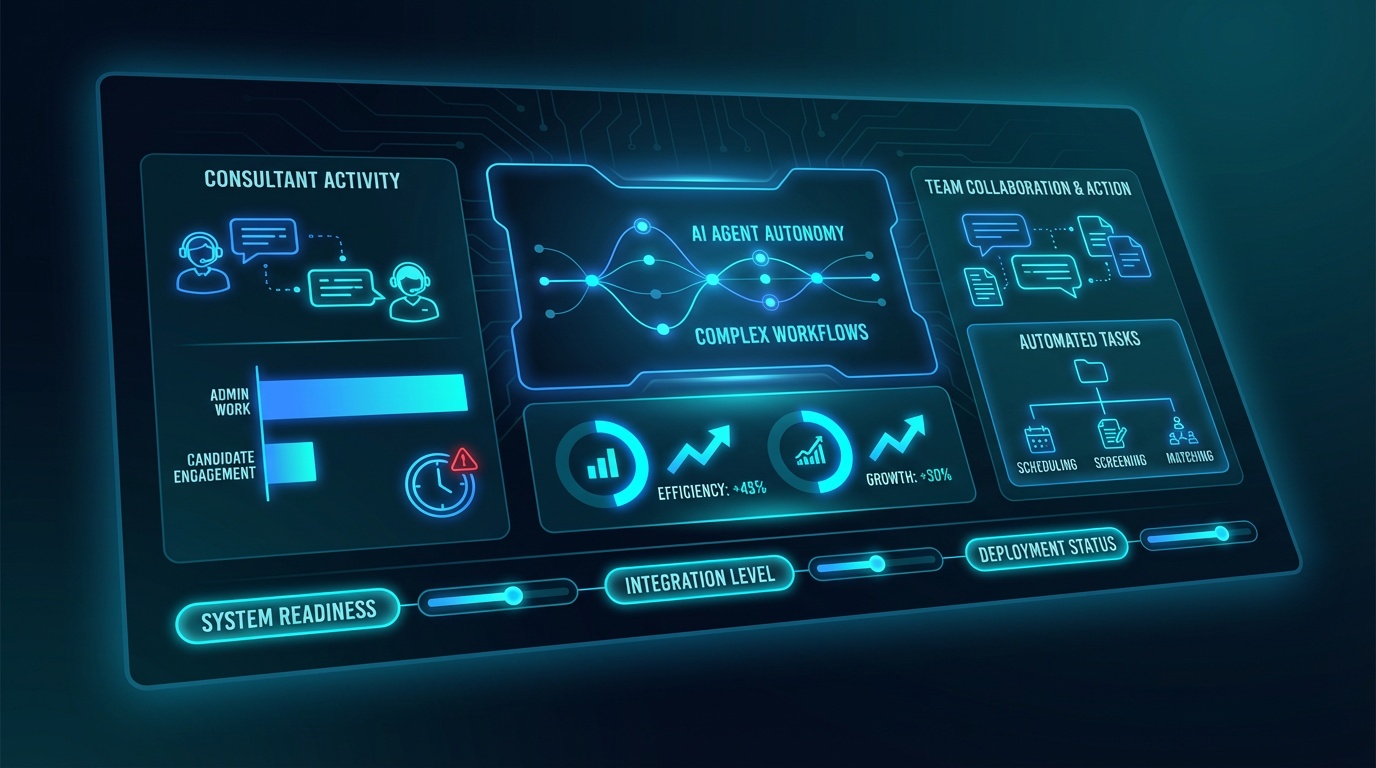
Your agency is ready to implement agentic systems if consultants spend more than 40% of their time on admin work, candidate outreach response rates sit below 30%, time-to-hire consistently misses client expectations, or you’re turning away business due to capacity constraints.
Agencies with low monthly application volume may see slower payback, while teams processing thousands of CVs across multiple sources often see value within the first quarter.
Investment Considerations and Timeline
Costs vary by agency size and integration complexity, but many mid-market firms target payback within a quarter by improving throughput and conversion. Ongoing maintenance is usually light once the system’s configured.
Plan for initial integration work, consultant training for shortlist review, and periodic optimization sessions. Treat implementation as an operations project with clear owners, metrics, and QA.
Selecting the Right Agentic Platform
Evaluate platforms based on recruitment workflows, not generic automation checklists. Look for proven ATS integrations, multi-job-board connectivity, WhatsApp Business API support, and measurable match quality for your niche. Ask for references from agencies similar to yours—technical recruitment, executive search, or volume hiring.
Vynta AI recruitment solutions focus on recruitment agency workflows with integrations across major boards and customization for role-specific screening criteria.
Your Action Plan: Implementing Agentic Systems This Quarter
Agentic systems represent one of the biggest shifts in recruitment operations since modern ATS platforms. Agencies that master this technology move faster, keep candidate experience consistent, and scale without matching headcount growth one-to-one. The best outcomes come from tight process design, clear ownership, and disciplined measurement.
Start with a focused pilot: select your highest-volume role type, integrate the agentic system with your ATS, and measure results over 30 days. Track time saved per hire, outreach response rates, and consultant satisfaction with shortlist quality. Use those numbers to decide what to automate next and how to adjust your criteria and messaging.
The recruitment environment in 2026 will reward agencies that combine human judgment with intelligent automation. If you want to see how this works inside your current workflow, request a Vynta AI demo and we’ll walk through your stack, your bottlenecks, and a pilot plan that produces measurable operational gains.
Frequently Asked Questions
How do Agentic Systems transform recruitment agency operations?
Agentic systems automate repetitive, time-consuming tasks across the recruitment workflow, from candidate sourcing to interview scheduling. This allows your consultants to shift their focus from administrative burdens to high-value, relationship-driven activities and client engagement. The goal is to increase placements and operational efficiency without needing to expand your team.
What core capabilities do Agentic Systems offer for recruitment?
Agentic systems provide three key capabilities: precise candidate matching based on skills and experience, automated engagement through personalized communication via channels like WhatsApp Business API and email, and workflow orchestration. These work together to streamline processes, ensuring consultants can concentrate on strategic tasks.
Can Agentic Systems help reactivate dormant candidate databases?
Absolutely. Agentic systems can systematically identify and re-engage suitable candidates within your existing Applicant Tracking System (ATS) who match new job openings. This capability helps recruitment firms recover talent they have already invested in acquiring, making your stored data a valuable, active resource.
How do Agentic Systems handle candidate communication and engagement?
The systems generate individualized messages tailored to each candidate’s background and the role requirements. They manage automated follow-ups to maintain momentum and can communicate across various channels, including WhatsApp Business API and email, ensuring timely responses and an improved candidate experience.
What is the initial process for implementing Agentic Systems in a recruitment agency?
Implementation begins with a thorough assessment of your current recruitment workflow to identify bottlenecks and areas for automation. Following this, we integrate the system with your existing ATS and other platforms, then configure and train the AI agents on your specific qualification criteria to optimize performance.
Do Agentic Systems integrate with existing Applicant Tracking Systems (ATS)?
Yes, integration with your existing ATS is a fundamental step. Agentic systems are designed to connect with your ATS to access candidate data, update records automatically, and coordinate with job board feeds. This ensures a seamless flow of information and avoids data silos.
How do Agentic Systems improve interview scheduling and preparation?
Agentic systems automate the entire interview coordination process, minimizing the back-and-forth typically needed to align calendars. They send confirmations, reminders, and preparation materials to candidates, which helps reduce no-shows and significantly improves the overall candidate experience.