

Agentic Systems for Recruitment alternatives
# Agentic Systems for Recruitment Alternatives (2026)Recruitment agencies face mounting pressure to fill roles faster while maintaining candidate quality. Agentic Systems for Recruitment alternatives promise autonomous AI that handles screening, outreach, and scheduling with ongoing human oversight. Yet many platforms deliver rigid automation that breaks when real-world complexity hits.
The right solution combines adaptive intelligence with workflows built for recruitment—not retrofitted from generic systems. We’ll examine what separates effective automation from theoretical promises, highlighting practical options that deliver measurable improvements in time-to-hire and placement quality.
What Agentic Systems Mean for Recruitment
Core Capabilities of Agentic AI in Talent Acquisition
Agentic AI systems operate across end-to-end recruitment workflows with ongoing human oversight. They qualify candidates, schedule interviews, and adapt screening criteria based on past placement success. Unlike basic automation following static rules, these systems learn from recruiter behavior to refine matching over time.
How Agentic Systems Differ from Traditional Automation
| Feature | Traditional Automation | Agentic Systems |
|---|---|---|
| Decision-Making | Rule-based, requires human approval | Adaptive with human oversight |
| Workflow Scope | Single tasks (resume parsing) | End-to-end processes (sourcing to offer) |
| Learning Capability | Static rules | Continuous improvement from outcomes |
| Integration Depth | Surface-level API connections | Deep workflow orchestration |
Real-World Recruitment Processes They Automate
Effective systems handle candidate sourcing across job boards and LinkedIn, screen applications against nuanced role requirements, and coordinate interview scheduling with multiple stakeholders. They manage pipeline progression automatically while flagging exceptional candidates or potential drop-offs for human attention. The difference? Speed without sacrificing quality—candidates get engaged within minutes instead of days.
Where Generic Agentic Systems Fall Short
The Customization Problem
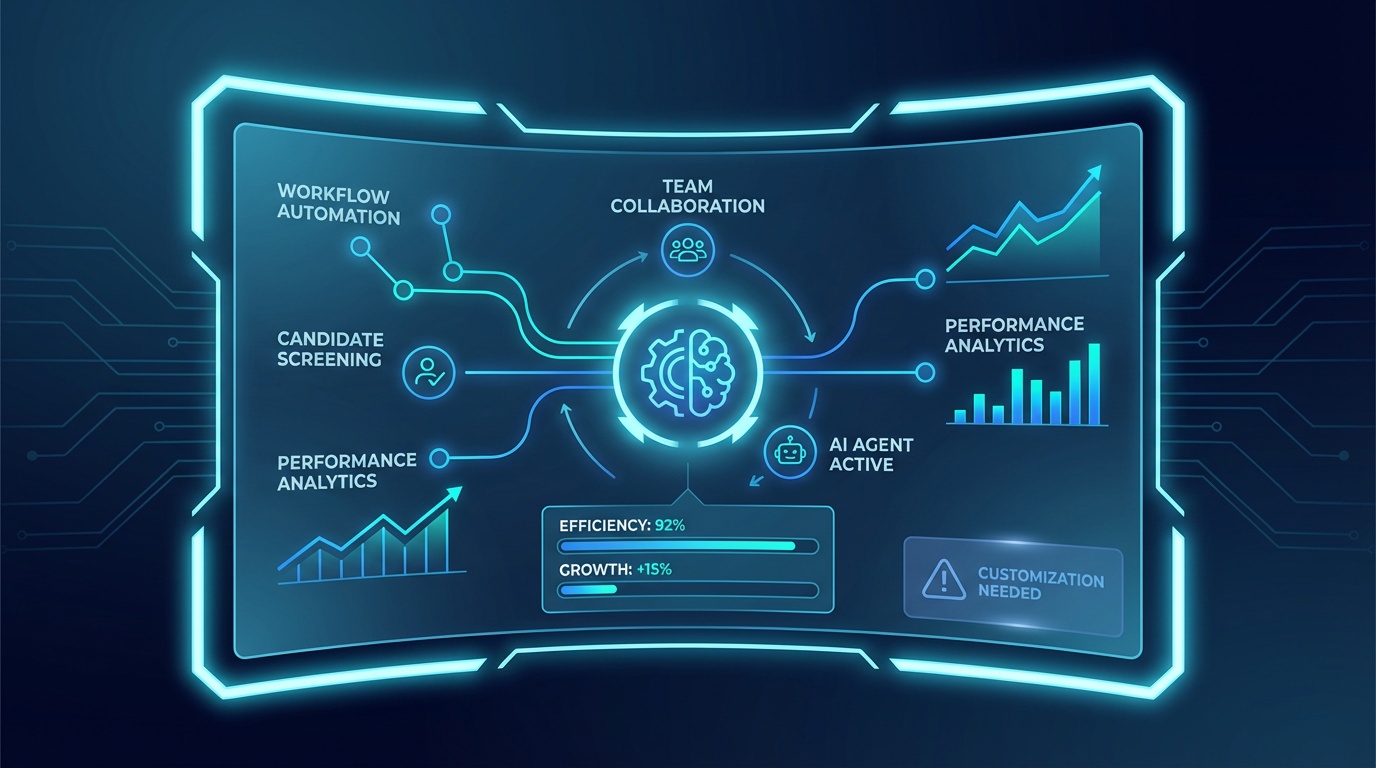
Most platforms struggle when you need screening criteria for executive search versus high-volume technical placement. Generic systems trained on broad datasets miss specialized role nuances. I’ve seen agencies spend weeks configuring rules that still require constant manual correction—defeating the entire automation purpose.
Why Surface-Level Integration Fails
Real recruitment workflows span CRM data, email systems, scheduling tools, and communication platforms like WhatsApp or SMS. Systems that only sync candidate records create data silos. You end up toggling between platforms to understand what’s happening with each candidate. True integration means unified visibility—not just API connections.
The Human Touch Gap
Candidate fit demands understanding company culture, team dynamics, and career trajectory beyond resume keywords. The best placements come from recognizing potential that automation misses. Systems requiring constant oversight to correct poor decisions? They create more work than they eliminate.
This matters especially in relationship-driven recruitment where personal touch drives client retention. A wrong match doesn’t just cost time—it damages trust that takes months to rebuild.
Better Alternatives for Recruitment Agencies
Custom AI Agents Built for Recruitment
Purpose-built AI agents designed for talent acquisition workflows outperform general-purpose systems. These solutions learn your firm’s placement patterns, integrate directly with your ATS and communication channels, and automate high-volume tasks while keeping recruiters in control of final decisions.
Agencies using specialized agents report over 60% reductions in hiring cycle time and 3x larger qualified pipelines. That’s not theoretical—it’s measurable impact on your placement capacity.
Hybrid Platforms That Keep Humans in the Loop
Hybrid platforms combine AI-driven candidate matching with human oversight at decision points. They automate sourcing and initial outreach, then surface top candidates with context for recruiter review. You’re not blindly trusting AI decisions—you’re using automation to focus your expertise where it matters.
The differentiator? Deep ATS integration that keeps all activity visible in your existing system rather than creating parallel workflows that fragment your data.
Modular Tools for Specific Bottlenecks
Focused automation tools tackle specific recruitment challenges: candidate engagement sequences, interview scheduling, or pipeline nurturing. Multi-agent systems coordinate these specialized functions, with each agent optimized for its task.
This modular approach lets you automate high-impact areas first while maintaining control over sensitive client relationships. Start where you’ll see immediate wins, then expand as you build confidence.
Why Vynta AI Works Better
Built for Recruitment, Not Retrofitted
At Vynta AI, we build agents specifically for recruitment workflows. Our system understands the difference between passive candidate nurturing and active placement cycles—not generic automation trying to fit talent acquisition.
We handle candidate screening with criteria matching your firm’s historical success patterns. We coordinate interview scheduling across multiple time zones and stakeholders. We maintain personalized outreach sequences that sound like they come from your recruiters, not bots.
This specialization extends to real estate, fundraising, and hospitality, where industry-specific workflows drive measurable outcomes.
The Numbers That Matter
Recruitment agencies using Vynta AI cut hiring cycles by over 60% through automated candidate sourcing and qualification. The system creates 3x larger qualified pipelines by engaging candidates within 60 seconds across WhatsApp, SMS, email, and website chat.
Your recruiters save 20+ hours per week by eliminating repetitive tasks like initial screening and follow-up coordination. That’s time redirected to relationship-building and closing placements—not drowning in administrative work.
Real Impact: Mid-market recruitment firms using Vynta AI report up to 85% candidate matching accuracy and a 27% improvement in client retention through consistent, personalized communication that maintains the human touch at decision points.
Implementation That Actually Works
Vynta AI deploys through a structured process: discovery to map your current workflows, strategy to identify high-impact automation opportunities, and implementation that integrates with your existing ATS and communication tools.
Our agents learn from your placement history to refine candidate matching continuously. You maintain control over final decisions while automation handles the volume work that slows down recruitment teams. Learn more about our AI automation services that support seamless integration and scaling.
How to Implement Recruitment Automation
Start With Your Biggest Bottlenecks
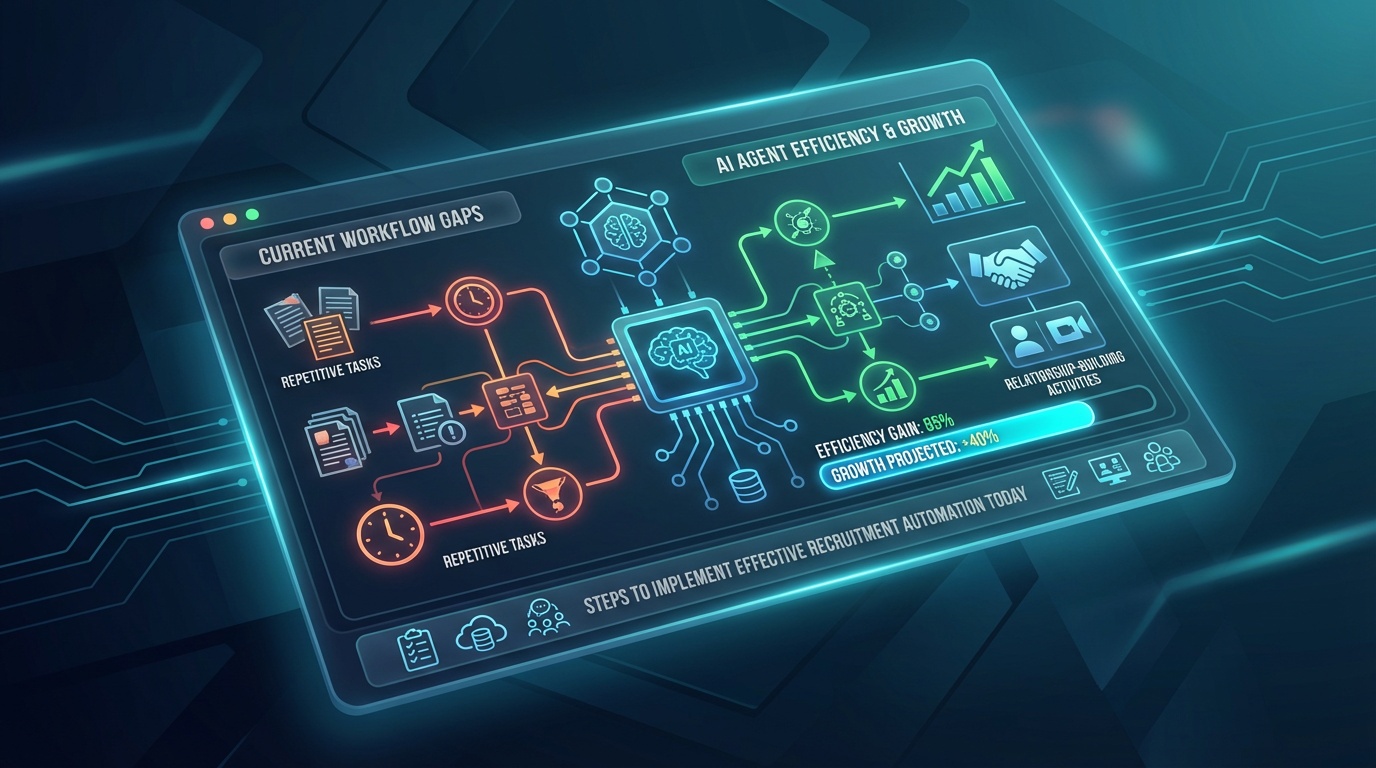
Map where recruiters spend time on repetitive tasks versus relationship-building activities. Identify bottlenecks in candidate response rates, interview scheduling coordination, and pipeline nurturing.
Measure current time-to-hire and qualified candidate volume to establish baseline metrics. Focus on workflows where automation delivers immediate wins: initial candidate screening, scheduling coordination, and follow-up sequences that currently fall through the cracks.
Choose Solutions With Proven Track Records
Look for recruitment-specific capabilities and deep ATS integration. Verify the system supports your communication channels and adapts to your qualification criteria. Start with high-volume, low-risk processes like candidate sourcing and initial outreach.
Vynta AI’s structured implementation ensures agents learn your firm’s placement patterns while maintaining recruiter oversight at key decision points.
Track What Matters, Then Expand
Monitor hiring cycle time, qualified pipeline growth, and recruiter productivity gains weekly. Track candidate satisfaction and client feedback to ensure automation maintains relationship quality.
Scale to additional roles and clients once initial workflows prove successful. Agencies see compounding returns as AI agents refine matching based on placement outcomes, improving candidate quality and conversion rates over time.
Ready to transform your recruitment operations? Vynta AI delivers industry-specific automation that reduces hiring cycles by over 60% while maintaining the personal touch that drives placements. Discover how our AI agents can 3x your qualified pipeline without expanding your team.
Making the Right Choice for Your Agency
The recruitment automation market splits between generic systems promising full autonomy and specialized solutions built for talent acquisition realities. Generic platforms require extensive configuration for nuances like passive candidate nurturing or executive search workflows.
Mid-market agencies need solutions that integrate with existing ATS platforms while maintaining the personal touch that drives client retention. The most effective alternatives combine automated candidate sourcing with human oversight at decision points.
When Specialized AI Makes Sense
Purpose-built recruitment automation delivers superior results for agencies handling high candidate volumes, managing multiple client accounts with distinct criteria, or competing on speed-to-placement.
Vynta AI demonstrates this through over 60% hiring cycle time reduction and 3x qualified pipeline growth—metrics generic systems often struggle to match without recruitment-specific training data.
Agencies in specialized sectors like technical recruitment or executive search benefit most from AI that understands role-specific qualification beyond resume keywords. You need systems that recognize candidate trajectory patterns, cultural fit indicators, and soft skills that drive placement success.
Keeping the Human Element Strong
Effective automation supports recruiter capabilities rather than replacing judgment. Strong systems handle time-consuming tasks—initial outreach, baseline screening, scheduling coordination, pipeline nurturing—while freeing recruiters for work that drives placements.
What drives placements? Understanding client needs. Assessing candidate motivation. Negotiating offers. That’s where your expertise matters most.
Vynta AI maintains this balance through AI agents that automate high-volume workflows while surfacing qualified candidates with context for human review. You control final decisions and client communication while automation reduces the risk of candidates falling through gaps.
What’s Coming Next
Recruitment automation is moving toward predictive intelligence that anticipates hiring needs before requisitions open. Advanced systems will analyze client growth patterns, industry trends, and hiring cycles to build candidate pipelines proactively.
This shift requires AI that learns continuously from placement outcomes, refining matching and timing strategies. Integration depth separates leading solutions from basic automation.
Future recruitment AI must orchestrate across video interview platforms, skills assessment systems, background checks, and offer management tools. Agencies that deploy unified automation maintain data consistency and reduce manual transfers that slow placement cycles.
Strategic Advantage: Agencies adopting specialized AI automation today can increase placement capacity without proportional cost increases, supporting sustainable competitive advantages as talent scarcity intensifies.
The right alternative improves agency economics by increasing placements per recruiter while maintaining relationship quality that drives repeat business. At Vynta AI, we deliver industry-specific automation that integrates with existing processes, learns from placement history, and scales with growth ambitions across recruitment and adjacent verticals.
Frequently Asked Questions
What practical alternatives exist for recruitment agencies beyond generic agentic systems?
For recruitment agencies seeking effective automation, practical alternatives to generic agentic systems include custom AI agents tailored for specific workflows, hybrid automation platforms with deep ATS integration, and specialized tools for outreach and pipeline management. These solutions prioritize adaptive intelligence and industry-specific needs over rigid, broad automation.
What characteristics define an effective AI tool for recruitment agencies?
An effective AI tool for recruitment agencies is purpose-built for industry-specific workflows, integrating deeply with existing ATS and communication channels. It learns from your firm’s placement patterns to refine candidate matching and automates high-volume tasks while keeping recruiters in control of final decisions. This approach delivers measurable improvements in time-to-hire and placement quality.
How do agentic AI systems function within recruitment workflows?
Agentic AI systems in recruitment operate across end-to-end workflows, making decisions about candidate qualification, scheduling interviews, and adapting screening criteria based on past success. Unlike basic automation, these systems continuously learn from recruiter behavior to refine candidate matching over time, always with ongoing human oversight.
Why is deep ATS integration important for recruitment automation solutions?
Deep ATS integration is essential because recruitment workflows involve various tools like CRM, email, and scheduling. Solutions that only sync candidate records create data silos and miss the operational reality where recruiters need unified visibility and control. True integration ensures all activity remains within your existing system, preventing parallel workflows.
What challenges do generic agentic recruitment platforms typically face?
Generic agentic platforms often struggle with industry-specific screening criteria and custom qualification workflows, missing the nuances of specialized roles. They can also create data silos due to surface-level integration with existing tech stacks and may lack the human judgment needed for assessing company culture or team dynamics. This often requires extensive manual configuration.
How does Vynta AI specifically support recruitment agencies?
Vynta AI builds AI agents designed specifically for recruitment workflows, understanding the nuances of candidate nurturing and active placement cycles. Our system screens candidates against your firm’s historical success patterns, coordinates interviews, and maintains personalized outreach. This specialization helps agencies achieve over 60% reductions in hiring cycle time and 3x larger qualified pipelines.
What measurable outcomes can recruitment agencies expect from specialized AI agents?
Agencies using specialized AI agents can expect significant measurable outcomes, including over 60% reductions in hiring cycle time and 3x larger qualified pipelines. For example, in real estate, such systems maximize agent productivity by automating 80% of tasks, leading to over 30% more deals closed and improving client retention by 85%.