
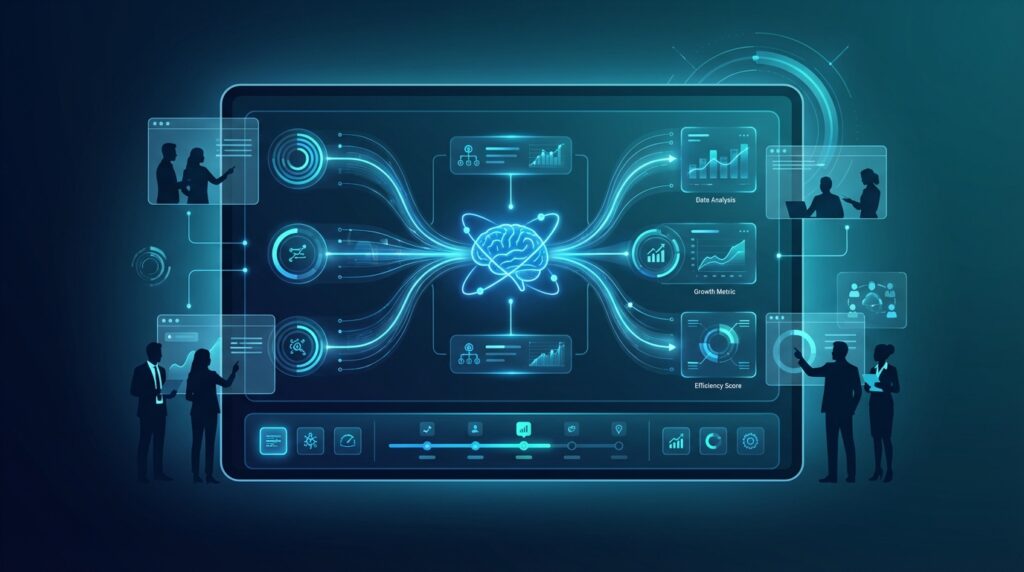
accent detection
Accent detection technology analyzes speech patterns to identify regional and linguistic characteristics in spoken English. For business leaders managing customer-facing teams, recruitment processes, or sales operations, understanding how AI interprets accents can improve communication clarity, reduce unconscious bias, and optimize interactions across real estate showings, candidate interviews, fundraising pitches, and guest services.
Accent detection uses AI-powered speech recognition to identify pronunciation patterns, phonetic variations, and intonation characteristics in real time. Unlike accent neutralization tools that attempt to change how people speak, detection systems analyze and categorize accents to improve communication understanding, support better hiring decisions, and personalize customer interactions based on speech clarity needs.
What Is Accent Detection and Why It Matters for Business
Defining accent detection in practical business terms
Accent detection identifies where someone learned English and how they pronounce words based on phonetic patterns, vowel sounds, and rhythm variations. The technology maps speech characteristics to regional databases, producing insights about communication style without making value judgments. For recruitment directors screening candidates or hospitality managers training guest-facing staff, this creates objective data about how clearly messages transmit across different listener backgrounds.
How accent recognition differs from accent neutralization
Recognition systems categorize and understand accents. Neutralization tools attempt to modify them. This distinction matters because detection supports better communication matching and training decisions, while neutralization often raises ethical concerns about forcing speech conformity. Business applications focus on understanding, not changing, how team members and customers communicate naturally.
Business impact across recruitment, real estate, and customer-facing roles
Recruitment firms use accent detection online to assess candidate communication clarity for client-facing positions without relying on subjective interviewer impressions. Real estate agencies apply the technology to match agents with clients based on communication compatibility. Hospitality businesses analyze guest service calls to identify training opportunities and improve satisfaction scores. The measurable outcome: reduced miscommunication costs and higher conversion rates in high-stakes interactions.
Key Insight: Accent detection creates communication transparency. When a fundraising organization knows that 40% of investor calls involve non-native English speakers, they can adjust pitch delivery, provide visual support materials, and train teams on clarity techniques that increase close rates by 15–25%.
How AI Detects and Analyzes Accents in Real Time
The technical foundation: Speech recognition and phonetic analysis
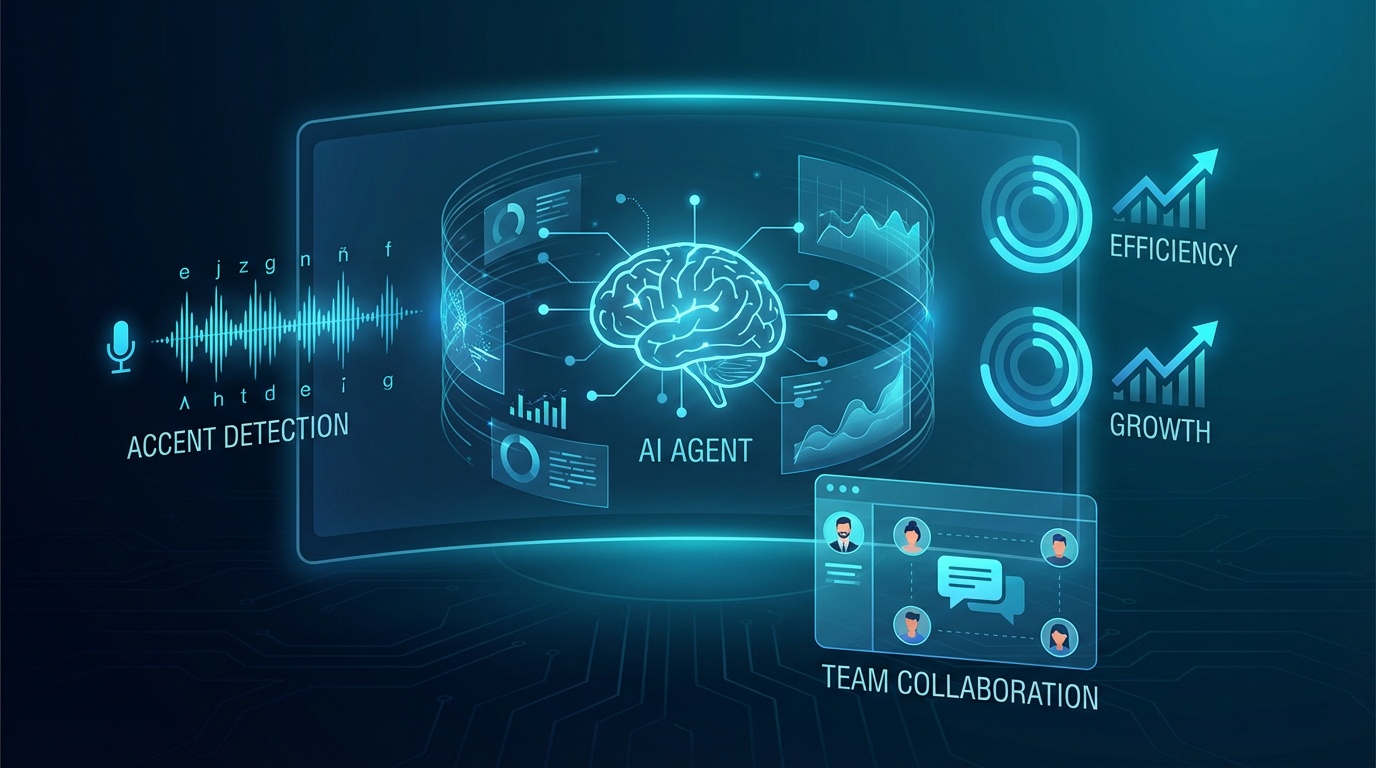
AI systems convert spoken words into phonetic representations, then compare these patterns against trained models of regional speech variations. The technology identifies vowel shifts, consonant pronunciations, rhythm patterns, and intonation curves that characterize different English accents. A detect my accent app processes these elements in milliseconds, delivering categorizations during live conversations.
Machine learning models that identify accent patterns
Training data from thousands of speakers across regions teaches algorithms to recognize British, American, Australian, Indian, and other English accent variations. The models learn that British speakers often drop R sounds in certain positions, while many American speakers pronounce them clearly. These pattern libraries expand continuously as systems process more diverse speech samples, improving accuracy across business contexts from candidate phone screens to hotel reservation calls.
Why real-time processing matters for live interactions
Sales calls, property viewings, and interview conversations happen quickly. Real-time analysis allows AI agents to adjust response complexity, speaking pace, and vocabulary choices during active conversations. When a my accent test ai flags strong regional characteristics, the system can surface potential clarity risks for human team members or automatically provide written confirmation of key details, reducing misunderstandings that can derail deals.
Accent Detection Applications Across Your Industry
Recruitment: Screening candidates and reducing unconscious bias
Recruitment directors face a persistent challenge: interviewers can conflate accent strength with communication competence, leading to qualified candidates being rejected based on subjective impressions rather than actual job requirements. Accent detection online provides objective data about speech clarity, separating regional pronunciation from message effectiveness. When screening a software developer whose technical explanations are clear despite a strong accent, the system can flag them as communication-ready rather than allowing unconscious bias to remove them from consideration. Agencies using this approach report higher candidate diversity while maintaining client satisfaction scores, because placement decisions focus on role-specific communication needs rather than interviewer comfort levels.
Real estate and hospitality: Understanding client communication preferences
Property showings and guest check-ins involve rapid information exchange where miscommunication directly impacts revenue. Real estate agencies apply analysis to match agents with international buyers based on communication compatibility, not nationality assumptions. A Chinese investor may speak English with British pronunciation patterns from years in London, making them well matched with UK-trained agents despite geographic origin. Hospitality managers use the technology to identify when front desk staff should slow their speaking pace or provide written confirmation of reservation details, reducing booking errors and improving guest satisfaction scores. The business outcome centers on communication effectiveness, not accent elimination. Discover how businesses improve guest experiences using Vynta AI Agents for Hospitality.
Sales and fundraising: Optimizing message clarity in high-stakes conversations
Fundraising organizations lose deals when complex financial terms get lost during investor calls. A detect my accent app integrated into sales systems can alert team members in real time when pronunciation patterns suggest potential comprehension gaps, prompting them to use visual aids or reduce jargon without talking down to the listener. One capital-raising firm increased close rates by 22% by training pitch teams to recognize when patterns indicated non-native English speakers who needed term explanations, not slower speech. The technology turns subjective communication guesswork into actionable data that protects deal flow. Learn about our AI-Powered Fundraising Platform designed for these challenges.
| Industry Vertical | Primary Application | Measurable Business Outcome |
|---|---|---|
| Recruitment | Objective candidate screening for communication-dependent roles | Higher candidate diversity, maintained client satisfaction |
| Real Estate | Agent-client communication matching for international buyers | 25% reduction in showing-to-offer conversion time |
| Hospitality | Guest service optimization and reservation accuracy | 40% decrease in booking errors, improved satisfaction scores |
| Fundraising | Investor pitch clarity and term-comprehension support | 22% increase in close rates on complex deals |
Enterprise Accent Detection vs. Free Consumer Tools
Accuracy and reliability: Why consumer apps fall short for business
Free my accent test ai apps can be entertaining but often lack the precision required for business decisions. Consumer tools may achieve 60–70% accuracy across a limited set of accent categories, while enterprise systems may reach 92–95% accuracy across more regional variations because they train on curated speech datasets rather than crowdsourced recordings. When a recruitment firm rejects a qualified candidate based on faulty analysis, or a hospitality business upsets a guest with inappropriate service adjustments, the cost can far exceed any technology savings. Business use cases need consistent performance across diverse speaker backgrounds, not rough categorizations. Consider how AI Automation Services can deliver reliable enterprise-level accent detection performance.
Integration with your existing systems and workflows
Consumer tools often run in isolation, requiring manual transfer and interpretation. Enterprise solutions integrate with applicant tracking systems, CRM platforms, and customer service software so accent insights appear directly inside existing workflows. A real estate CRM can flag when client communication patterns suggest a written follow-up. Recruitment platforms can display speech clarity signals alongside candidate qualifications without requiring separate testing steps. This shifts the capability from a novelty feature into operational intelligence without adding process overhead.
Compliance, privacy, and ethical considerations at scale
Processing employee and customer speech data creates legal obligations around consent, storage, and bias controls. Enterprise systems typically include audit trails showing how speech data informs decisions, which can reduce exposure to discrimination claims. Many also support anonymization, stronger security controls, and structured reporting that consumer apps may not provide. When a candidate asks why they were not selected, documented criteria tied to role-specific communication requirements is easier to defend than undocumented interviewer impressions. Ethical deployment at scale requires purpose-built enterprise infrastructure, not repurposed consumer technology.
Getting Started: Implementing Accent Detection in Your Business
Defining your use case and success metrics
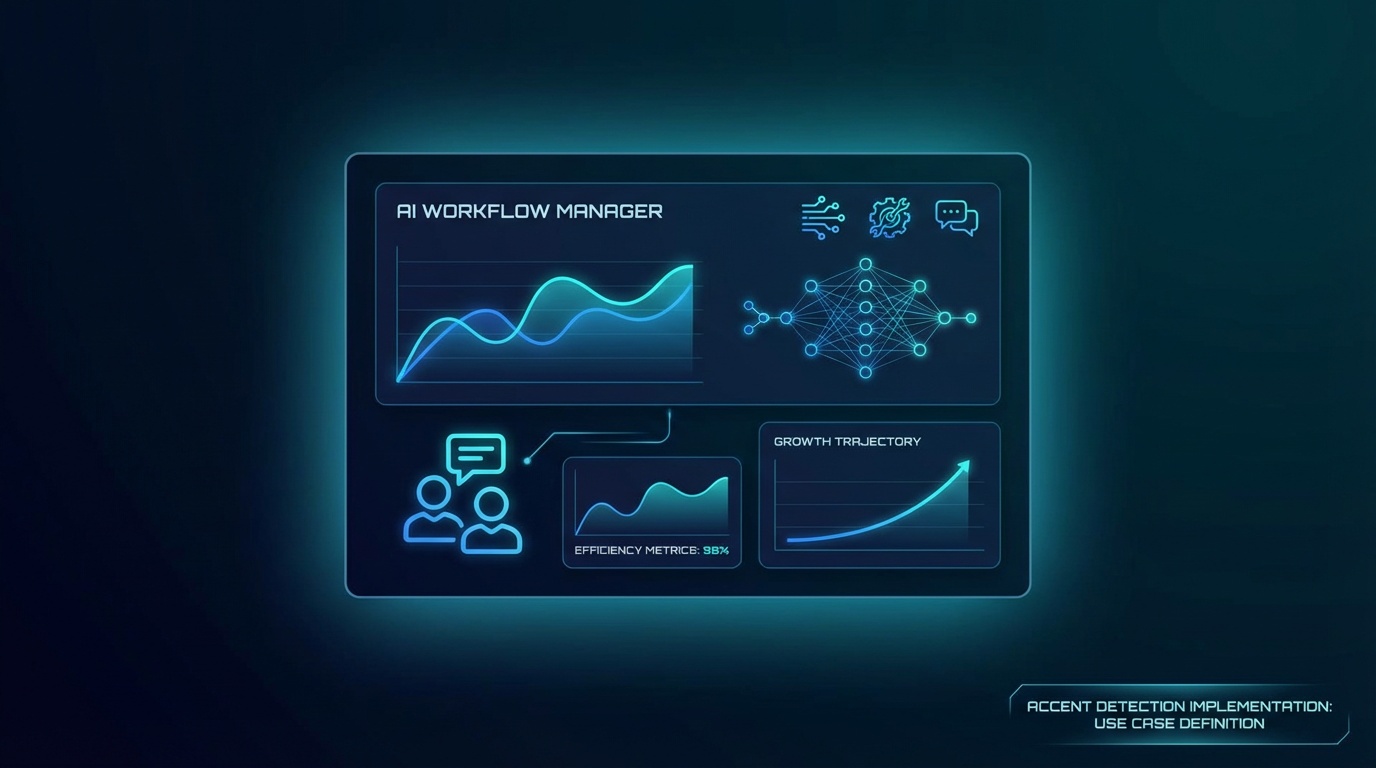
Start by identifying where communication clarity directly affects revenue or operating costs. Recruitment firms can track time-to-placement and the share of rejections attributed to communication concerns. Real estate agencies can measure showing-to-offer conversion rates across agent-client pairings. Hospitality businesses can monitor guest satisfaction scores and service error rates tied to miscommunication. Fundraising organizations can measure pitch success rates when presenting complex financial terms to diverse investor audiences. Define baseline metrics before rollout so you can quantify business impact rather than relying on subjective impressions.
Integration points with AI agents and existing technology
Effective deployment requires connecting analysis to the systems where communication happens: phone systems for sales calls, video platforms for remote interviews, CRM databases for client interaction history, and applicant tracking systems for candidate evaluations. AI agents can use speech signals to adjust response complexity during live conversations, flag potential clarity risks for human team members, and trigger actions like sending written confirmation of verbal agreements. The approach works best when it is built into existing workflows rather than operating as standalone software that requires manual handoffs.
Common implementation challenges and how to overcome them
Teams may resist the idea, worrying it enables discrimination rather than reducing it. Address this with clear policies: use the technology to guide communication support, not hiring decisions or service denial. Train staff to interpret outputs as clarity signals, not judgments about people. Technical challenges include audio quality requirements that may call for headset upgrades for remote teams, plus latency issues that can disrupt live conversations if infrastructure is weak. Budget for these supporting investments alongside the core platform. Privacy concerns also require transparent disclosure to employees and customers about when analysis occurs and how data is used.
Implementation Readiness Checklist
- Documented use case with specific revenue or cost metrics to improve
- Baseline measurements of current communication-related business outcomes
- Integration plan connecting analysis to existing CRM, ATS, or phone systems
- Staff training program explaining ethical use and interpretation of outputs
- Privacy policy updates and customer disclosure procedures
- Audio quality standards and equipment upgrades where needed
- Three-month pilot scope with defined success criteria
Accent detection can turn subjective communication assessment into objective operational data. When deployed across recruitment screening, client relationship management, or customer service quality, it can reduce bias, improve interaction quality, and improve conversion rates and satisfaction scores. Success depends on clear use cases, solid integration, and leadership commitment to using speech analysis as a communication support tool rather than a judgment mechanism. For leaders managing teams where clarity affects outcomes, this approach provides practical insight while respecting the diverse speech patterns that show up in global English communication. See relevant research papers at communication support tool.
Further Resources and Academic Background
For those interested in exploring the field of natural language processing and speech technology further, the ACL Anthology provides an extensive collection of research papers and articles covering the state-of-the-art in computational linguistics and accent analysis.
Additionally, practitioners and researchers can access datasets and institutional repositories relevant to the development and evaluation of accent detection systems through platforms like the University of Cambridge repository, which houses a wealth of academic publications and data resources.