
Key Takeaways
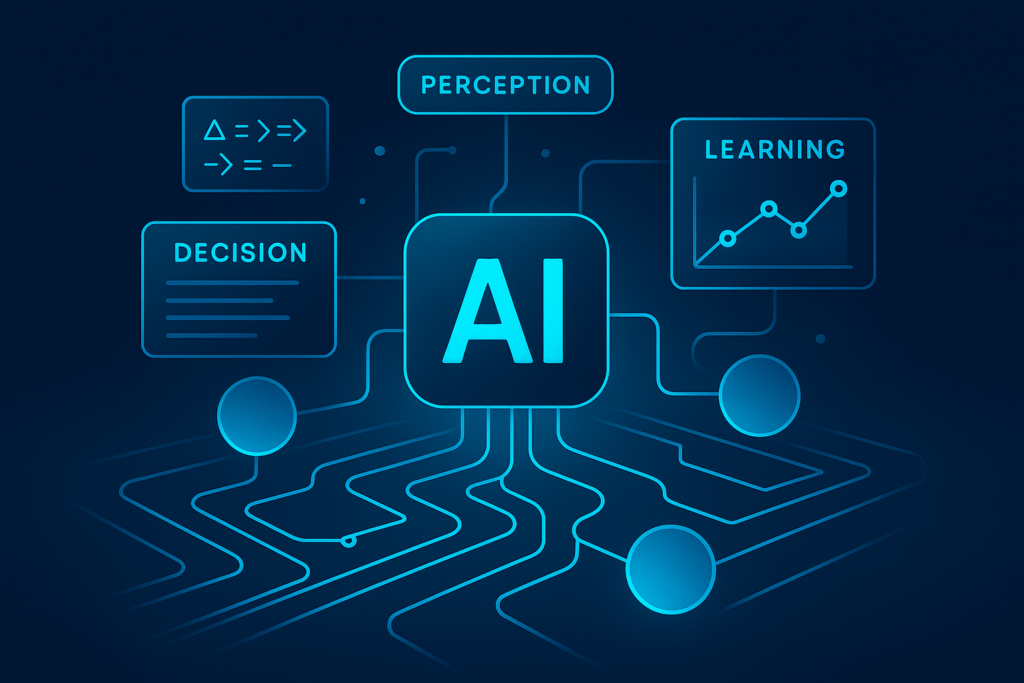
- AI agents are autonomous software systems that integrate reasoning, planning, and decision-making.
- They operate without constant human intervention to achieve specific business objectives.
- Unlike rule-based automation, AI agents perceive their environment and analyze complex information.
- AI agents adapt their behavior based on real-time feedback and changing conditions.
Table of Contents
Understanding AI Agents: Beyond Automation Tools
How do agents work? AI agents represent a fundamental shift from traditional automation—they’re autonomous software systems that combine reasoning, planning, and decision-making to pursue specific business objectives without constant human intervention. Unlike rule-based automation tools that simply execute predetermined steps, AI agents actively perceive their environment, analyze complex information, and adapt their approach based on real-time feedback and changing conditions.
The distinction matters for your business. When you deploy an AI agent in recruitment, it doesn’t just follow a checklist—it reasons through candidate qualifications, weighs multiple matching criteria simultaneously, and continuously refines its evaluation logic based on hiring outcomes. In real estate, an agent doesn’t mechanically filter properties; it learns which listing attributes convert fastest, adjusts its lead qualification approach based on market conditions, and identifies high-potential buyer-property matches that traditional matching systems would miss.
This autonomy, combined with their ability to integrate seamlessly with your existing business systems, is why mid-market SMEs across real estate, recruitment, fundraising, and hospitality are seeing 30-90 day ROI windows—a timeline that was impossible with generic automation tools.
The Core Architecture: How AI Agents Think and Act
The Foundation: Large Language Models and Memory Systems
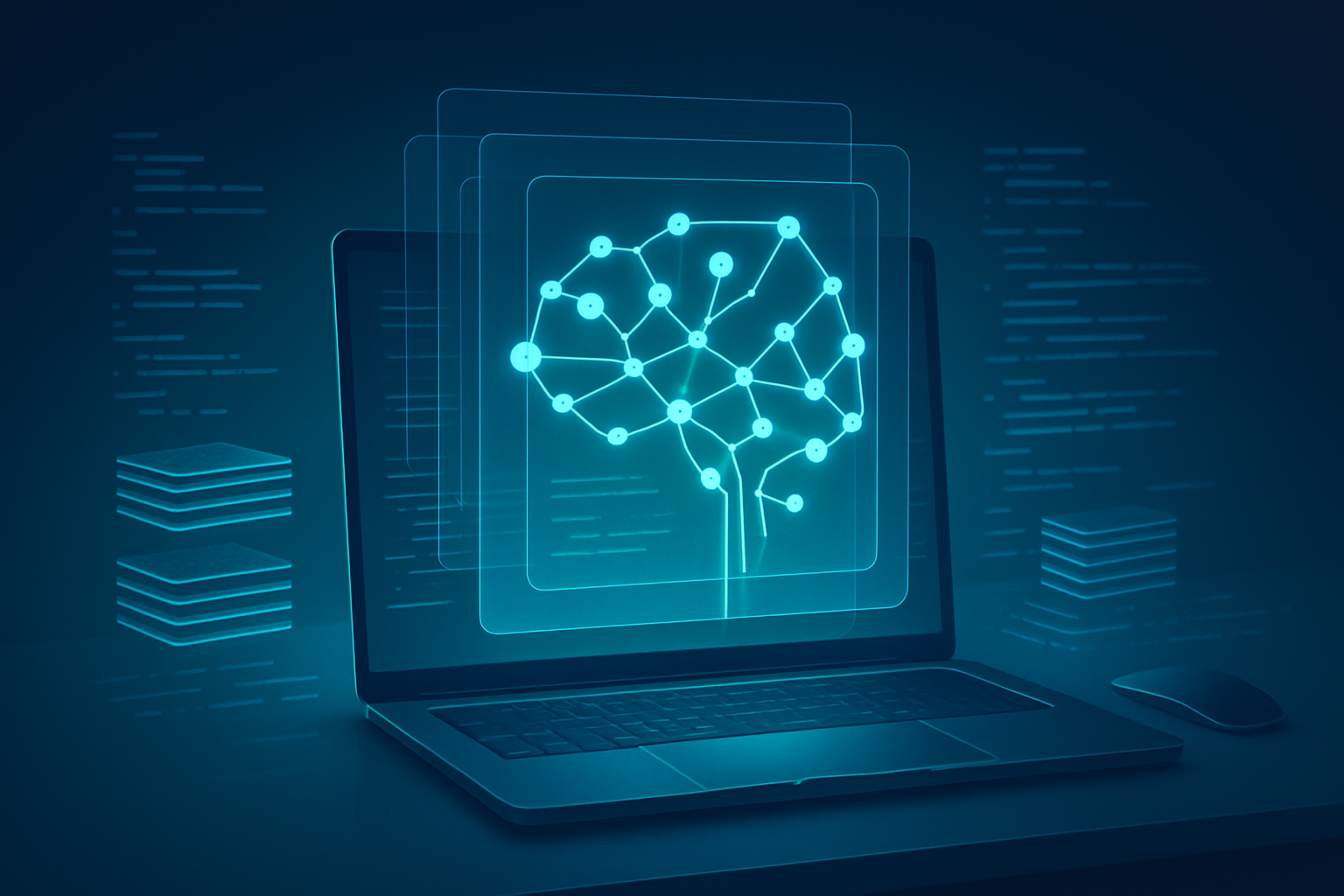
At the heart of every sophisticated AI agent lies a large language model (LLM)—the reasoning engine that processes complex information, understands context, and generates decisions that align with your business goals. But the LLM alone isn’t what makes an agent powerful. It’s how that reasoning capability is combined with three other critical components.
Memory operates across multiple layers. Short-term memory maintains context within a single interaction—for example, remembering that a candidate previously expressed interest in remote roles. Long-term memory stores patterns across hundreds of interactions, helping your recruitment agent identify which candidate profiles historically convert to successful placements. Episodic memory preserves specific past events, enabling your real estate agent to recall that a particular buyer specifically requested properties near specific schools or transit lines. Without this layered memory architecture, agents would approach each task as if it were their first, losing the accumulated intelligence that drives continuous improvement.
Tools are the bridges connecting your agents to the systems where work actually happens. In real estate, these tools are your CRM integrations—allowing agents to query property databases, pull buyer preferences, and update lead statuses in real-time. For recruitment, tools connect to your applicant tracking system to pull candidate profiles, schedule interviews, and log communication. In fundraising, tools access your donor management platform and email systems to identify high-potential investors and automate personalized outreach. In hospitality, tools connect to your reservation system, guest preference database, and communication channels.
The Operating Cycle: Goal, Reasoning, Action, Learning
Every AI agent operates through a consistent cycle that distinguishes it from simpler automation tools. Goal Initialization and Planning happens first. You define what success looks like for your agent—in recruitment, that might be “reduce time-to-hire by 50% while improving placement quality.” Your agent breaks this complex goal into actionable subtasks: source candidates matching specific criteria, screen resumes against job requirements, conduct initial phone screening, schedule qualified candidates for interviews, gather feedback from hiring managers.
Reasoning with Tools is where the agent becomes truly powerful. When processing 200 candidate applications, the agent doesn’t apply a rigid scoring rubric. Instead, it gathers information from multiple sources—your ATS, job descriptions, historical hiring data—and iteratively refines its reasoning. It might discover that previous candidates with specific technical certifications outperformed those without them, so it weights those credentials more heavily in real-time. It observes that hiring managers consistently reject candidates from certain backgrounds and investigates whether this reflects legitimate role requirements or unconscious bias.
Learning and Reflection separates exceptional agents from mediocre ones. After each cycle, your agent collects feedback—which leads converted to customers, which placements succeeded long-term, which guest experiences resulted in repeat bookings. Industry-specific agents learn differently than generic tools. A Vynta AI hospitality agent doesn’t just track booking volumes; it correlates reservation timing, upselling offers, and guest service quality with actual satisfaction scores and repeat booking rates. It discovers that guests booked through personalized outreach have 23% higher satisfaction scores, so it automatically increases personalization in similar future scenarios.
AI Agents vs. Traditional Automation: Why the Distinction Matters
| Dimension | AI Agents | Traditional Automation Tools | Generic Chatbots |
|---|---|---|---|
| Decision-Making | Reasoning-based; adapts logic based on new information | Rule-based; follows predetermined paths | Pattern-matching only; no reasoning |
| Learning Capability | Continuous improvement from feedback and outcomes | No learning; requires manual rule updates | Limited to conversation patterns |
| Complexity Handling | Autonomously manages multi-step workflows with variables | Handles linear processes only | Single conversation threads |
| System Integration | Seamless connection to CRMs, ATSs, PMSs, fundraising platforms | Often requires manual data entry between systems | No backend integration |
| ROI & Business Impact | Delivers measurable ROI in 30-90 days; improves conversion, placement, fundraising, and guest satisfaction metrics | Incremental efficiency gains; limited impact on core business KPIs | Improves response speed; limited impact on outcomes |
How Industry-Specific Agents Outperform Generic Solutions
Generic automation platforms fail across real estate, recruitment, fundraising, and hospitality because they lack the specialized logic that drives actual business outcomes. How do agents work effectively in your vertical? They combine general AI reasoning with deep domain expertise—understanding market dynamics in real estate, talent patterns in recruitment, investor psychology in fundraising, and guest behavior in hospitality.
A generic lead qualification tool scores leads based on basic demographic data. A Vynta AI real estate agent understands that a lead inquiring about properties on Tuesday mornings typically has higher purchase intent than weekend browsers, that certain zip codes correlate with faster closings in current market conditions, and that buyers mentioning specific lifestyle factors (school districts, commute times) convert at 3x higher rates. This domain intelligence is pre-built into industry-specific agents, eliminating months of configuration time.
The specialization advantage compounds through learning cycles. Generic platforms learn slowly because they process diverse, unrelated data across multiple industries. Industry-specific agents learn rapidly because every interaction reinforces domain-relevant patterns. A Vynta hospitality agent processing guest preferences develops increasingly sophisticated understanding of which service combinations drive satisfaction and repeat bookings—knowledge that directly improves revenue per guest. This focused learning explains why hospitality managers achieve 300%+ year-one ROI with industry-specific agents versus unpredictable timelines with generic tools.
Deployment speed reflects this specialization. Vynta’s 30-90 day implementation timeline is possible because agents ship with pre-configured workflows for property matching, candidate screening, investor outreach, and guest experience optimization. You’re customizing proven templates rather than building automation from scratch, which is why real estate agencies achieve 70% faster lead qualification and recruitment firms cut screening time in half within their first quarter of deployment.
Memory Architecture: How Agents Learn from Every Interaction

The memory system distinguishes how do agents work from simple task automation. AI agents maintain three distinct memory layers that enable continuous improvement: interaction memory captures specific workflow decisions, pattern memory identifies trends across hundreds of interactions, and contextual memory maintains ongoing business intelligence that informs future decisions.
In recruitment, interaction memory stores why your agent screened each candidate—which qualifications triggered interview recommendations, which red flags prompted rejections, which follow-up questions hiring managers asked. Pattern memory identifies that candidates from specific universities have 3x higher placement success rates, that certain technical certifications correlate with longer tenure, and that candidates responding positively to particular interview questions tend to exceed performance expectations. Contextual memory maintains current market conditions—which skills are in highest demand, which compensation ranges attract top talent, which companies are actively hiring similar roles.
This layered memory architecture enables increasingly sophisticated decisions. A Vynta fundraising agent initially identifies investor prospects based on stated criteria—investment stage, sector focus, check size. After processing hundreds of investor interactions, pattern memory reveals that certain investor profiles respond best to personalized outreach at specific times of year, or that follow-up sequences tailored to sector trends yield 2x higher engagement rates. The agent adapts its outreach strategy accordingly, driving measurable improvements in fundraising ROI and donor retention.
In hospitality, contextual memory allows agents to remember guest preferences across visits, enabling personalized upselling and service recommendations that increase guest satisfaction scores and repeat bookings. Real estate agents leverage memory to recall buyer preferences and market shifts, ensuring that lead qualification and property matching become more accurate and efficient over time.
Ultimately, this memory-driven learning is what empowers Vynta AI agents to deliver sustained business value—improving conversion rates, reducing time-to-hire, increasing fundraising outcomes, and elevating guest experiences across all four verticals.
Frequently Asked Questions
How do AI agents differ from traditional rule-based automation tools in their decision-making processes?
AI agents differ from traditional rule-based automation by actively perceiving their environment and reasoning through complex information rather than simply executing preset instructions. They adapt their decisions based on real-time feedback and changing conditions, enabling more nuanced and effective outcomes aligned with business objectives.
What role does memory architecture play in enabling AI agents to learn and improve over time?
Memory architecture allows AI agents to retain context from past interactions, both short-term and long-term, which helps them refine their decision-making and strategies continuously. This learning capability enables agents to improve accuracy and efficiency by adapting to evolving business conditions and user behaviors.
How do AI agents integrate with existing business systems like CRMs and applicant tracking systems?
AI agents seamlessly connect with existing business systems such as CRMs and applicant tracking systems to access relevant data and automate workflows without disrupting current operations. This integration ensures that AI-driven insights and actions complement human efforts, enhancing efficiency and decision-making across sales, recruitment, fundraising, and hospitality processes.
In what ways do industry-specific AI agents provide better outcomes compared to generic automation solutions?
Industry-specific AI agents deliver superior outcomes by tailoring their reasoning and actions to the unique challenges and workflows of sectors like real estate, recruitment, fundraising, and hospitality. Unlike generic tools, they understand domain-specific nuances, resulting in higher conversion rates, better candidate matches, improved donor engagement, and enhanced guest satisfaction.
About The Author
Anas Moujahid is the chief contributing writer & Operations Director for the Vynta AI Blog, where he turns cutting-edge AI automation into measurable business outcomes for mid-market companies.
Vynta AI designs enterprise-grade AI agents that augment rather than replace people—freeing teams to focus on higher-value work while the bots handle the busywork.
We specialise in four service-heavy verticals where AI can move the revenue needle fast: real estate, recruitment, fundraising and hospitality.
Anas started his career architecting AI and automation systems; today he leads operations at Vynta AI, making sure every deployment lands real-world ROI—whether that’s more booked viewings for estate agents, faster placements for recruiters, warmer investor pipelines for fundraisers or happier guests for hotels and restaurants.
Vynta AI delivers results by:
- Building industry-specific agents pre-trained on real-world workflows—no generic chatbots here.
- Integrating seamlessly with existing CRMs, ATSs, PMSs and fundraising platforms—zero rip-and-replace.
- Measuring success in business KPIs (lead-to-close rates, time-to-hire, donor retention, RevPAR) not vanity metrics.
- Providing transparent implementation plans so clients know exactly what to expect, when and why.
- Pairing every AI agent with human-in-the-loop controls to keep quality, compliance and brand voice on point.
Since launch, Vynta AI has helped agencies slash lead qualification time by up to 70 %, recruitment firms cut screening hours in half, fundraising teams triple investor touchpoints and hospitality brands lift guest satisfaction scores by double digits—all while keeping human expertise firmly in the loop.
Anas writes with the same ethos that drives Vynta AI: outcome-focused, jargon-free and grounded in real business value. Expect data-backed insights, practical implementation guides and a clear-eyed view of what AI can—and can’t—do for your organisation.