Business Services Online serves as the digital gateway for electronic wage reporting, Social Security Number verification, and beneficiary reporting. The platform handles W-2, W-2c, and W-3 submissions while providing real-time validation that prevents costly compliance errors before they reach the SSA.
Hospitality businesses benefit most from BSO’s tip reporting features and seasonal staff management, while real estate agencies leverage batch processing for agent commissions and contractor payments. Recruitment firms use the platform’s SSN verification to accelerate candidate onboarding, and fundraising organizations maintain donor database integrity through automated payroll cross-checks.
The transition from paper filing delivers immediate ROI: processing speeds improve from 7-14 business days to under 10 minutes, error rates drop by 40-60%, and late penalty risks disappear through real-time submission confirmations. For service industries managing fluctuating workforce sizes, BSO’s scalability eliminates the administrative bottlenecks that constrain growth during peak seasons.
BSO Registration & Access — Set Up in 5 Steps

Step 1: Gather your Employer Identification Number (EIN), business address, and authorized user information. BSO requires specific documentation to verify business identity and establish proper access permissions for payroll administrators.
Step 2: Navigate to the SSA BSO portal and select “Register for Business Services Online.” The system now requires Login.gov or ID.me authentication—legacy BSO credentials expired in 2024, requiring all users to establish new secure accounts.
Step 3: Complete identity verification through the chosen authentication service. Enable two-factor authentication immediately to meet federal security standards and protect sensitive employee data during transmission.
Step 4: Confirm business authorization by matching your EIN with SSA records. Third-party payroll providers must establish separate access permissions, while business owners receive full administrative control over user roles and submission authorities.
Registration Checklist
- Current EIN and business registration documents
- Authorized user email addresses and role definitions
- Login.gov or ID.me account credentials
- Two-factor authentication setup (required)
- Browser compatibility check (Chrome, Firefox, Safari recommended)
BSO handles all standard wage reporting forms through streamlined digital workflows. W-2 submissions process in under 5 minutes for small agencies, scaling to 20 minutes for businesses with 100+ employees. The platform auto-generates Form W-3 summaries, eliminating manual reconciliation and reducing year-end administrative burden by 60-80%.
Hospitality operations like Maria’s boutique hotel save 6+ hours monthly by automating staff W-2 submission and tip reporting compliance. Real estate agencies streamline contractor versus employee reporting, while recruitment firms handle high-volume temporary placements without manual data entry bottlenecks.
W-2c corrections happen in real-time through BSO’s validation engine. Common errors trigger immediate alerts with specific correction guidance, allowing instant resubmission rather than waiting weeks for SSA rejection notices. This prevents the cascade of compliance issues that traditionally plague service industries during tax season.
Filing deadlines carry significant penalties—up to $310 per form in 2024 for late or incorrect submissions. BSO’s electronic confirmation system provides immediate proof of timely filing, while automated validation catches errors before they become costly compliance violations that impact business operations and client relationships.
Elite Social Security Number Verification — Accuracy in Action
BSO offers two verification tools: Social Security Number Verification Service (SSNVS) for basic name/SSN matching up to 250,000 records per submission, and Consent-Based SSN Verification (CBSV) for detailed background checks requiring written employee consent. Both services deliver 90% fewer data mismatches compared to manual entry systems.
Hospitality businesses prevent payroll errors and tip credit compliance issues by verifying staff information before first payment. Real estate agencies avoid delayed closings caused by commission reporting errors, while recruitment firms accelerate onboarding for short-term and gig economy placements through instant verification workflows.
The verification process requires uploading employee data in CSV format or entering information directly through the web interface. Results return within 24-48 hours for batch submissions, with immediate confirmation for individual verifications during business hours.
Top 5 SSN Verification Scenarios That Prevent Major Compliance Risk
- New hire onboarding: Catch identity mismatches before first payroll run
- Seasonal staff returns: Verify unchanged personal information annually
- Contractor-to-employee transitions: Ensure accurate tax classification changes
- Multi-location businesses: Standardize verification across all sites
- Audit preparation: Pre-validate all employee records before compliance reviews
Online vs Paper — What’s Best for Modern SMEs?

Processing speed differences are dramatic: BSO electronic filing completes in minutes with immediate confirmation, while paper submissions require 7-14 business days plus mail transit time. Error correction happens instantly online versus months-long back-and-forth correspondence for paper corrections.
Digital adoption rates vary significantly across verticals. Hospitality and recruitment firms lead at 78% electronic filing due to high-volume, seasonal workforce needs, while traditional real estate agencies lag at 45% adoption. Fundraising organizations fall between at 62%, driven by nonprofit compliance requirements and audit trail demands.
The decision framework centers on business size, filing frequency, and digital infrastructure. Companies with 50+ employees, multiple locations, or frequent payroll corrections benefit most from BSO adoption. However, very small businesses with stable, long-term staff may find paper filing adequate if they accept slower processing and higher error risks.
| Criteria |
BSO Electronic Filing |
Traditional Paper Filing |
| Processing Time |
5-20 minutes, instant confirmation |
7-14 business days plus mail time |
| Error Correction |
Real-time validation, immediate resubmission |
Weeks to months for correction cycles |
| Audit Trail |
Complete digital records with timestamps |
Physical storage, manual tracking |
| Accessibility |
24/7 web portal access |
Business hours, postal service dependent |
| Security |
Encrypted transmission, 2FA required |
Physical mail risks, no transmission security |
Troubleshooting the Most Common BSO Issues — A Practical Guide
Registration problems typically stem from the 2024 Login.gov transition. Legacy BSO credentials no longer work—users must create new accounts through Login.gov or ID.me. EIN mismatches occur when business information doesn’t match SSA records exactly, requiring direct contact with SSA Business Services at 1-800-772-6270 for verification updates.
File format rejections happen most often with CSV uploads containing special characters or incorrect column headers. BSO provides specific error codes: use the platform’s built-in error lookup tool for immediate diagnosis and correction guidance. Common validation errors include invalid SSN formats, missing required fields, and wage amount inconsistencies that trigger automatic rejection.
Access and permission issues multiply during year-end filing periods. Forgotten admin credentials require identity re-verification through the authentication provider, not SSA directly. For locked accounts, wait 30 minutes before retry attempts, or contact Login.gov support for immediate assistance during critical filing deadlines.
System outages typically occur during peak filing periods in January and February. Check real-time system status at ssa.gov/bso before troubleshooting local issues. For same-day filing emergencies during outages, SSA accepts paper submissions with electronic filing attempt documentation to avoid late penalties.
BSO Security, Data Privacy, and Compliance — What Every SME Must Know
SSA secures BSO through industry-standard AES-256 encryption, mandatory two-factor authentication, and FISMA-compliant data segregation. The platform meets NIST cybersecurity framework requirements and undergoes continuous federal security monitoring to protect sensitive employee information during transmission and storage.
Employers maintain responsibility for secure workstation setup, regular password updates, and proper user permission management. BSO creates comprehensive audit logs for all access and submission activities, providing complete compliance documentation for internal reviews and external audits.
User credential requirements include unique Login.gov or ID.me accounts for each authorized person, with role-based permissions preventing unauthorized access to sensitive payroll functions. Regular permission reviews ensure departing employees lose system access immediately, maintaining data security across personnel changes.
BSO Best Practices for Sustainable ROI in Your Sector
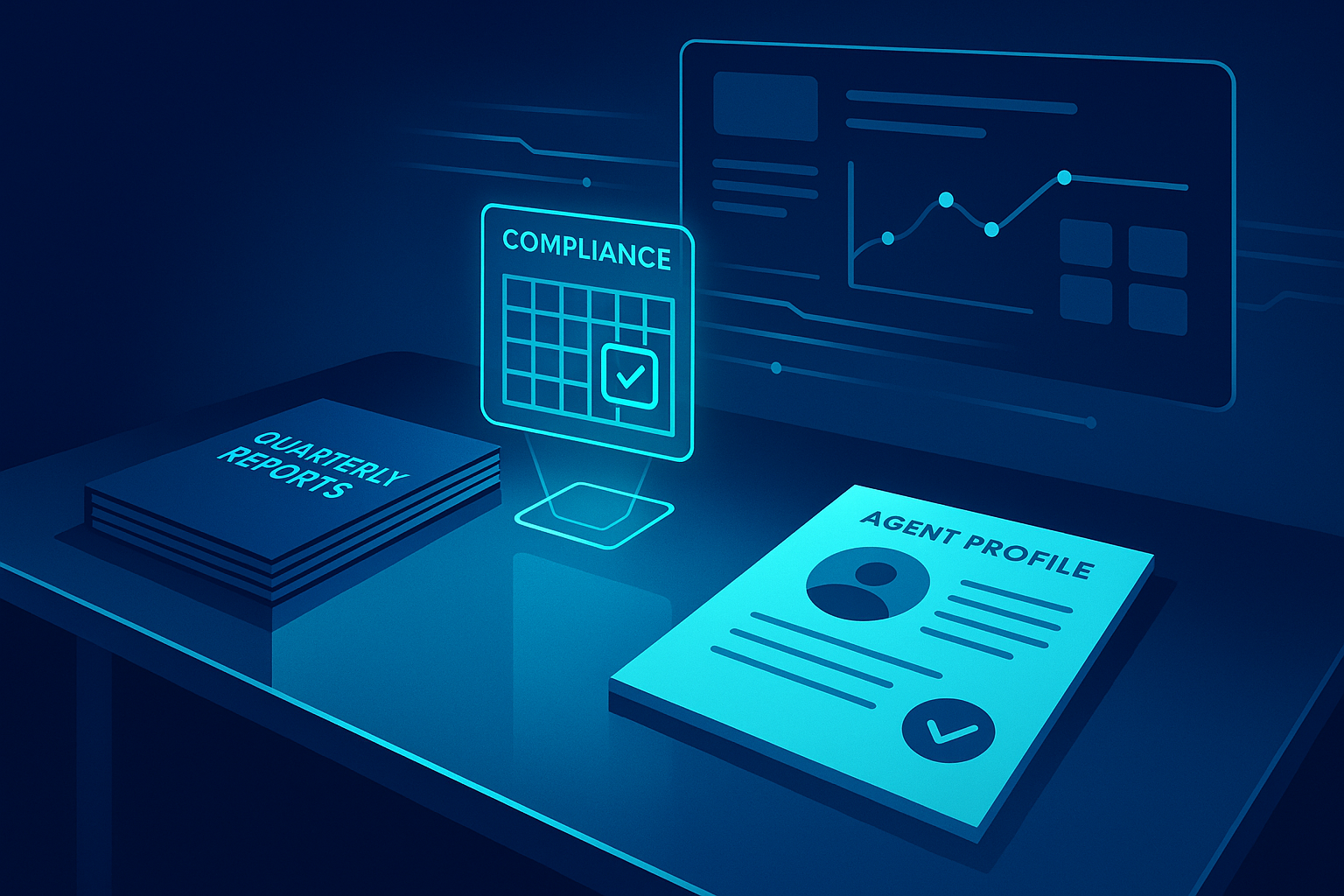
Real Estate agencies should pre-validate agent and contractor information quarterly, integrate BSO reporting with CRM systems for automatic compliance reminders, and establish year-end audit procedures that reduce filing errors by 70-85%. Commission reporting accuracy directly impacts agent satisfaction and retention rates.
Recruitment firms benefit from batch filing capabilities during high-volume placement periods, candidate self-service onboarding that reduces administrative overhead, and automated error flagging that accelerates placement completion times. Weekly verification runs prevent last-minute compliance scrambles during contract renewals.
Fundraising organizations must sync BSO data with donor management systems, schedule monthly payroll cross-checks before grant reporting cycles, and maintain digital compliance records for 4+ years. Clean payroll data supports grant applications and simplifies annual audit requirements that determine future funding eligibility.
Hospitality businesses like Maria’s operation enable weekly manager reviews before BSO submission, automate seasonal staff onboarding, and use BSO’s tip reporting features to ensure compliance and maximize operational efficiency. By integrating BSO with reservation and guest management systems, hospitality managers can further reduce administrative workload and focus on delivering exceptional guest experiences.
Resources, Learning, and Support — Getting Help and Staying Current
The SSA provides comprehensive BSO training through their online help center, featuring step-by-step tutorials, error code lookups, and monthly virtual office hours. The IRS complements this with form ordering services, deadline alert systems, and industry-specific compliance newsletters that keep you current on regulatory changes.
Industry associations offer sector-specific training: the National Association of Realtors provides BSO workshops for real estate professionals, while the American Staffing Association delivers recruitment-focused compliance webinars. Hospitality Financial and Technology Professionals offer specialized sessions for hotel and restaurant payroll management.
Vynta AI extends this support with personalized onboarding for each vertical, quarterly compliance audits, and direct access to automation specialists who understand your industry’s unique requirements. Our clients receive priority troubleshooting and strategic guidance for integrating BSO with existing business processes.
For additional guidance on starting and managing a business, you can explore the USA.gov business guide for authoritative resources and step-by-step instructions.
| Resource Type |
Provider |
Best For |
Access Method |
| Technical Support |
SSA Help Desk |
System errors, account issues |
1-800-772-6270, online chat |
| Industry Training |
Trade Associations |
Sector-specific compliance |
Member portals, conferences |
| Strategic Integration |
Vynta AI |
Automation and optimization |
Dedicated account management |
| Regulatory Updates |
IRS/SSA Newsletters |
Policy changes, deadlines |
Email subscriptions, RSS feeds |
The Future of SSA Business Services Online for Growing SMEs
BSO adoption delivers measurable ROI through reduced administrative overhead, eliminated penalty risks, and accelerated compliance processes. Mid-market SMEs report average time savings of 15-20 hours per filing period, penalty avoidance worth $5,000-15,000 annually, and improved audit readiness that strengthens their competitive position in regulated industries.
The convergence of BSO efficiency with AI-powered business automation represents the next evolution for forward-thinking SMEs. Vynta AI’s industry-specific solutions amplify BSO benefits by integrating wage reporting with lead management, candidate tracking, donor relations, and guest experience systems. Ready to transform your business services online ssa guide implementation into a strategic advantage? Schedule your personalized BSO optimization assessment and discover how Vynta AI can streamline your compliance while accelerating growth in your sector.
Frequently Asked Questions
What are the main benefits of using the SSA’s Business Services Online (BSO) platform for wage reporting and compliance?
BSO streamlines wage reporting by enabling electronic submission of W-2 forms and real-time Social Security Number verification, significantly reducing payroll errors. It saves mid-market SMEs 15-30 hours monthly on administrative tasks, improves compliance accuracy, and accelerates processing times from days to minutes.
How does BSO improve accuracy and reduce errors in W-2, W-2c, and W-3 filings compared to traditional paper methods?
BSO provides real-time validation of Social Security Numbers and automated error checks before submission, preventing costly filing mistakes. This digital approach reduces errors by 25-50% compared to paper filings, minimizing rework and compliance risks for businesses.
Which industries can gain the most operational advantages from integrating BSO into their payroll and compliance processes?
Hospitality, real estate, recruitment, and fundraising sectors benefit most from BSO integration due to their complex wage reporting needs, seasonal or variable staffing, and regulatory compliance demands. These industries see measurable improvements in payroll accuracy, operational efficiency, and compliance management.
What are the essential steps and requirements for registering and gaining access to the BSO platform?
To access BSO, businesses must complete a straightforward five-step registration process including identity verification and authorization setup. Employers with 250 or more W-2 forms annually are required to register, ensuring secure access to electronic wage reporting and Social Security Number verification tools.
About The Author
Anas Moujahid is the chief contributing writer & Operations Director for the Vynta AI Blog, where he turns cutting-edge AI automation into measurable business outcomes for mid-market companies.
Vynta AI designs enterprise-grade AI agents that augment rather than replace people—freeing teams to focus on higher-value work while the bots handle the busywork.
We specialise in four service-heavy verticals where AI can move the revenue needle fast: real estate, recruitment, fundraising and hospitality.
Anas started his career architecting AI and automation systems; today he leads operations at Vynta AI, making sure every deployment lands real-world ROI—whether that’s more booked viewings for estate agents, faster placements for recruiters, warmer investor pipelines for fundraisers or happier guests for hotels and restaurants.
Vynta AI delivers results by:
- Building industry-specific agents pre-trained on real-world workflows—no generic chatbots here.
- Integrating seamlessly with existing CRMs, ATSs, PMSs and fundraising platforms—zero rip-and-replace.
- Measuring success in business KPIs (lead-to-close rates, time-to-hire, donor retention, RevPAR) not vanity metrics.
- Providing transparent implementation plans so clients know exactly what to expect, when and why.
- Pairing every AI agent with human-in-the-loop controls to keep quality, compliance and brand voice on point.
Since launch, Vynta AI has helped agencies slash lead qualification time by up to 70 %, recruitment firms cut screening hours in half, fundraising teams triple investor touchpoints and hospitality brands lift guest satisfaction scores by double digits—all while keeping human expertise firmly in the loop.
Anas writes with the same ethos that drives Vynta AI: outcome-focused, jargon-free and grounded in real business value. Expect data-backed insights, practical implementation guides and a clear-eyed view of what AI can—and can’t—do for your organisation.