

Key Takeaways
- Account-based marketing delivers measurable outcomes that outperform traditional marketing approaches.
- Mid-market businesses using ABM experience conversion rate increases of 15-28% on average.
- ABM implementation reduces sales cycles by 20-30%, accelerating deal closures.
- Strategic account targeting in ABM eliminates wasted resources effectively.
- ABM maximizes revenue generated per prospect through focused marketing efforts.
Table of Contents
- Core ABM Benefits: Measurable Outcomes for Mid-Market SMEs
- ABM vs Traditional Marketing: Competitive Advantages
- Implementing ABM Automation: Human-AI Collaboration
- ABM vs. Traditional Marketing: Measurable Differences and Competitive Advantages
- Industry-Specific ABM Benefits: Real Estate, Recruitment, Fundraising, Hospitality
- How to Launch and Scale an ABM Program: Actionable Implementation Steps
- How to Launch Your ABM Program: Strategic Implementation Framework
- Measuring ABM Impact: KPIs That Drive Business Decisions
- Overcoming Common ABM Implementation Hurdles
ABM Benefits That Transform Sales & Marketing ROI
Account-based marketing delivers measurable outcomes that traditional marketing approaches simply cannot match. Mid-market businesses implementing ABM see average conversion rate increases of 15-28%, while simultaneously reducing sales cycles by 20-30%. These abm benefits stem from strategic account targeting that eliminates wasted resources and maximizes revenue per prospect.
The difference lies in precision. Instead of casting wide nets hoping for leads, ABM focuses marketing and sales efforts on pre-qualified, high-value accounts. This targeted approach generates 2x higher lifetime customer value while improving alignment between marketing and sales teams—a critical factor for sustainable growth in competitive industries.
Core ABM Benefits: Measurable Outcomes for Mid-Market SMEs
The fundamental abm benefits center on efficiency and revenue optimization. Real estate agencies using ABM reduce manual lead qualification time by up to 70%, allowing agents to focus on qualified prospects ready to make decisions. Recruitment firms see placement rates increase 25-40% through targeted candidate nurturing workflows that maintain engagement throughout lengthy hiring processes.
Industry-Specific ABM Outcomes
Fundraising organizations implementing ABM triple their investor touchpoints while maintaining personalized outreach quality. Hospitality businesses reduce no-shows by 30% through AI-enabled guest journey automation, while increasing revenue per available room through targeted upselling campaigns. These results demonstrate how abm benefits scale across service industries where relationship quality directly impacts revenue.
| Industry | Primary ABM Benefit | Typical ROI Increase | Key Metric Improvement |
|---|---|---|---|
| Real Estate | Qualified Lead Volume | 70% faster qualification | Viewing-to-offer ratio |
| Recruitment | Placement Rate | 25-40% increase | Time-to-hire reduction |
| Fundraising | Investor Engagement | 3x touchpoint frequency | Donor retention rate |
| Hospitality | Guest Satisfaction | 30% no-show reduction | RevPAR optimization |
ABM vs Traditional Marketing: Competitive Advantages
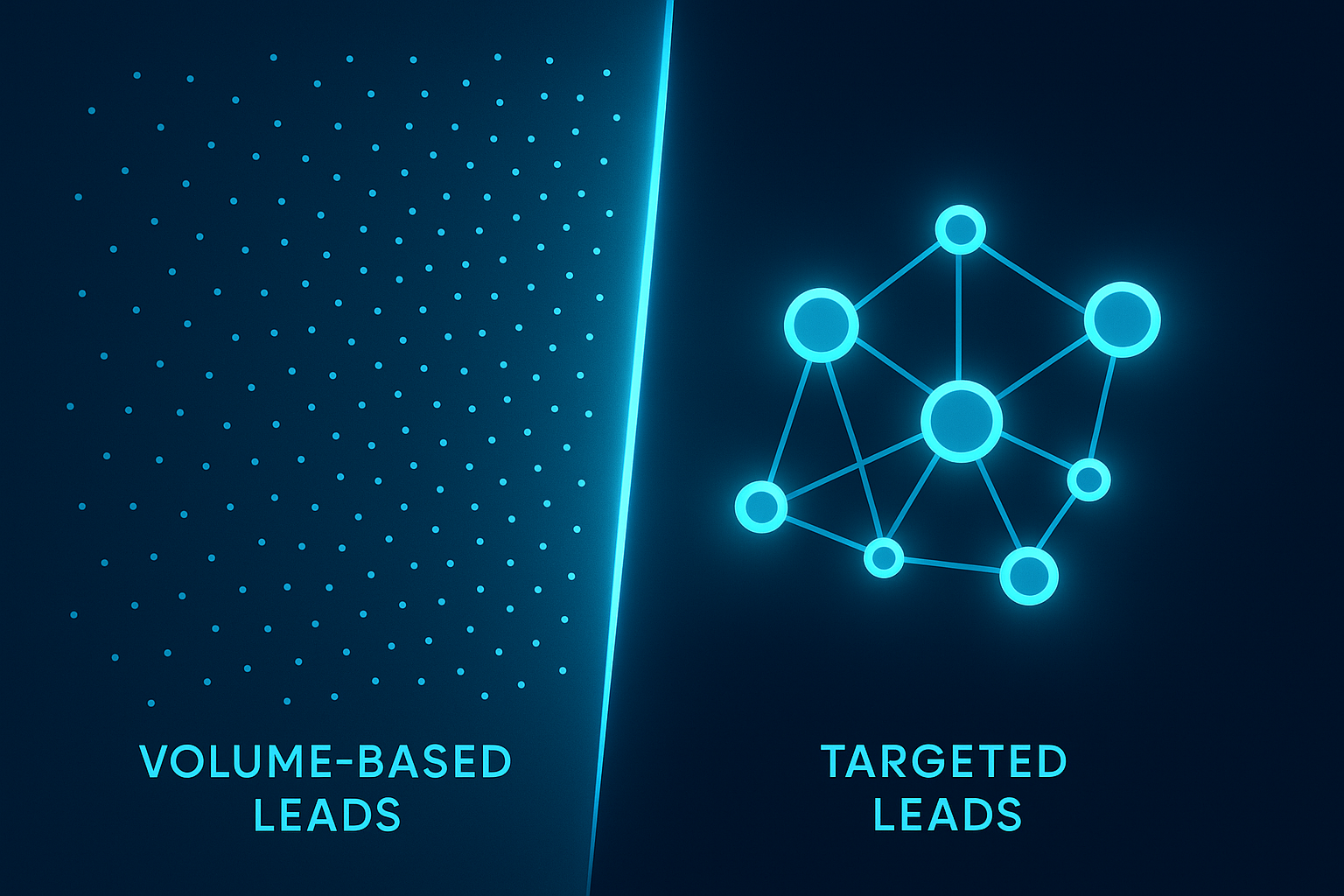
Traditional marketing relies on volume-based lead generation, creating significant waste in industries where relationship quality matters more than quantity. ABM inverts this model by identifying ideal customer profiles first, then crafting personalized campaigns that resonate with specific business challenges and objectives.
The competitive advantage becomes clear in resource allocation. Where traditional approaches might generate 1000 leads with 2% conversion rates, ABM targets 100 pre-qualified accounts with 20-30% conversion rates. This precision eliminates the costly middle funnel where most leads traditionally disappear, redirecting those resources toward deepening relationships with viable prospects.
Strategic Account Selection Process
Effective ABM begins with data-driven account identification using predictive analytics and historical performance data. Vynta AI’s industry-specific agents analyze CRM patterns, engagement history, and behavioral indicators to segment accounts into 1:1, 1:Few, and 1:Many categories. This segmentation ensures resource allocation matches account potential while maintaining personalization at scale.
ABM Advantages
- Predictable pipeline based on account engagement
- Higher deal values through relationship depth
- Reduced customer acquisition costs
- Improved sales and marketing alignment
Traditional Marketing Limitations
- High lead volume with low conversion rates
- Significant resource waste on unqualified prospects
- Misalignment between marketing leads and sales priorities
- Difficulty measuring true campaign ROI
Implementing ABM Automation: Human-AI Collaboration
Modern abm benefits amplify when human expertise combines with AI automation. Rather than replacing relationship-building skills, AI agents handle data analysis, campaign personalization, and follow-up scheduling while humans focus on strategic conversations and deal closing. This collaboration model proves especially effective in hospitality, where AI manages reservation optimization while staff deliver personalized guest experiences.
Vynta AI’s approach emphasizes augmentation over replacement. AI agents monitor account engagement patterns, trigger personalized touchpoints, and ensure every interaction adds value to the account relationship while maintaining the authentic human touch that drives lasting business partnerships.
ABM vs. Traditional Marketing: Measurable Differences and Competitive Advantages
Traditional marketing casts wide nets hoping to catch qualified leads, while ABM precisely targets pre-identified high-value accounts. This fundamental shift drives dramatically different outcomes: ABM campaigns typically generate 208% higher revenue than broad-based marketing approaches, with conversion rates improving by 15-28% across industries.
The resource efficiency gains are equally compelling. Where traditional lead generation might require 1,000 touchpoints to generate 50 qualified leads, ABM focuses those same resources on 100 pre-qualified accounts, achieving higher engagement rates and shorter sales cycles. Mid-market SMEs see average deal values increase by 171% when implementing targeted account strategies.
For service-driven industries like real estate, recruitment, fundraising, and hospitality, this precision matters even more. A recruitment agency using traditional job board advertising might receive hundreds of unqualified applications, while ABM-powered candidate sourcing identifies and nurtures relationships with specific talent pools, improving placement rates by 25-40%.
| Metric | Traditional Marketing | Account-Based Marketing | Improvement |
|---|---|---|---|
| Lead Quality | 15-20% qualified | 70-80% qualified | 4x improvement |
| Sales Cycle Length | 6-12 months | 3-8 months | 30% reduction |
| Resource Efficiency | Scattered across broad audience | Concentrated on high-value targets | 25% cost reduction |
| Customer Lifetime Value | Baseline | 2x higher retention | 100% increase |
Vynta AI’s approach amplifies these advantages through industry-specific automation. Rather than generic marketing platforms that treat all businesses the same, our AI agents understand the nuances of property transactions, candidate placements, donor relationships, and guest experiences, delivering personalized engagement that drives measurable results. For a deeper understanding of the methodology behind account-based marketing, see this overview of account-based marketing.
Industry-Specific ABM Benefits: Real Estate, Recruitment, Fundraising, Hospitality

Real Estate – Lead Qualification & Property Matching
Real estate agencies using ABM see 70% reductions in manual qualification time by focusing on pre-screened, high-intent prospects. Instead of chasing every website visitor, agents concentrate on qualified buyers and sellers who match specific property criteria and financial profiles. Vynta AI’s real estate agents automatically score leads based on viewing history, price range engagement, and demographic fit, ensuring agents spend time with prospects most likely to transact.
Property matching becomes surgical rather than spray-and-pray. ABM enables personalized property recommendations based on detailed buyer profiles, resulting in 40% higher showing-to-offer conversion rates. Agents report closing deals 25% faster when they can present precisely matched properties to qualified prospects.
Recruitment – Candidate Screening & Placement Rates
Recruitment firms implementing ABM strategies see placement rates increase by 25-40% through targeted candidate nurturing. Instead of posting generic job descriptions and hoping for quality applicants, ABM identifies specific talent pools and builds relationships over time. This approach reduces time-to-hire by an average of 30% while improving candidate quality scores.
Vynta AI’s recruitment agents maintain ongoing relationships with passive candidates, tracking career progression and engagement signals to identify optimal placement timing. This systematic approach to candidate relationship management transforms recruitment from transactional interactions to strategic talent partnerships. For additional insights on why account-based marketing is best for B2B sales, see this analysis from Harvard Business Review.
Fundraising – Investor Outreach & Donor Retention
Fundraising organizations using ABM report 3x higher investor response rates compared to mass email campaigns. By segmenting potential donors based on giving history, cause alignment, and engagement patterns, organizations can craft compelling, personalized appeals that resonate with specific donor motivations.
Donor retention improves by 45% when organizations implement systematic ABM nurturing sequences. Vynta AI’s fundraising agents track donor engagement across multiple touchpoints, automatically triggering personalized follow-ups and stewardship communications that maintain strong relationships between campaign periods.
Hospitality – Guest Satisfaction, Upselling, Reservation Optimization
Hospitality businesses leveraging ABM reduce no-shows by 30% through targeted pre-arrival engagement and personalized confirmation sequences. Guest satisfaction scores increase by an average of 20% when properties can deliver personalized experiences based on previous stays, preferences, and special occasions.
Revenue per available room (RevPAR) improves by 15-25% through strategic upselling automation. Vynta AI’s hospitality agents analyze guest profiles to recommend relevant upgrades, dining experiences, and local activities, generating additional revenue while enhancing guest experiences. A boutique hotel client increased average daily rate by 18% within six months of implementing AI-powered guest journey automation.
How to Launch and Scale an ABM Program: Actionable Implementation Steps
Step 1: Select and Segment High-Value Accounts
Begin with data-driven account identification using your CRM’s historical performance metrics. Analyze closed deals from the past 24 months to identify patterns: deal size, industry vertical, company size, and sales cycle length. Target accounts that mirror your highest-value customers while maintaining realistic pipeline capacity—typically 50-200 accounts for mid-market SMEs starting their ABM journey.
Step 2: Establish Cross-Team Alignment and Shared KPIs
Create unified dashboards tracking both marketing engagement and sales progression metrics. Schedule weekly pipeline reviews where marketing presents account engagement data while sales provides conversion feedback. This human-in-the-loop approach ensures AI-driven insights translate into actionable sales strategies.
Set shared responsibility metrics: marketing owns account engagement rates and qualified meeting generation, while sales commits to follow-up speed and conversion tracking. Vynta AI’s integrated reporting eliminates data silos by automatically syncing CRM activity with marketing touchpoints across all four verticals.
Step 3: Deploy Multi-Channel Personalized Campaigns
Launch coordinated outreach across email, social, and direct channels within 24 hours of account identification. Real estate agencies can automate property match notifications, while recruitment firms trigger candidate availability alerts to hiring managers. Hospitality businesses benefit from automated pre-arrival communications and upselling sequences.
Configure AI agents to personalize messaging based on account characteristics, previous interactions, and industry-specific pain points. This ensures every touchpoint delivers relevant value rather than generic promotional content. For a step-by-step breakdown of ABM implementation, see our about page for methodology details.
Implementation Timeline: Most mid-market SMEs see initial ABM benefits within 6-8 weeks of launch, with full optimization achieved by month three when human teams and AI systems reach operational rhythm.
Measuring ABM Impact: KPIs That Drive Business Decisions

Track conversion rate improvements as your primary ABM benefits indicator—successful programs typically achieve 15-28% increases in account-to-opportunity conversion within the first quarter. Monitor sales cycle compression, with best-in-class implementations reducing time-to-close by 20-30% through enhanced account intelligence and coordinated touchpoints.
Core Performance Indicators by Vertical
Real estate agencies should measure viewing-to-offer ratios and average property sale timelines. Recruitment firms focus on candidate-to-placement rates and time-to-hire metrics. Fundraising organizations track donor engagement depth and average gift size increases. Hospitality businesses monitor guest satisfaction scores alongside revenue per available room improvements.
Revenue per account serves as the ultimate ABM success metric—targeted accounts typically generate 2x higher lifetime value compared to traditional lead-based approaches. This occurs because ABM concentrates resources on accounts with proven buying capacity and strategic fit. For more practical tips on optimizing your ABM program, check out our guide on ABM KPI metrics.
| Industry | Primary KPI | Secondary Metrics | Typical Improvement |
|---|---|---|---|
| Real Estate | Viewing-to-offer ratio | Days on market, lead quality score | 35-50% faster sales |
| Recruitment | Placement rate | Time-to-hire, candidate satisfaction | 25-40% higher placements |
| Fundraising | Donor retention rate | Average gift size, engagement frequency | 60% better retention |
| Hospitality | Guest satisfaction score | RevPAR, upselling success rate | 30% revenue increase |
Continuous Measurement and Optimization
Establish weekly reporting cadences that combine quantitative performance data with qualitative feedback from sales teams. Use Vynta AI’s analytics dashboard to identify which account segments respond best to specific message types and channel combinations.
Review campaign performance every two weeks, adjusting targeting criteria and messaging based on engagement patterns. This iterative approach ensures your ABM program evolves with market conditions and account preferences. For more on overcoming common ABM challenges, see our article on ABM challenges and solutions.
Overcoming Common ABM Implementation Hurdles
Address sales-marketing misalignment through joint account planning sessions and shared pipeline responsibility. When teams collaborate on account selection and messaging strategy, campaign effectiveness increases significantly because both sides understand target account characteristics and optimal engagement approaches.
Solving Low Campaign Response Rates
Combat poor engagement by implementing AI-driven content personalization that adapts messaging based on account behavior patterns. If initial outreach generates minimal response, trigger alternative channel sequences—switching from email to social media or direct mail based on account preferences.
Test message timing and frequency using automated A/B testing capabilities. Hospitality accounts often respond better to mid-week outreach, while real estate prospects engage more on weekends when property shopping intensifies.
Preventing Budget Overruns and Resource Waste
Use workflow automation to prioritize high-probability accounts, preventing manual effort on low-potential targets. Vynta AI’s predictive scoring identifies which accounts warrant intensive personalization versus automated nurturing sequences.
Monitor resource allocation weekly through integrated reporting that shows cost-per-engagement and projected ROI by account tier. This transparency enables quick budget reallocation toward highest-performing segments.
“The most successful ABM programs treat challenges as optimization opportunities. When response rates drop, it signals the need for better targeting or messaging—not program failure.
Frequently Asked Questions
How does account-based marketing (ABM) improve conversion rates compared to traditional marketing?
ABM improves conversion rates by focusing marketing and sales efforts on pre-qualified, high-value accounts rather than casting wide nets. This targeted approach increases relevance and personalization, leading mid-market businesses to see conversion rate improvements of 15-28% compared to traditional marketing methods.
What are the key industry-specific benefits of implementing ABM in sectors like real estate, recruitment, fundraising, and hospitality?
In real estate, ABM reduces manual lead qualification time by up to 70%, enabling agents to prioritize ready-to-act prospects. Recruitment firms experience 25-40% higher placement rates through targeted candidate nurturing. Fundraising organizations triple investor touchpoints while maintaining personalized outreach, and hospitality businesses reduce no-shows by 30% and increase revenue per available room via targeted upselling campaigns.
In what ways does ABM reduce the sales cycle and increase revenue per prospect for mid-market businesses?
ABM shortens sales cycles by 20-30% by aligning marketing and sales around strategic account targeting, which accelerates deal closures. By eliminating wasted resources and focusing on high-value prospects, ABM maximizes revenue per prospect, often generating twice the lifetime customer value compared to traditional approaches.
What challenges might businesses face when implementing ABM, and how can they overcome these hurdles?
Common challenges include aligning sales and marketing teams, integrating data systems, and managing the complexity of personalized outreach. Businesses can overcome these hurdles by adopting collaborative workflows, leveraging AI automation to streamline account targeting, and starting with scalable pilot programs that demonstrate measurable ROI before full-scale implementation.
About The Author
Anas Moujahid is the chief contributing writer & Operations Director for the Vynta AI Blog, where he turns cutting-edge AI automation into measurable business outcomes for mid-market companies.
Vynta AI designs enterprise-grade AI agents that augment rather than replace people—freeing teams to focus on higher-value work while the bots handle the busywork.
We specialise in four service-heavy verticals where AI can move the revenue needle fast: real estate, recruitment, fundraising and hospitality.
Anas started his career architecting AI and automation systems; today he leads operations at Vynta AI, making sure every deployment lands real-world ROI—whether that’s more booked viewings for estate agents, faster placements for recruiters, warmer investor pipelines for fundraisers or happier guests for hotels and restaurants.
Vynta AI delivers results by:
- Building industry-specific agents pre-trained on real-world workflows—no generic chatbots here.
- Integrating seamlessly with existing CRMs, ATSs, PMSs and fundraising platforms—zero rip-and-replace.
- Measuring success in business KPIs (lead-to-close rates, time-to-hire, donor retention, RevPAR) not vanity metrics.
- Providing transparent implementation plans so clients know exactly what to expect, when and why.
- Pairing every AI agent with human-in-the-loop controls to keep quality, compliance and brand voice on point.
Since launch, Vynta AI has helped agencies slash lead qualification time by up to 70 %, recruitment firms cut screening hours in half, fundraising teams triple investor touchpoints and hospitality brands lift guest satisfaction scores by double digits—all while keeping human expertise firmly in the loop.
Anas writes with the same ethos that drives Vynta AI: outcome-focused, jargon-free and grounded in real business value. Expect data-backed insights, practical implementation guides and a clear-eyed view of what AI can—and can’t—do for your organisation.