
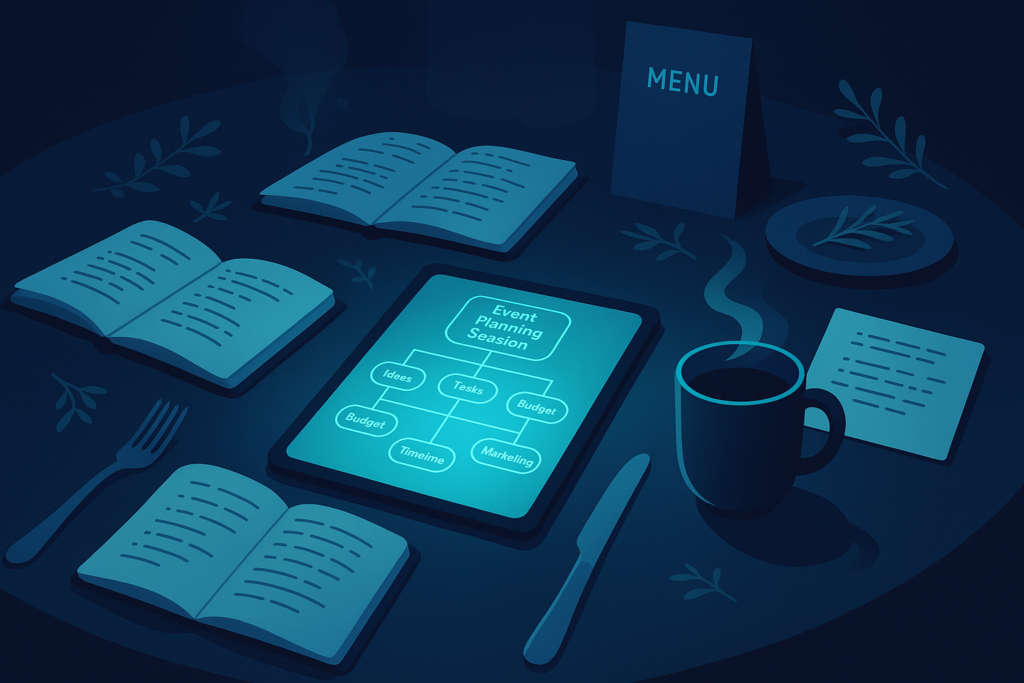
Restaurant events serve four core business functions: brand differentiation in competitive markets, predictable revenue streams during slower periods, enhanced guest data collection for future marketing, and premium pricing opportunities that improve profit margins. When executed with AI-powered precision, these events become systematic growth engines rather than one-off promotional tactics.
Strategic Event Types—AI-Optimized for Maximum Impact
vynta.ai/wp-content/uploads/2025/11/flat_illustration_of_digital_blueprint_with_event_.webp” alt=”Flat illustration of digital blueprint with event icons, restaurant elements, and neon glow.” />
The most profitable restaurant event ideas align event format with AI-driven operational advantages. Rather than choosing events based solely on creativity, successful hospitality managers map each event type to specific automation capabilities that reduce costs while enhancing guest experience.
Tasting & Immersive Experiences
Best for: Building guest loyalty and showcasing culinary expertise with premium pricing
AI transforms traditional tastings through automated personalized menu creation based on guest dietary preferences, purchase history, and real-time inventory levels. Smart wine pairing algorithms suggest optimal combinations while tracking guest reactions for future events. Restaurants using AI-guided tasting experiences report 10-15% higher average spend per head compared to static tasting menus.
Private Dining & Corporate Gatherings
Best for: Predictable revenue streams and premium pricing opportunities
Automated booking systems prevent double-booking disasters while maximizing room utilization through intelligent scheduling. AI chatbots handle RSVP management and pre-event dietary surveys, reducing administrative time by 60%. Corporate clients particularly value the seamless coordination, leading to 25% faster event confirmation cycles and higher rebooking rates.
| Event Type | AI-Enabled Outcome | Typical ROI Lift | Implementation Timeline |
|---|---|---|---|
| Tasting Events | Personalized menu automation | 10-15% higher spend | 2-3 weeks setup |
| Private Dining | Smart booking & coordination | 25% faster confirmations | 1-2 weeks integration |
| Themed Events | Dynamic pricing & targeting | 30% higher attendance | 3-4 weeks campaign setup |
| Hybrid Events | Digital integration & upselling | 40% ancillary revenue | 4-6 weeks tech integration |
Themed & Social Events
Best for: Seasonal revenue boosts and community engagement
Dynamic pricing algorithms adjust ticket prices based on demand patterns, weather forecasts, and competitor activity. AI-powered guest targeting automatically promotes events to high-value past attendees two weeks in advance, resulting in 30% higher attendance rates for seasonal celebrations like Valentine’s Day or Oktoberfest themes.
Hybrid Digital + Physical Events
Best for: Expanding reach beyond physical capacity constraints
Live-streamed chef demonstrations with integrated e-commerce for ingredient kits create new revenue streams. Virtual guests can participate in cooking classes or wine tastings through automated registration systems. This hybrid approach generates 40% additional revenue from merchandise, ingredient kits, and premium virtual experiences.
Setting Goals and Audience for Restaurant Events—Data-Driven Decision Making
Successful food events ideas begin with SMART goals tied to measurable business outcomes: increase monthly bookings by 15%, lift average spend by 20%, or achieve 90% guest satisfaction scores. AI transforms vague event planning into precision audience segmentation and goal setting through behavioral data analysis. Rather than guessing at guest preferences, AI-powered systems analyze past dining patterns, spending habits, and engagement levels to create detailed customer personas. This approach enables restaurants to design events that resonate with specific audience segments—from corporate clients seeking networking opportunities to food enthusiasts craving culinary education.
Predictive analytics transforms event timing and theme selection from guesswork into strategic decision-making. By analyzing historical booking data, seasonal trends, and local market conditions, AI identifies optimal windows for maximum attendance and revenue. For instance, data might reveal that wine pairing events perform 40% better on Thursday evenings versus weekends, or that corporate groups book private dining 6-8 weeks in advance during Q4. Explore more about artificial intelligence in the hospitality industry.
Automated pre-event surveys delivered via chatbots capture real-time guest preferences 14 days before each event in restaurant venue. This feedback loop allows menu adjustments, dietary accommodation planning, and service customization that directly impacts satisfaction scores. Restaurants using this approach report 25% higher Net Promoter Scores compared to static event planning.
Quick Implementation: Five Pre-Event Questions That Drive Results
- What’s your primary goal for attending this event?
- Any dietary restrictions or preferences we should know about?
- How did you hear about this event?
- What time works best for your arrival?
- Interest in add-on experiences (wine pairing, chef interaction)?
The most successful restaurant event ideas emerge from A/B testing concepts with small, representative groups before full rollout. AI platforms can segment guest lists, send different event concepts to each group, and measure engagement rates, RSVP conversion, and feedback sentiment. This data-driven validation reduces the risk of poorly attended events and maximizes marketing spend efficiency. Discover more about our approach to data-driven hospitality.
The Restaurant Event Management Blueprint—From Space to Service
AI serves as the operational backbone connecting physical space optimization, menu personalization, staff coordination, and guest experience enhancement. Dynamic floorplan tools powered by machine learning analyze RSVP data, guest group dynamics, and service requirements to automatically suggest optimal table configurations. This eliminates the guesswork in space planning and ensures smooth traffic flow for events ranging from intimate wine tastings to large corporate gatherings.
Menu customization reaches new levels of precision when AI integrates guest preference data, dietary restrictions, and real-time inventory levels. The system generates personalized menu options that balance guest satisfaction with kitchen efficiency and cost control. For buffet-style events, AI tracks consumption patterns in real-time, alerting kitchen staff when specific dishes need replenishment while preventing overproduction of less popular items.
Staffing optimization becomes strategic rather than reactive through AI-powered scheduling that aligns workforce deployment with event complexity and expected guest flow. Chatbots handle routine guest inquiries pre-event, freeing staff to focus on high-value service interactions. During events, AI-enabled guest lookup systems provide servers with instant access to dining history, preferences, and special occasions, enabling truly personalized service.
| Event Component | Traditional Management | AI-Enhanced Approach | Measurable Benefit |
|---|---|---|---|
| Space Planning | Manual layout estimation | Dynamic floorplan optimization | 15% better space utilization |
| Menu Creation | Fixed options for all guests | Personalized dietary matching | 20% higher satisfaction scores |
| Staff Scheduling | Experience-based guessing | Predictive workload analysis | 25% reduction in labor costs |
| Guest Service | Generic interactions | Preference-driven personalization | 30% increase in upselling success |
Smart ambiance systems adapt lighting, music, and temperature based on event type, guest count, and real-time feedback. Pre-loaded AV checklists integrated with event management platforms ensure technical elements run smoothly without manual oversight. This technological foundation allows hospitality teams to focus on creating memorable experiences rather than managing operational details.
Budgeting, Pricing, and Profitability—The AI Advantage
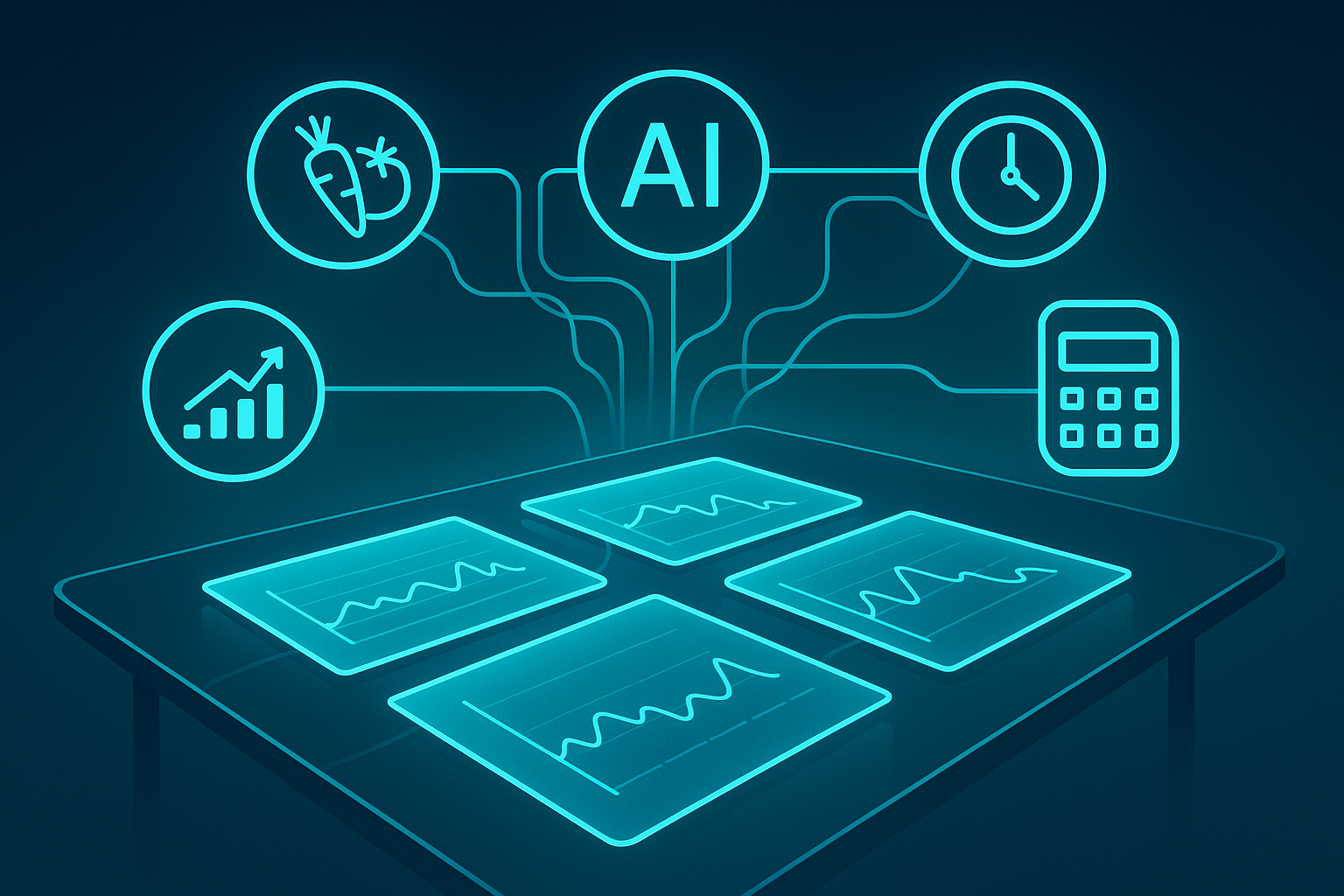
AI transforms event financial planning from static budgeting to dynamic cost prediction and revenue optimization. Machine learning algorithms analyze historical data across food costs, labor requirements, marketing spend, and overhead allocation to generate accurate budget forecasts for different event types. This predictive capability helps restaurants avoid common pitfalls like underestimating service costs for large groups or overordering specialty ingredients.
Dynamic pricing strategies powered by real-time market analysis adjust ticket prices based on demand patterns, competitor activity, local events, and even weather forecasts. For example, AI might recommend premium pricing for a rooftop wine tasting during perfect weather while suggesting promotional rates for indoor events during peak competitor activity. This approach maximizes revenue per seat while maintaining competitive positioning.
Automated upselling systems identify and present relevant add-on opportunities throughout the guest journey. Pre-event emails might offer wine pairings to guests who previously purchased premium beverages, while day-of-event prompts suggest photo packages or chef interactions based on celebration indicators. Restaurants implementing AI-driven upselling report 35% higher ancillary revenue per event.
Post-event profitability analysis becomes granular and actionable through AI-powered cost tracking that identifies specific revenue drivers and expense leaks. The system correlates guest satisfaction scores with spending patterns, menu item performance, and service timing to pinpoint optimization opportunities. This data-driven approach to event in restaurant management eliminates guesswork and maximizes return on investment.
Restaurant Event Profitability Analysis
Event profitability analysis transforms raw data into strategic insights that drive sustainable revenue growth. Modern AI systems track every touchpoint from initial inquiry to final payment, creating comprehensive profit maps that reveal hidden opportunities and expense leaks. The system correlates guest satisfaction scores with spending patterns, menu item performance, and service timing to pinpoint optimization opportunities. This data-driven approach to event in restaurant management eliminates guesswork and maximizes return on investment.
Smart analytics platforms automatically calculate true event ROI by factoring in direct costs (food, labor, materials), indirect expenses (utilities, wear-and-tear), and opportunity costs from regular service displacement. AI-powered systems identify which event types generate the highest profit margins and predict optimal pricing strategies based on demand patterns, seasonal trends, and competitive positioning. Recent NIST research highlights the impact of AI-driven restaurant efficiency.
Post-event analysis becomes a strategic weapon when automated systems generate actionable reports within 24 hours. These insights reveal guest lifetime value increases, identify high-performing menu items for future events, and highlight operational inefficiencies that drain profitability. Restaurant managers gain clear visibility into which events drive repeat business versus one-time transactions.
Key Insight: Restaurants using AI-powered event analytics report 23% higher profit margins compared to those relying on manual tracking methods. The difference lies in real-time optimization and data-driven decision making.
Scaling Restaurant Events Systematically
Systematic event scaling requires robust operational frameworks that maintain quality while increasing frequency and capacity. Successful restaurants develop repeatable processes for their most profitable event formats, creating template-based approaches that reduce planning time and minimize execution errors. This standardization enables staff to deliver consistent experiences regardless of event size or complexity. See how scalable event management solutions can support your growth.
Technology infrastructure becomes critical when scaling beyond monthly events to weekly or even daily special occasions. Integrated booking systems, automated inventory management, and streamlined communication tools prevent the operational chaos that typically accompanies rapid growth. Smart restaurants invest in scalable solutions that grow with their ambitions.
Staff development programs ensure team members can handle increased event volume without compromising service quality. Cross-training initiatives create operational flexibility, while specialized roles emerge for event coordination, guest relations, and technical support. Clear advancement pathways retain talented employees who become valuable assets in scaling efforts.
Financial planning for scale requires careful attention to cash flow patterns, seasonal variations, and capacity constraints. Successful scaling maintains profitability while investing in infrastructure improvements, staff expansion, and marketing initiatives that support sustainable growth trajectories.
Measuring Long-Term Event Success

Long-term success metrics extend beyond immediate revenue to encompass brand building, customer lifetime value, and market positioning. Sophisticated measurement frameworks track how events contribute to overall restaurant performance, including increased regular dining frequency, higher average spending per visit, and enhanced brand reputation within the community.
Guest retention analysis reveals the true value of event in restaurant investments by measuring how event attendees become regular customers. Advanced analytics platforms track individual guest journeys, identifying which event experiences generate the strongest loyalty and highest lifetime value. This data guides future event strategy and resource allocation decisions.
Brand awareness metrics capture the broader impact of events on restaurant visibility and reputation. Social media engagement, online reviews, word-of-mouth referrals, and media coverage all contribute to long-term brand value that extends far beyond direct event revenue. Smart restaurants track these indicators alongside financial metrics.
Competitive positioning improves when events differentiate restaurants within their local markets. Regular events create unique selling propositions that attract specific customer segments and establish thought leadership in culinary innovation, community engagement, or hospitality excellence. For further reading, see this study on AI and hospitality innovation.
Future Restaurant Event Innovations
Emerging technologies are reshaping restaurant events through immersive experiences, personalized interactions, and seamless digital integration. Virtual and augmented reality elements enhance dining experiences, while IoT sensors optimize ambiance, monitor guest comfort, and prevent service bottlenecks before they impact satisfaction.
Artificial intelligence evolution continues advancing personalization capabilities, enabling restaurants to create truly individualized event experiences. Predictive analytics anticipate guest preferences, dietary needs, and service expectations, while automated systems handle complex logistics that previously required extensive manual coordination.
Sustainability initiatives increasingly influence event planning as environmentally conscious guests demand responsible practices. Zero-waste events, local sourcing programs, and digital-first approaches reduce environmental impact while often improving operational efficiency and cost management.
Community integration deepens as restaurants become cultural hubs that host educational workshops, charitable fundraisers, and collaborative experiences with local artisans, farmers, and entertainers. These partnerships create authentic connections that strengthen customer loyalty and community standing.
Strategic Recommendations for Restaurant Events
Start with data-driven event selection by analyzing existing customer preferences, seasonal patterns, and competitive gaps in your local market. Focus initial efforts on 2-3 event formats that align with your restaurant’s core strengths and customer base rather than attempting to offer everything immediately.
Invest in integrated technology platforms that connect event management with existing POS, inventory, and customer relationship systems. This integration eliminates data silos, reduces manual errors, and provides comprehensive insights that drive continuous improvement in event performance and profitability.
Develop systematic approaches to restaurant event ideas generation by establishing regular brainstorming sessions, monitoring industry trends, and soliciting customer feedback. Create evaluation criteria that assess potential events based on profit potential, operational feasibility, and brand alignment before committing resources. Learn more about our strategic recommendations for restaurant events.
Build strategic partnerships with complementary businesses, local suppliers, and community organizations to expand event capabilities while sharing costs and risks. These collaborations often generate unique experiences that differentiate your restaurant while creating mutually beneficial relationships.
| Event Strategy | Implementation Timeline | Resource Requirements | Expected ROI |
|---|---|---|---|
| Template-Based Event Formats | 2-4 weeks | Standardized checklists, staff training | 15-20% higher event frequency |
| Integrated Tech Platforms | 4-8 weeks | IT integration, vendor selection | 25% reduction in manual errors |
| Strategic Partnerships | Ongoing | Relationship management | Expanded event capabilities, shared costs |
Frequently Asked Questions
How do restaurant events differ from traditional dining experiences, and what advantages do they offer?
Restaurant events are planned, curated experiences—such as wine tastings or corporate gatherings—that go beyond standard dining by creating memorable, premium moments. They drive higher average spend per guest, enhance guest lifetime value, and foster repeat visits through unique brand engagement.
In what ways can AI technology enhance the planning and profitability of restaurant events?
AI optimizes event planning by personalizing invitations, predicting demand, and managing seating arrangements to maximize capacity and guest satisfaction. It also analyzes feedback and inventory in real time, enabling data-driven adjustments that increase event profitability and operational efficiency.
What types of restaurant events are most effective for increasing guest spend and loyalty?
Events like intimate wine tastings, chef’s tables, and corporate gatherings are highly effective as they offer exclusive, premium experiences that encourage guests to spend more and return. These curated events showcase the culinary brand and justify premium pricing while deepening guest relationships.
How can hosting regular events contribute to long-term revenue growth and brand differentiation for restaurants?
Regularly hosting events creates predictable revenue streams during slower periods and builds a loyal customer base through memorable experiences. This strategic approach differentiates the restaurant in competitive markets by reinforcing its brand identity and driving higher guest retention rates.
About The Author
Anas Moujahid is the chief contributing writer & Operations Director for the Vynta AI Blog, where he turns cutting-edge AI automation into measurable business outcomes for mid-market companies.
Vynta AI designs enterprise-grade AI agents that augment rather than replace people—freeing teams to focus on higher-value work while the bots handle the busywork.
We specialise in four service-heavy verticals where AI can move the revenue needle fast: real estate, recruitment, fundraising and hospitality.
Anas started his career architecting AI and automation systems; today he leads operations at Vynta AI, making sure every deployment lands real-world ROI—whether that’s more booked viewings for estate agents, faster placements for recruiters, warmer investor pipelines for fundraisers or happier guests for hotels and restaurants.
Vynta AI delivers results by:
- Building industry-specific agents pre-trained on real-world workflows—no generic chatbots here.
- Integrating seamlessly with existing CRMs, ATSs, PMSs and fundraising platforms—zero rip-and-replace.
- Measuring success in business KPIs (lead-to-close rates, time-to-hire, donor retention, RevPAR) not vanity metrics.
- Providing transparent implementation plans so clients know exactly what to expect, when and why.
- Pairing every AI agent with human-in-the-loop controls to keep quality, compliance and brand voice on point.
Since launch, Vynta AI has helped agencies slash lead qualification time by up to 70 %, recruitment firms cut screening hours in half, fundraising teams triple investor touchpoints and hospitality brands lift guest satisfaction scores by double digits—all while keeping human expertise firmly in the loop.
Anas writes with the same ethos that drives Vynta AI: outcome-focused, jargon-free and grounded in real business value. Expect data-backed insights, practical implementation guides and a clear-eyed view of what AI can—and can’t—do for your organisation.