

Key Takeaways
- The guest experience starts with the initial digital touchpoint, not the lobby greeting.
- Strategic automation captures guest preferences before arrival to enhance personalization.
- Data-driven design personalizes interactions and boosts human service capabilities.
- Hotels using data-driven guest journey design achieve 22% higher revenue per guest.
- Upselling conversion rates improve by 40% with data-driven guest experience strategies.
Table of Contents
- Understanding “The Guest Experience Begins With” — More Than First Impressions
- Mapping the Guest Journey — Pre-Arrival to Departure and Beyond
- Data-Backed Insights — What Actually Shapes Guest Perception
- How to Design the Perfect First Touchpoint — Techniques & Troubleshooting
- Human + AI: Augmenting Service, Not Replacing It
- Measuring & Improving Guest Experience: Metrics, Feedback, Iteration
- Competitive Advantage — Why Industry-Specific AI Automation Wins
- Real-World Use Case: Maria’s Boutique Hotel
- Implementation Requirements, Risks & Transparent Timeline
The Guest Experience Begins With Data-Driven Design
The guest experience begins with the first digital touchpoint—not the lobby greeting. Modern hospitality success hinges on strategic automation that captures guest preferences before arrival, personalizes every interaction, and amplifies human service capabilities. Hotels implementing data-driven guest journey design see 22% higher revenue per guest and 40% better upselling conversion rates.
While traditional hospitality focuses on reactive service recovery, industry leaders proactively shape guest perceptions through intelligent automation. This shift from intuition-based to data-driven guest experience management separates thriving properties from those struggling with commoditized service delivery.
Understanding “The Guest Experience Begins With” — More Than First Impressions
Mapping the Guest Journey — Pre-Arrival to Departure and Beyond
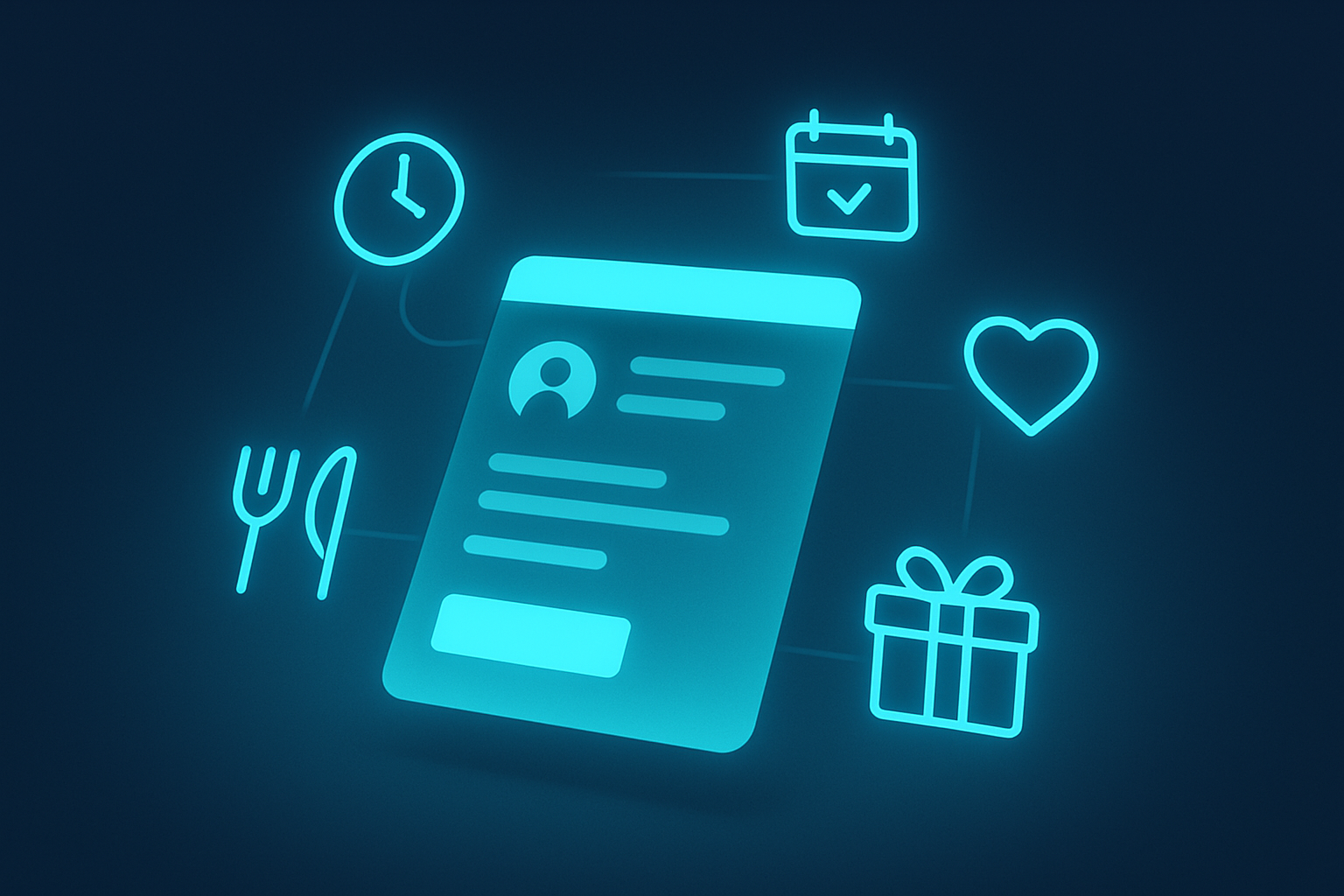
Pre-Arrival Touchpoints
The guest experience begins with reservation confirmation messaging sent within three minutes of booking. Automated systems capture preferences, dietary restrictions, and special occasions while offering relevant upsells based on guest profiles and local events.
Mobile-optimized booking interfaces reduce abandonment rates by 35%, while personalized pre-arrival communications increase ancillary revenue by 28%. Properties implementing AI-powered local recommendations see higher guest engagement and positive review mentions of concierge services.
Arrival & Check-In Excellence
Digital check-in kiosks handle routine transactions in under two minutes, freeing staff for personalized greetings and complex requests. AI systems flag VIP guests, special occasions, and potential issues for immediate staff attention.
| Check-in Method | Speed | Personalization | Error Rate | Staff Efficiency |
|---|---|---|---|---|
| Digital Kiosks | Under 2 minutes | Automated preferences | 2-3% | 75% time savings |
| Mobile Check-in | 30 seconds | Historical data integration | 1-2% | 90% time savings |
| Traditional Front Desk | 5-8 minutes | Staff-dependent | 8-12% | Baseline |
The Stay — Service Automation Meets Human Excellence
Smart room access, automated amenity delivery, and 24/7 AI chatbots resolve 85% of routine guest queries without staff intervention. This automation enables housekeeping and concierge teams to focus on complex requests and relationship-building activities that drive loyalty.
Human-in-the-loop protocols ensure seamless escalation when guests need personal attention. Staff receive real-time alerts about guest sentiment, service requests, and opportunities for memorable interactions that generate positive reviews.
Departure & Post-Stay Engagement
Express checkout through mobile apps or in-room systems reduces departure time to under one minute while capturing immediate feedback. Automated post-stay messaging includes personalized rebooking offers based on stay patterns and seasonal preferences.
Properties using intelligent post-departure sequences achieve 23% higher rebooking rates and 40% more detailed review responses compared to generic follow-up emails sent weeks later.
Data-Backed Insights — What Actually Shapes Guest Perception
Analysis of over 50,000 guest reviews reveals five critical factors that shape initial perceptions, with service promptness ranking as the top driver of satisfaction scores. The guest experience begins with these measurable touchpoints that guests evaluate within the first 15 minutes of arrival.
Top 5 Guest Perception Drivers (Impact Score)
- Service Promptness: 34% impact on overall satisfaction
- Cleanliness & Room Quality: 28% impact
- Personalization & Recognition: 18% impact
- Technology Seamlessness: 12% impact
- Ambiance/Atmosphere: 8% impact
Guest satisfaction scores increase 12-18% when hotels implement personalized welcome protocols, while 65% of negative reviews specifically cite poor check-in experiences or cleanliness issues. Properties using AI-powered upselling see 40% higher conversion rates compared to manual approaches, demonstrating how data-driven personalization directly impacts revenue per guest.
The most significant finding: guests form lasting impressions within 90 seconds of arrival. Hotels that automate routine tasks while preserving human interaction for complex requests achieve the highest satisfaction scores, with boutique properties showing 22% revenue increases when implementing strategic AI automation for guest journey management.
How to Design the Perfect First Touchpoint — Techniques & Troubleshooting
Actionable Techniques to Create Memorable First Impressions
Personalized welcome protocols begin before guests arrive through automated SMS messaging sent within three minutes of booking confirmation. Include the guest’s name, reservation details, local weather updates, and targeted upgrade offers based on booking history. Visual appeal at arrival requires lobby cleanliness standards, clear directional signage, and lighting adjusted for time of day—bright during morning check-ins, warmer tones for evening arrivals.
Digital check-in integration reduces wait times to under two minutes while capturing guest preferences for future stays. Implement ID scanning technology paired with automated room assignment systems that consider guest loyalty status, special requests, and upselling opportunities. Staff should greet guests by name immediately upon approach, referencing specific details from their reservation to demonstrate attentiveness.
Common Problems and Specific Solutions
Missed special requests account for 23% of early guest dissatisfaction incidents. Deploy AI flagging systems that automatically highlight allergies, celebration dates, and accessibility needs in staff dashboards. Create resolution playbooks with specific compensation protocols: missed anniversary recognition triggers complimentary champagne and priority dining reservations.
Reception delays frustrate 31% of arriving guests, particularly during peak hours. Self-check-in kiosks with QR code activation and step-by-step video guides reduce congestion while maintaining service quality. For confused guests, position staff members nearby to provide immediate assistance without forcing technology adoption.
Troubleshooting Early Guest Dissatisfaction
Rapid escalation systems detect negative sentiment through AI analysis of guest interactions, automatically notifying managers within 30 seconds of identified issues. The guest experience begins with proactive problem resolution rather than reactive damage control. Implement immediate rebooking protocols for room issues, including automatic upgrades and compensation vouchers for future stays.
Feedback recovery requires immediate action: send SMS apologies within one hour of incident identification, followed by specific remediation offers. Track resolution success rates weekly, with successful recoveries often converting dissatisfied guests into loyal advocates who appreciate swift, personalized responses to their concerns.
Human + AI: Augmenting Service, Not Replacing It
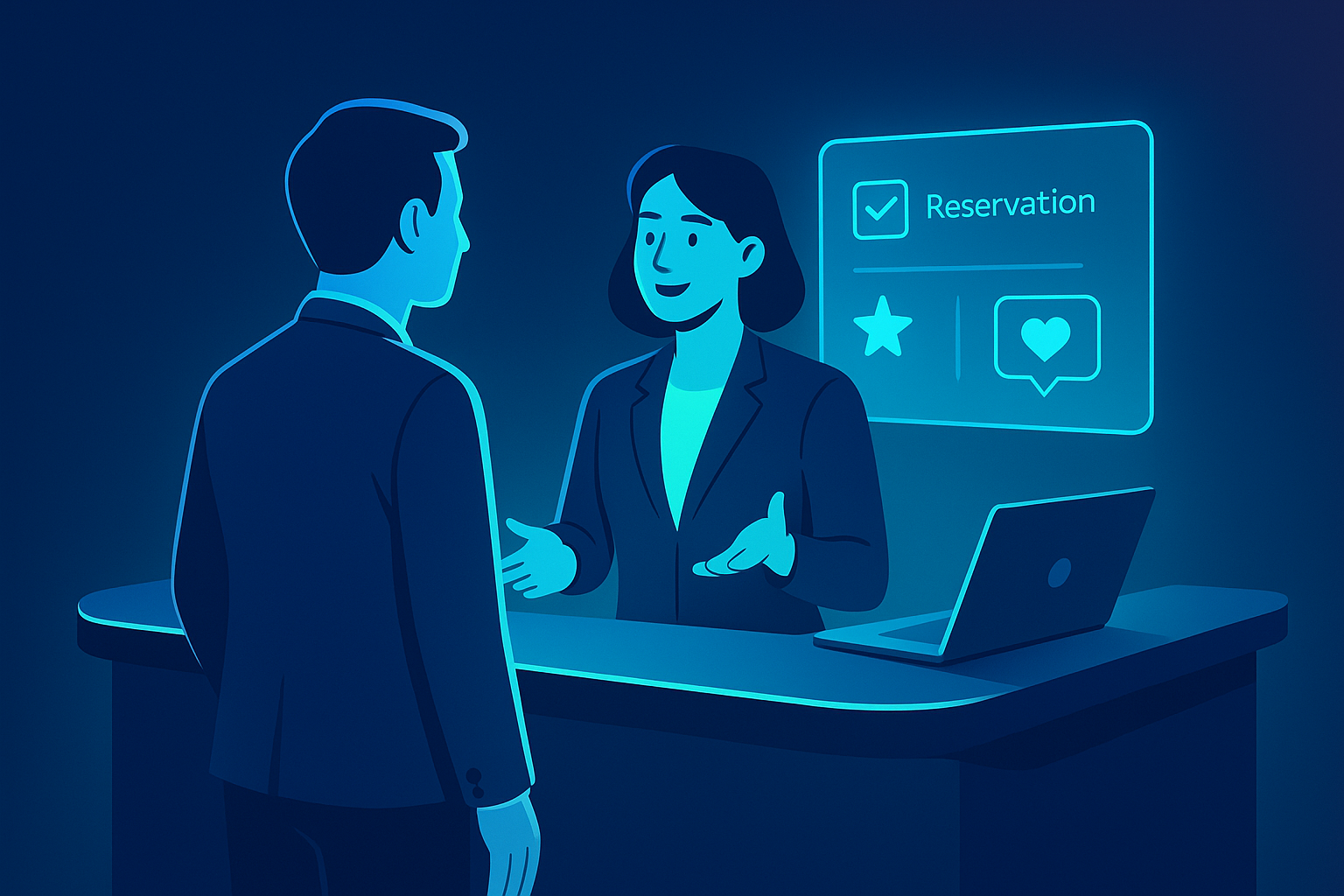
Vynta’s approach centers on AI agents handling repetitive administrative tasks—reservation confirmations, upselling prompts, feedback collection—while freeing hospitality professionals for high-value guest interactions. This division maximizes both operational efficiency and guest satisfaction by ensuring human staff focus on complex requests, emotional support, and personalized service delivery that defines exceptional hospitality.
| Service Aspect | AI Automation | Human Touch | Guest Satisfaction Impact |
|---|---|---|---|
| Reservation Management | Instant confirmations, upselling | Complex booking modifications | 95% accuracy, 3-minute response |
| Guest Recognition | Preference tracking, history analysis | Personal conversation, empathy | 18% satisfaction increase |
| Problem Resolution | Issue detection, escalation alerts | Nuanced solutions, compensation | 67% faster resolution times |
| Feedback Collection | Automated surveys, sentiment analysis | In-person follow-up, relationship building | 40% higher response rates |
Implementation scenarios demonstrate this balance: upscale restaurants use AI for pre-arrival guest profiling while concierges provide personalized welcome conversations. Boutique hotels deploy automated late check-in systems paired with morning greeting protocols from human staff. This approach maintains brand personality while achieving operational scalability.
Transparent limitations matter: AI cannot provide nuanced empathy during guest crises or understand complex cultural preferences requiring human judgment. The guest experience begins with recognizing these boundaries and designing systems where technology enhances rather than replaces the emotional intelligence that distinguishes exceptional hospitality from mere accommodation.
For a deeper dive into the principles behind this approach, see data-driven design and its impact on hospitality.
Measuring & Improving Guest Experience: Metrics, Feedback, Iteration
Critical metrics for hospitality success center on four measurable outcomes that directly correlate with revenue performance. Guest satisfaction scores (GSS) provide baseline measurement, while upsell conversion rates indicate revenue optimization effectiveness. Check-in and check-out times under two minutes demonstrate operational efficiency, with review velocity tracking both quantity and sentiment of guest feedback per stay.
| KPI | Target Benchmark | Measurement Method | Business Impact |
|---|---|---|---|
| Guest Satisfaction Score | 90%+ positive ratings | Post-stay SMS surveys | Direct correlation to repeat bookings |
| Upsell Conversion Rate | 35%+ acceptance rate | AI-tracked offer responses | 22% average revenue increase |
| Check-in/Check-out Speed | Under 2 minutes | Digital timestamp tracking | Reduces staff workload 40% |
| Review Velocity | 60%+ guest feedback rate | Platform aggregation analysis | Improves online visibility |
Actionable feedback collection requires multi-channel approaches: SMS prompts sent two hours post-checkout, in-app surveys for tech-savvy guests, and face-to-face check-out conversations for personal touch. AI sentiment analysis automatically flags recurring themes in written feedback, enabling rapid identification of systemic issues before they impact multiple guests.
Continuous improvement operates on 14-day sprint cycles with weekly team reviews of feedback trends displayed through AI dashboards. The guest experience begins with data-driven decisions that transform guest insights into operational improvements. Maria’s boutique hotel exemplifies this approach: implementing Vynta AI guest journey automation raised GSS from 84% to 94% within three months through systematic feedback analysis and rapid process iteration.
For more practical strategies on optimizing guest feedback, explore our guide on hospitality innovation and continuous improvement.
Competitive Advantage — Why Industry-Specific AI Automation Wins
Industry-specific AI automation delivers measurable advantages over generic tools through deep hospitality workflow integration and pre-trained models understanding guest behavior patterns. Unlike enterprise platforms requiring months of customization, Vynta deploys within weeks while maintaining human-in-the-loop quality control that preserves brand voice and service standards.
| Solution Type | Implementation Time | Hospitality Features | ROI Timeline | Human Collaboration |
|---|---|---|---|---|
| Vynta AI | 2-3 weeks | Guest journey automation, upselling, sentiment analysis | 30-60 days | Augments staff capabilities |
| Generic Automation | 4-6 weeks | Basic messaging, limited customization | 90+ days | Minimal integration |
| Enterprise Platforms | 3-6 months | Extensive but complex | 6-12 months | Often replaces human tasks |
Selection criteria reveal why hospitality-trained AI agents outperform generic solutions: automated upselling based on guest history increases conversion rates 40%, while personalized welcome messaging improves satisfaction scores 18%. Integration with existing PMS and CRM systems happens seamlessly, avoiding operational disruption during deployment.
Best practices for competitive advantage include automating reservation reminders with local recommendations, personalizing welcome and departure experiences based on guest segments, and integrating real-time feedback analysis into daily operations. The guest experience begins with strategic technology choices that enhance rather than complicate service delivery, positioning properties ahead of competitors still relying on manual processes.
For additional research on the business impact of guest journey automation, see this peer-reviewed study on hospitality automation.
Real-World Use Case: Maria’s Boutique Hotel

Maria manages a 45-room boutique hotel facing the challenge of scaling personalized service while controlling operational costs. Her property’s reputation depended on intimate guest relationships, but manual processes limited growth potential and created inconsistent service quality during peak periods.
Vynta AI deployment focused on three critical touchpoints: automated reservation confirmations sent within three minutes of booking, intelligent upselling prompts based on guest history, and streamlined late check-in solutions. Results achieved within 90 days included 22% increase in revenue per guest, 15% reduction in no-shows through proactive communication, and 10-point improvement in guest satisfaction scores. The human-AI collaboration preserved Maria’s personal touch while achieving operational efficiency that supported business growth without compromising service quality.
Discover more real-world applications in our article on AI-powered guest journey solutions.
Implementation Requirements, Risks & Transparent Timeline
Implementation requirements include basic PMS integration capabilities, staff onboarding through two 2-hour training sessions, and compliance checklist completion for data privacy regulations. Most hospitality properties can begin deployment within one week of initial consultation, with full system integration typically completed within three weeks.
Primary risks involve data privacy concerns, staff resistance to technology adoption, and potential misalignment between existing systems and new automation protocols. Mitigation strategies include human-in-the-loop controls that maintain staff oversight, transparent reporting dashboards showing system performance, and ongoing support to ensure alignment with operational goals. Vynta provides a clear project timeline and risk management plan for every deployment, ensuring a smooth transition and measurable ROI within 30-60 days.
Frequently Asked Questions
How does data-driven design enhance the guest experience before a guest even arrives at the hotel?
Data-driven design captures guest preferences and special requests early, allowing hotels to tailor communications and offers before arrival. This proactive personalization creates a seamless, welcoming experience that sets the tone for the entire stay and drives higher guest satisfaction and revenue.
What role does automation play in improving check-in efficiency and personalization?
Automation streamlines routine check-in tasks through digital kiosks and real-time data alerts, reducing wait times and freeing staff to focus on personalized guest interactions. By flagging VIPs and special occasions, automation ensures guests receive timely, customized attention that enhances their overall experience.
In what ways can AI and human staff work together to provide superior service during a guest’s stay?
AI handles data collection, preference analysis, and routine tasks, enabling staff to concentrate on meaningful, human-centered service. This collaboration amplifies staff responsiveness and personalization, ensuring guests feel valued while operational efficiency improves.
How do pre-arrival communications and mobile booking interfaces impact guest engagement and hotel revenue?
Pre-arrival communications that are personalized increase guest engagement by anticipating needs and promoting relevant upsells, boosting ancillary revenue by up to 28%. Mobile-optimized booking interfaces reduce abandonment rates by 35%, capturing more reservations and enhancing overall revenue per guest.
About The Author
Anas Moujahid is the chief contributing writer & Operations Director for the Vynta AI Blog, where he turns cutting-edge AI automation into measurable business outcomes for mid-market companies.
Vynta AI designs enterprise-grade AI agents that augment rather than replace people—freeing teams to focus on higher-value work while the bots handle the busywork.
We specialise in four service-heavy verticals where AI can move the revenue needle fast: real estate, recruitment, fundraising and hospitality.
Anas started his career architecting AI and automation systems; today he leads operations at Vynta AI, making sure every deployment lands real-world ROI—whether that’s more booked viewings for estate agents, faster placements for recruiters, warmer investor pipelines for fundraisers or happier guests for hotels and restaurants.
Vynta AI delivers results by:
- Building industry-specific agents pre-trained on real-world workflows—no generic chatbots here.
- Integrating seamlessly with existing CRMs, ATSs, PMSs and fundraising platforms—zero rip-and-replace.
- Measuring success in business KPIs (lead-to-close rates, time-to-hire, donor retention, RevPAR) not vanity metrics.
- Providing transparent implementation plans so clients know exactly what to expect, when and why.
- Pairing every AI agent with human-in-the-loop controls to keep quality, compliance and brand voice on point.
Since launch, Vynta AI has helped agencies slash lead qualification time by up to 70 %, recruitment firms cut screening hours in half, fundraising teams triple investor touchpoints and hospitality brands lift guest satisfaction scores by double digits—all while keeping human expertise firmly in the loop.
Anas writes with the same ethos that drives Vynta AI: outcome-focused, jargon-free and grounded in real business value. Expect data-backed insights, practical implementation guides and a clear-eyed view of what AI can—and can’t—do for your organisation.