

Key Takeaways
- A strategic restaurant email list generates $36 in revenue for every $1 invested.
- Email marketing outperforms social media advertising by 300% in revenue efficiency.
- Your email list consists of owned customer relationships, unlike rented social media audiences.
- Email lists create a direct communication channel to your most valuable guests.
- Utilizing an email list drives predictable repeat bookings and measurable revenue growth.
Table of Contents
- Why Every Modern Restaurant Needs a Quality Email List—And How It Impacts ROI
- Restaurant Email List Essentials: What It Is, What to Send, and Compliance Must-Haves
- Building Your Restaurant Email List: Proven Strategies for Hospitality Brands
- Restaurant Email List Segmentation: Unlocking Hyper-Personalization (and Profits)
- Writing High-Converting Restaurant Emails: Tone, Timing & Templates
- Leveraging Automation & AI to Own, Manage, and Monetize Your List
- Troubleshooting & Advanced Tactics: Overcoming Restaurant Email Marketing Roadblocks
The Ultimate Restaurant Email List Playbook: Build, Grow & Monetize Hospitality Relationships
Why Every Modern Restaurant Needs a Quality Email List—And How It Impacts ROI
A strategic restaurant email list delivers $36 in revenue for every $1 invested—outperforming social media advertising by 300% and creating a direct line to your most valuable guests. Unlike rented audiences on Instagram or Facebook, your email list represents owned customer relationships that drive predictable repeat bookings and measurable revenue growth.
For restaurants looking to maximize guest engagement and revenue, solutions designed specifically for hospitality brands can help you build, manage, and monetize your email list more effectively.
The Business Case for Email Lists in Hospitality
Direct email communication boosts customer retention rates by 300% compared to channels you don’t control. A boutique restaurant in Chicago increased repeat bookings by 18% within three months after launching targeted email campaigns to their guest database. The key difference: personalized follow-ups based on dining preferences and visit history rather than generic promotional blasts.
Email marketing creates compound value through data collection. Every interaction—opens, clicks, reservations—builds detailed guest profiles that enable precision targeting for special events, menu launches, and seasonal promotions.
To understand the broader impact of email marketing in the hospitality industry, you can review this authoritative overview of email marketing.
Strategic Uses Beyond Basic Promotions
Smart restaurants use email lists for proactive guest engagement: birthday offers, anniversary reminders, and personalized menu recommendations based on dietary preferences. This approach increases guest satisfaction scores by 10-15 points while generating additional revenue from milestone celebrations and special occasions.
Crisis management becomes seamless with a robust restaurant emails list. During unexpected closures, menu changes, or capacity restrictions, direct communication prevents no-shows and maintains guest relationships through transparent, immediate updates.
Restaurant Email List Essentials: What It Is, What to Send, and Compliance Must-Haves
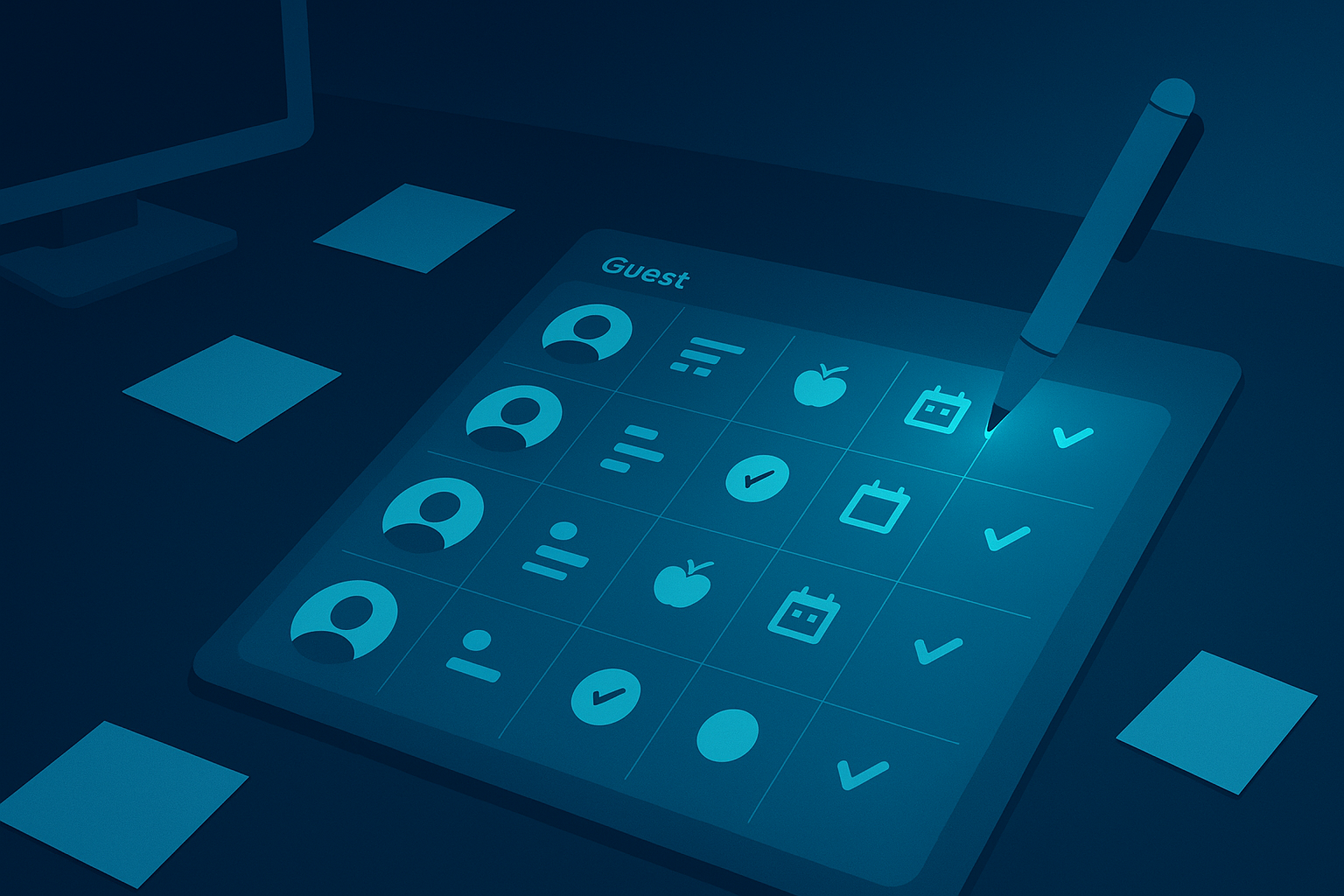
A high-quality restaurant email list consists of explicitly opted-in guest contacts with detailed preference data: email addresses, visit frequency, dietary restrictions, special dates, and consent timestamps. This foundation enables personalized communication that converts at 3x higher rates than generic messaging.
Definition and Core Components
Essential guest data fields include email address, reservation history, preferred dining times, party size patterns, and special occasion dates. Advanced lists incorporate spend patterns, menu preferences, and communication frequency preferences to maximize engagement while respecting guest boundaries.
For more insights on building compliant and effective lists, see our guide on how hospitality brands can leverage data-driven marketing.
Content That Engages and Converts
High-performing restaurant emails focus on exclusive access rather than discounts: early reservation windows for special events, chef’s table previews, seasonal menu sneak peeks, and personalized recommendations. Successful content types include behind-the-scenes kitchen stories, ingredient sourcing updates, and staff spotlights that build emotional connections.
Milestone-triggered emails generate the highest response rates: birthday celebrations with complimentary desserts, anniversary dinner suggestions, and loyalty rewards based on visit frequency create anticipation for the next dining experience.
Compliance and Deliverability Standards
GDPR, CAN-SPAM, and Canadian Anti-Spam Law require explicit consent for restaurant email marketing. Purchased lists destroy deliverability rates, trigger spam filters, and damage sender reputation—resulting in legitimate emails landing in junk folders.
| Strategy | Engagement Rate | Compliance Risk | Long-term ROI |
|---|---|---|---|
| Compliant List Building | 25-35% open rate | Zero risk | $36 per $1 invested |
| Purchased Lists | 2-5% open rate | High penalty risk | Negative ROI |
Building Your Restaurant Email List: Proven Strategies for Hospitality Brands
Effective email collection requires multiple touchpoints throughout the guest journey. The most successful restaurants capture emails through reservation systems, in-venue experiences, and post-visit follow-ups with immediate value exchange rather than generic newsletter sign-ups.
To further explore the science behind digital engagement and consumer behavior, you may find this peer-reviewed study on digital marketing effectiveness helpful.
Online Collection Strategies
Reservation platforms should require email addresses with clear opt-in language: “Join our VIP list for exclusive menu previews and priority reservations.” Online ordering systems convert at 40% higher rates when offering immediate incentives like “Get 10% off your next dine-in experience—join our insider list in 30 seconds.”
Website forms perform best with exit-intent triggers and time-delayed popups. Optimal timing: after 45 seconds of browsing or when users scroll past menu sections, indicating genuine interest in dining options.
In-Venue Collection Techniques
QR code tent cards at tables generate 25% sign-up rates when linked to exclusive offers: “Scan for your complimentary appetizer on your next visit.” Train hosts to capture emails during waitlist registration with scripted prompts: “I’ll text you when your table’s ready, and add you to our VIP list for priority seating.”
Post-meal feedback forms with digital opt-ins capture guests at peak satisfaction moments. Physical comment cards with email collection also remain effective for certain demographics, especially when paired with a small incentive or entry into a prize draw.
Restaurant Email List Segmentation: Unlocking Hyper-Personalization (and Profits)
Batch-and-blast email campaigns deliver 14% lower open rates and 18% higher unsubscribe rates compared to segmented campaigns. Your restaurant email list becomes a revenue powerhouse when you treat different guest types with distinct messaging strategies.
For a deeper dive into segmentation strategies, check out our article on advanced restaurant email marketing solutions.
The Power of Segmentation
Generic emails to your entire list ignore fundamental guest behavior patterns. First-time visitors need different messaging than regulars who dine weekly. High-spend anniversary celebrants respond to exclusive experiences, while budget-conscious families want value-driven offers. Segmented campaigns consistently outperform mass emails by 3:1 in conversion rates because they align with specific guest motivations and dining patterns.
Practical Segmentation Models
| Segment Type | Identification Criteria | Best Email Content | Expected Engagement Lift |
|---|---|---|---|
| VIP Regulars | 5+ visits, $75+ average spend | Chef previews, exclusive events | 45% higher open rates |
| Special Occasion Diners | Reservations for 2+, weekend bookings | Anniversary reminders, celebration packages | 32% higher click-through |
| Lapsed Guests | No visit in 60+ days | Win-back offers, “We miss you” campaigns | 28% reactivation rate |
| New Guests | First visit within 30 days | Welcome series, loyalty program intro | 67% second visit conversion |
One boutique restaurant generated $12,000 in additional bookings over three months by creating a “Big Spenders” segment—guests with $100+ average orders received advance access to wine pairing dinners and chef’s table experiences. The targeted approach converted 34% of recipients compared to 8% for general promotional emails.
Implementation How-To
Most email platforms enable segmentation in under 15 minutes. Create dynamic segments based on POS data: visit frequency, average order value, last visit date, and reservation type. Integrate your reservation system with email marketing tools to automatically tag guests as “walk-ins,” “special events,” or “regular bookings.” Set up automated workflows that trigger different email sequences based on segment membership—new guests receive a three-part welcome series while VIPs get monthly exclusive previews.
Writing High-Converting Restaurant Emails: Tone, Timing & Templates
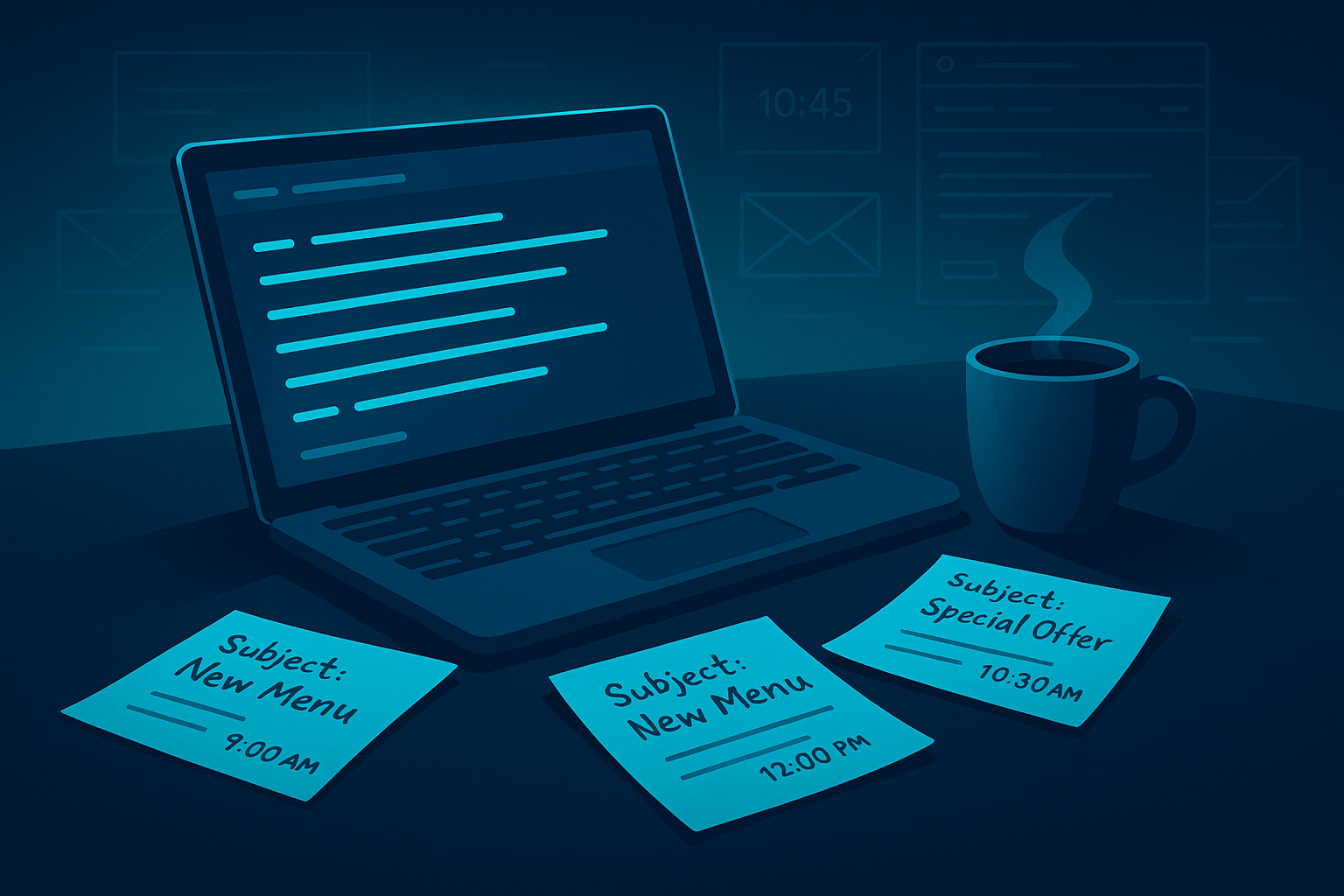
Restaurant emails with personalized subject lines achieve 26% higher open rates than generic promotions. Your tone, timing, and template structure directly impact whether guests book tables or hit delete.
For more tips on crafting compelling campaigns, see our post on the art of hospitality email storytelling.
What Makes Restaurant Emails Engaging
Successful restaurant emails mirror your in-person hospitality—warm, personal, and focused on the guest experience rather than hard selling. Use the guest’s name and reference their last visit or favorite dishes when possible. Subject lines like “Maria, Your Table’s Ready: This Week’s Chef Special Awaits” outperform generic “Weekly Specials” by 40%. Write as if you’re personally inviting each guest back to your establishment, highlighting what makes their next visit special rather than listing menu items and prices.
Top Performing Restaurant Subject Lines
- “[Guest Name], Something Special is Waiting for You”
- “Your Favorite Table Has a Surprise This Weekend”
- “We Saved You a Seat (and Your Usual Order)”
- “Before Anyone Else Knows: Tomorrow’s Chef Special”
- “Happy [Birthday/Anniversary], [Name]! Your Celebration Awaits”
Frequency & Rhythm: Finding the Sweet Spot
Send 1-2 regular campaigns monthly with additional event-specific emails as needed, never exceeding one email per week unless guests explicitly consent to higher frequency. Tuesday through Thursday between 10 AM and 2 PM generates optimal open rates for restaurant emails. The #1 reason guests unsubscribe is receiving too many irrelevant messages—quality trumps quantity every time.
Template Examples
First-Timer Thank You: “Thank you for choosing [Restaurant Name] last [day]. We hope you enjoyed the [specific dish if known]. As our welcome gift, enjoy 15% off your next visit within 30 days. We can’t wait to serve you again soon.”
Birthday Surprise: “Happy Birthday, [Name]! This special day calls for exceptional dining. Join us this month and receive a complimentary dessert plus priority seating for your celebration. Book your birthday dinner today—you deserve something extraordinary.”
Leveraging Automation & AI to Own, Manage, and Monetize Your List
Restaurants using marketing automation see 451% higher qualified leads and 34% better guest retention rates. Smart automation transforms your restaurant email list from a manual task into a scalable, revenue-driving asset. By integrating AI-powered tools, restaurants can automatically segment guests, trigger personalized campaigns based on real-time behaviors, and optimize send times for maximum engagement. For example, AI can identify lapsed guests and send targeted win-back offers, or recognize high-value regulars and deliver exclusive event invitations—freeing up staff to focus on delivering exceptional in-person experiences.
Troubleshooting & Advanced Tactics: Overcoming Restaurant Email Marketing Roadblocks
Even well-intentioned email campaigns can stumble. Low engagement rates, rising unsubscribes, and deliverability issues plague restaurants that treat email marketing as an afterthought rather than a strategic revenue channel.
For expert help with troubleshooting and advanced tactics, consider reaching out to our restaurant email marketing specialists.
Low Open Rates: Root Causes and Solutions
Open rates below 20% signal fundamental issues with subject lines, sender reputation, or list quality. Generic subjects like “Monthly Newsletter” get ignored, while personalized, benefit-driven lines like “Sarah, Your Favorite Chef’s Special Returns Thursday” achieve 35-40% open rates.
Authenticate your sending domain through SPF and DKIM records to avoid spam filters. Send consistently—erratic scheduling confuses subscribers and triggers spam algorithms. Test send times: Tuesday-Thursday between 10 AM-2 PM typically performs best for restaurant audiences.
Reducing Unsubscribes and List Churn
Maintain a 3:1 ratio of value-added content to promotional offers. Share chef interviews, behind-the-scenes content, and seasonal ingredient spotlights alongside reservation incentives. Survey departing subscribers with a simple “How can we improve?” link—their feedback reveals whether frequency, content, or relevance needs adjustment.
Healthy unsubscribe rates: 0.5-2% monthly is normal. Rates above 5% indicate over-promotion or poor list quality requiring immediate attention.
Compliance Pitfalls & How to Avoid Them
Never import purchased lists or add guests without explicit consent. Include clear unsubscribe links in every email—buried opt-out options violate CAN-SPAM regulations and damage sender reputation. Assign one team member to review data collection practices quarterly, ensuring all touchpoints include proper consent language.
Advanced Growth Tactics
To accelerate list growth, partner with local businesses for co-branded events and cross-promotions, incentivize referrals with exclusive rewards, and leverage social proof by showcasing guest testimonials in your campaigns. Experiment with A/B testing for subject lines and content to continually refine your approach and maximize ROI.
Frequently Asked Questions
How does building a restaurant email list improve customer retention and increase repeat bookings?
A restaurant email list creates a direct communication channel with your most valuable guests, enabling personalized follow-ups based on dining preferences and visit history. This targeted approach boosts customer retention by up to 300% and drives predictable repeat bookings, as guests feel recognized and valued beyond generic promotions.
What types of personalized content should restaurants send to maximize engagement and revenue through email marketing?
Restaurants should send personalized offers such as birthday and anniversary discounts, menu recommendations tailored to dietary preferences, and exclusive invitations to special events or seasonal promotions. This hyper-personalized content increases guest satisfaction and encourages additional visits, directly impacting revenue growth.
What are the essential data points and compliance requirements needed to create a high-quality restaurant email list?
Key data points include guest contact information, visit frequency, dining preferences, and engagement history like email opens and clicks. Compliance requires obtaining explicit consent through opt-in mechanisms, adhering to data privacy laws such as GDPR or CAN-SPAM, and providing easy unsubscribe options to maintain trust and list quality.
How can restaurants leverage automation and AI to effectively manage and monetize their email lists?
Automation and AI enable restaurants to segment guests dynamically, send timely personalized emails, and optimize campaign performance based on real-time data. This reduces manual effort, increases email relevance, and drives measurable revenue by turning one-time diners into loyal repeat customers through consistent, data-driven engagement.
About The Author
Anas Moujahid is the chief contributing writer & Operations Director for the Vynta AI Blog, where he turns cutting-edge AI automation into measurable business outcomes for mid-market companies.
Vynta AI designs enterprise-grade AI agents that augment rather than replace people—freeing teams to focus on higher-value work while the bots handle the busywork.
We specialise in four service-heavy verticals where AI can move the revenue needle fast: real estate, recruitment, fundraising and hospitality.
Anas started his career architecting AI and automation systems; today he leads operations at Vynta AI, making sure every deployment lands real-world ROI—whether that’s more booked viewings for estate agents, faster placements for recruiters, warmer investor pipelines for fundraisers or happier guests for hotels and restaurants.
Vynta AI delivers results by:
- Building industry-specific agents pre-trained on real-world workflows—no generic chatbots here.
- Integrating seamlessly with existing CRMs, ATSs, PMSs and fundraising platforms—zero rip-and-replace.
- Measuring success in business KPIs (lead-to-close rates, time-to-hire, donor retention, RevPAR) not vanity metrics.
- Providing transparent implementation plans so clients know exactly what to expect, when and why.
- Pairing every AI agent with human-in-the-loop controls to keep quality, compliance and brand voice on point.
Since launch, Vynta AI has helped agencies slash lead qualification time by up to 70 %, recruitment firms cut screening hours in half, fundraising teams triple investor touchpoints and hospitality brands lift guest satisfaction scores by double digits—all while keeping human expertise firmly in the loop.
Anas writes with the same ethos that drives Vynta AI: outcome-focused, jargon-free and grounded in real business value. Expect data-backed insights, practical implementation guides and a clear-eyed view of what AI can—and can’t—do for your organisation.