

Key Takeaways
- Guest surveys convert raw feedback into measurable business outcomes when used strategically.
- Structured feedback collection helps hospitality managers address immediate service issues and optimize long-term revenue.
- The main challenge is designing systems that capture actionable insights without losing the personal touch of hospitality.
- Effective guest surveys support both service recovery and operational excellence in boutique hotels.
Table of Contents
- Guest Surveys, Definition, Purpose, and the Modern Business Case
- Designing Guest Surveys That Drive Actionable Insights
- Boosting Survey Response Rates, Practical Hospitality Techniques
- Turning Survey Data into Measurable Business Results
- Guest Survey Tools, Comparing Solutions for Hospitality Leaders
- Best Practices & Pitfalls, Maximizing Guest Survey ROI
- Future-Proofing Your Guest Survey Strategy
- The Strategic Choice for Hospitality Leaders
Guest Surveys: Turn Hospitality Feedback Into Results
Guest surveys transform raw feedback into measurable business outcomes when executed strategically. For hospitality managers like Maria running boutique hotels, structured feedback collection drives both immediate service recovery and long-term revenue optimization. The challenge isn’t just gathering opinions, it’s designing systems that capture actionable insights while maintaining the personal touch that defines hospitality excellence.
Guest surveys encompass digital post-stay questionnaires, in-person touchpoint feedback, and real-time experience check-ins throughout the guest journey. These structured feedback mechanisms address hospitality’s core challenge: scaling personalized service cost-effectively while maintaining quality standards.
Modern hospitality businesses achieve 30% improvement in repeat bookings through proactive service recovery triggered by survey insights. Average post-stay survey response rates range from 15-35%, with properly timed and personalized surveys reaching the higher end of this spectrum.
Designing Guest Surveys That Drive Actionable Insights
Effective guest surveys follow three cornerstone principles: clarity, brevity, and relevance to specific guest journey stages. Branching logic tailors questions to reservation source or guest profile, while limiting surveys to 8 core questions prevents completion fatigue.
Combine rating scales for key touchpoints, check-in efficiency, amenities quality, dining experience, with a single open-ended prompt: “What could we have improved?” This structure yields 20% higher actionable insight capture compared to static, generic questionnaires that fail to address specific service moments.
Boosting Survey Response Rates, Practical Hospitality Techniques
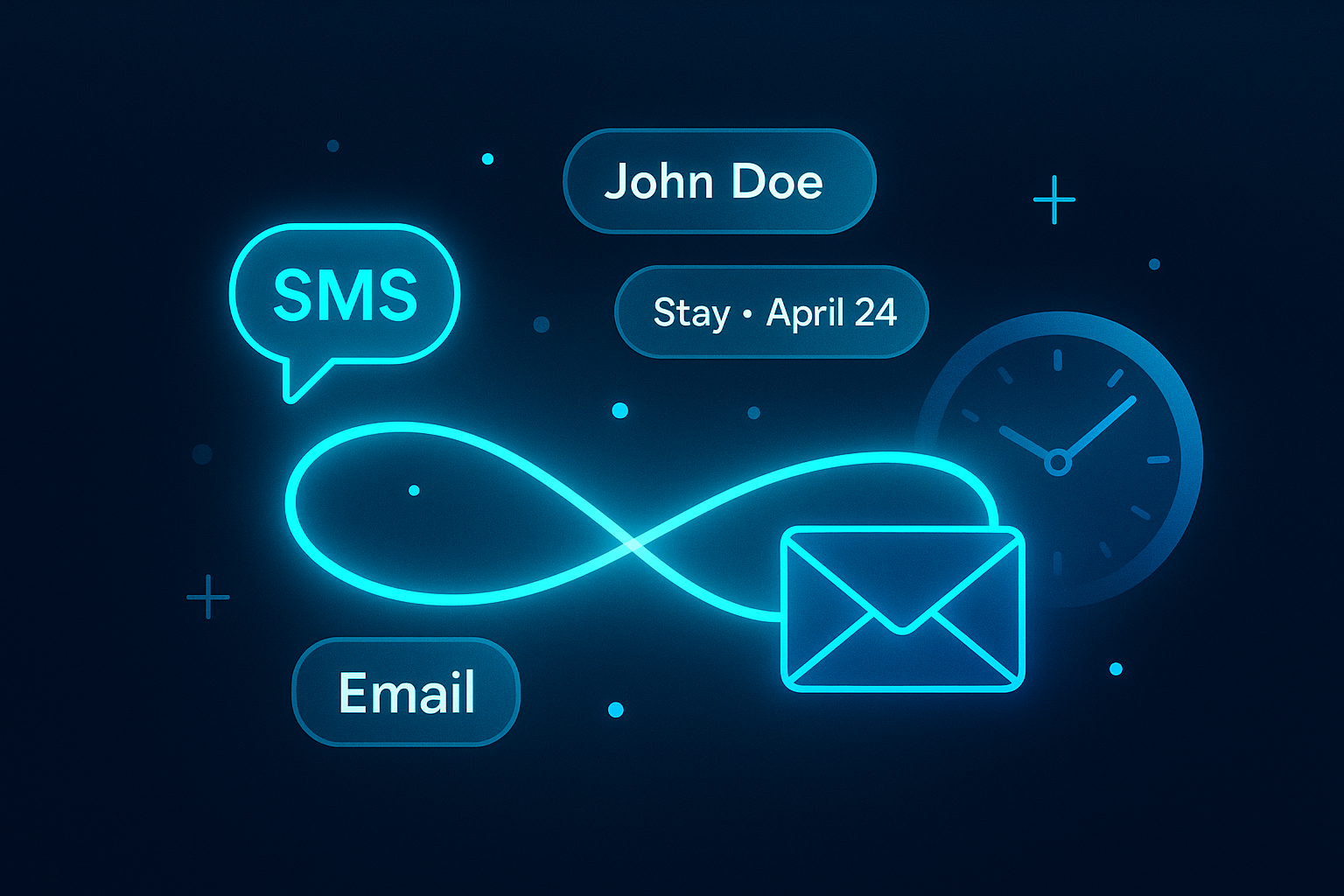
SMS and email hybrid delivery channels generate up to 2x higher response rates than email alone. Personalization using guest names and specific stay details produces 12% completion rate improvements, while sending surveys within 2 hours post-checkout captures peak engagement.
Maria’s boutique hotel increased response rates from 18% to 33% by implementing multilingual SMS surveys with personalized stay references, demonstrating how targeted approaches overcome survey fatigue and cultural barriers.
Turning Survey Data into Measurable Business Results
Real-time alerts for ratings below 3 trigger immediate service recovery protocols, while monthly dashboard reviews link NPS scores directly to occupancy rates and RevPAR performance. Integration with PMS and CRM systems enables longitudinal analysis that identifies trends before they impact revenue.
Hotels closing feedback loops within 24 hours see 50% higher guest return intent. Maria’s property improved satisfaction scores by 22% quarter-over-quarter using Vynta’s automated analysis to identify service gaps and implement targeted staff training based on specific feedback patterns.
| Survey KPI | Business Metric Impacted | Typical Improvement |
|---|---|---|
| NPS Score | Repeat Booking Rate | 15-25% |
| Response Rate | Service Recovery Speed | 40-60% |
| Satisfaction Trends | RevPAR Growth | 8-12% |
Guest Survey Tools, Comparing Solutions for Hospitality Leaders
Selecting the right guest survey platform requires evaluating PMS integration capabilities, automation features, industry-specific templates, and multilingual support. Generic survey tools lack hospitality workflows, while enterprise platforms often exceed SME budgets and complexity needs.
| Feature | Vynta | Generic Survey Tool | Enterprise Platform |
|---|---|---|---|
| PMS/CRM Integration | Native hospitality APIs | Manual export only | Custom development required |
| Real-time Alerts | Automated service recovery triggers | Basic notifications | Complex rule configuration |
| Industry Templates | Hospitality-optimized questions | Generic business templates | Customizable but generic |
| Pricing Model | SME-friendly tiers | Per-response fees | Enterprise licensing |
Vynta’s hospitality-specific automation identifies service recovery opportunities within minutes of survey completion, while generic tools require manual monitoring. Maria’s hotel reduced response analysis time from hours to minutes after migrating from a generic platform to Vynta’s industry-focused solution.
Best Practices & Pitfalls, Maximizing Guest Survey ROI

Strategic survey timing focuses on key service moments without overwhelming guests. Monitor trends monthly rather than annually, and always acknowledge negative feedback both publicly and privately to demonstrate responsiveness.
Over-surveying causes 60% response rate drops within three months. Rotate question banks for repeat guests and limit surveys to meaningful service interactions. Cultural sensitivity and accessibility considerations prevent exclusion of international or differently-abled guests from providing valuable feedback.
Deploy guest surveys systematically: start with post-stay feedback, analyze response patterns for two months, then expand to in-stay touchpoints based on initial insights. This phased approach prevents survey fatigue while building comprehensive feedback systems that drive measurable hospitality improvements.
Future-Proofing Your Guest Survey Strategy
AI-powered guest surveys are evolving beyond basic feedback collection toward predictive analytics that anticipate service needs before issues arise. Voice-activated surveys through smart room devices and multilingual chatbot integration will expand accessibility while reducing friction for international guests.
Real-time sentiment analysis during stays enables proactive service recovery, transforming traditional post-checkout feedback into dynamic guest experience management. Properties implementing predictive guest surveys report 35% higher satisfaction scores and 28% increased direct booking rates compared to reactive feedback systems.
Integration with IoT sensors and mobile apps will create seamless feedback loops that capture guest preferences without explicit survey requests. This ambient feedback collection maintains service personalization while eliminating survey fatigue, the ultimate evolution of hospitality guest surveys.
The Strategic Choice for Hospitality Leaders
Effective guest surveys transform hospitality feedback from reactive damage control into proactive revenue optimization. The distinction lies not in collecting more data, but in implementing systems that deliver actionable insights within service recovery windows.
Vynta’s hospitality-focused automation eliminates the gap between guest feedback and operational response. Unlike generic survey platforms requiring manual analysis, Vynta’s industry-specific intelligence identifies service recovery opportunities and upselling moments automatically, enabling mid-market hotels to compete with enterprise-level guest experience management.
For hospitality managers prioritizing measurable outcomes over technical complexity, guest surveys become strategic assets when paired with purpose-built automation. The choice between reactive feedback collection and predictive guest experience optimization determines whether surveys drain resources or drive revenue growth in today’s competitive hospitality market.
Frequently Asked Questions
How can guest surveys be designed to capture actionable insights without losing the personal touch of hospitality?
Guest surveys should be clear, concise, and tailored to specific guest journey stages using branching logic to personalize questions. Including a mix of rating scales and one open-ended question allows guests to share detailed feedback while preserving a conversational, human-centered approach that reflects hospitality’s personal touch.
What techniques can hospitality managers use to boost guest survey response rates effectively?
Hospitality managers can increase response rates by timing surveys strategically, such as immediately post-stay or during key touchpoints, and personalizing invitations to engage guests authentically. Offering brief surveys with no more than eight focused questions and integrating real-time feedback requests during the guest experience also help capture higher participation.
In what ways do real-time feedback and personalized follow-ups from guest surveys contribute to revenue growth?
Real-time feedback enables immediate service recovery, reducing negative experiences that impact repeat bookings, while personalized follow-ups reinforce guest satisfaction and loyalty. Together, these actions improve guest retention and upselling opportunities, driving measurable increases in repeat business and overall revenue per guest.
What are the best practices for structuring guest surveys to maximize the quality and usefulness of the feedback collected?
Effective guest surveys combine brevity with relevance, focusing on key touchpoints like check-in, amenities, and dining experience. Using rating scales alongside a single open-ended question encourages actionable insights, while limiting survey length prevents fatigue and ensures higher quality responses that directly inform service improvements and operational decisions.
About The Author
Anas Moujahid is the chief contributing writer & Operations Director for the Vynta Blog, where he turns cutting-edge AI automation into measurable business outcomes for mid-market companies.
Vynta designs enterprise-grade AI agents that augment rather than replace people, freeing teams to focus on higher-value work while the bots handle the busywork.
We specialise in four service-heavy verticals where AI can move the revenue needle fast: real estate, recruitment, fundraising and hospitality.
Anas started his career architecting AI and automation systems; today he leads operations at Vynta, making sure every deployment lands real-world ROI, whether that’s more booked viewings for estate agents, faster placements for recruiters, warmer investor pipelines for fundraisers or happier guests for hotels and restaurants.
Vynta delivers results by:
- Building industry-specific agents pre-trained on real-world workflows, no generic chatbots here.
- Integrating seamlessly with existing CRMs, ATSs, PMSs and fundraising platforms, zero rip-and-replace.
- Measuring success in business KPIs (lead-to-close rates, time-to-hire, donor retention, RevPAR) not vanity metrics.
- Providing transparent implementation plans so clients know exactly what to expect, when and why.
- Pairing every AI agent with human-in-the-loop controls to keep quality, compliance and brand voice on point.
Since launch, Vynta has helped agencies slash lead qualification time by up to 70 %, recruitment firms cut screening hours in half, fundraising teams triple investor touchpoints and hospitality brands lift guest satisfaction scores by double digits, all while keeping human expertise firmly in the loop.
Anas writes with the same ethos that drives Vynta: outcome-focused, jargon-free and grounded in real business value. Expect data-backed insights, practical implementation guides and a clear-eyed view of what AI can, and can’t, do for your organisation.