
Key Takeaways
- A strategic hotel pricing strategy significantly boosts revenue by 15-20% when based on data-driven decisions.
- Relying solely on intuition for pricing often results in missed revenue opportunities.
- Hospitality managers face challenges in balancing competitive rates, guest satisfaction, and profit margins.
- Effective pricing strategies are essential for success in the dynamic hotel market.
Table of Contents
- Hotel Pricing Strategy: Your Revenue Growth Foundation
- How Hotel Pricing Works: Supply, Demand, and Technology
- Key Factors to Consider When Setting Hotel Prices
- Effective Hotel Pricing Strategies
- Discount Pricing Strategy
- Cost-Based Pricing Foundation
- Seasonal Pricing Optimization
- Length of Stay Pricing Benefits
- Implementing Pricing Technology Solutions
- Monitoring and Adjusting Pricing Performance
- Implementing Technology for Pricing Excellence
- Advanced Revenue Optimization Techniques
- Measuring and Monitoring Pricing Performance
- Future Considerations for Hotel Pricing Strategy
- Maximizing Revenue Through Strategic Pricing
Hotel Pricing Strategy: Your Revenue Growth Foundation
A strategic hotel pricing strategy directly impacts your bottom line, properties using data-driven pricing see 15-20% revenue increases compared to those relying on intuition alone. Yet most hospitality managers struggle with balancing competitive rates, guest satisfaction, and profit margins in today’s dynamic market. Learn how Vynta empowers hotels with data-driven pricing strategies.
Modern hotel pricing extends far beyond setting nightly rates. It encompasses dynamic adjustments based on demand patterns, competitor analysis, guest segmentation, and seasonal fluctuations. The most successful properties integrate AI-powered automation to optimize pricing decisions in real-time, capturing revenue opportunities that manual processes miss.
Smart pricing strategies transform how guests perceive value while maximizing your property’s earning potential. From boutique hotels to mid-market chains, the right approach combines market intelligence, operational costs, and guest behavior data to drive sustainable growth.
How Hotel Pricing Works: Supply, Demand, and Technology
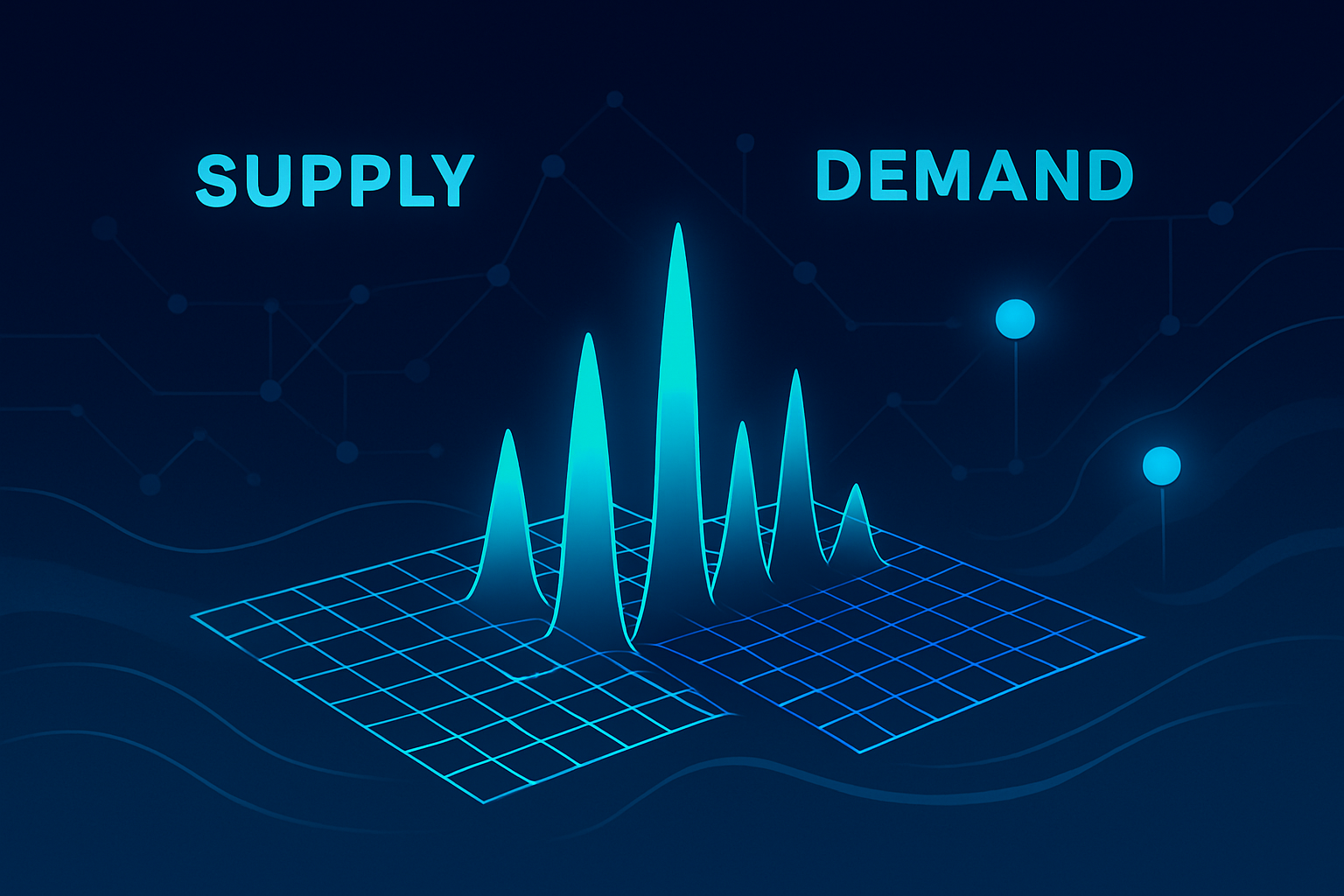
Hotel pricing operates on fundamental supply and demand principles amplified by technology. When local events drive demand above available inventory, rates naturally increase. Conversely, low-demand periods require strategic pricing to maintain occupancy and cash flow.
Multiple factors influence daily rate decisions: competitor pricing within your market segment, guest review scores affecting perceived value, operational costs including staffing and utilities, and booking patterns from historical data. Properties near convention centers experience dramatic demand spikes during major events, while leisure destinations see predictable seasonal variations.
Key Insight: Properties using automated Revenue Management Systems (RMS) integrated with their Property Management Systems (PMS) achieve 8-12% higher RevPAR than those relying on manual pricing adjustments.
Technology transforms pricing from reactive to proactive. Modern systems analyze booking pace, competitor rates, local events, and weather forecasts to recommend optimal pricing 30-90 days ahead. This predictive capability helps properties capture peak demand while avoiding revenue loss during slower periods.
Key Factors to Consider When Setting Hotel Prices
Market conditions form your pricing foundation. Local supply levels, competitor positioning, and guest preferences within your segment determine your rate boundaries. A boutique property competes differently than a business hotel, even within the same geographic area.
Room differentiation and service offerings justify rate premiums. Properties with unique amenities, rooftop bars, spa services, or prime locations, command higher rates when these features align with guest expectations. Value-added services like complimentary breakfast or airport transfers can support rate increases while improving guest satisfaction scores.
Regulatory compliance protects your revenue strategy. Rate parity agreements with online travel agencies (OTAs) require consistent pricing across channels, while local regulations may limit surge pricing during emergencies. Non-compliance can result in OTA penalties or legal issues that damage long-term profitability.
| Factor | Impact on Pricing | Monitoring Frequency |
|---|---|---|
| Competitor Rates | Direct rate positioning | Daily |
| Local Events | Demand surge opportunities | Weekly/Monthly |
| Booking Pace | Rate adjustment timing | Daily |
| Guest Reviews | Value perception | Weekly |
Effective Hotel Pricing Strategies
Competitor-Based Pricing – Market Position Strategy
Best for: Properties in competitive markets with similar amenities and service levels.
Competitor-based pricing uses direct competitor rates as your primary pricing reference. This strategy works when your property offers comparable value to nearby hotels in your segment. Regular competitor analysis reveals pricing gaps and opportunities for strategic positioning.
Strategic differentiation within competitor-based pricing focuses on unique value propositions. A hotel matching competitor rates while offering superior breakfast or location convenience can maintain occupancy during rate increases.
Forecasting-Based Pricing – Predictive Revenue Strategy
Best for: Properties with strong historical data and predictable seasonal patterns.
Forecasting-based pricing leverages historical booking patterns, seasonal trends, and market events to predict optimal rates weeks or months ahead. This proactive approach captures revenue opportunities before competitors react to market changes.
Successful forecasting combines internal data with external factors like local event calendars, economic indicators, and weather patterns. Properties using predictive models often achieve 10-15% higher revenue during peak periods.
Dynamic Pricing – Real-Time Revenue Optimization
Best for: Properties with variable demand patterns and technology infrastructure for automated adjustments.
Dynamic pricing adjusts rates continuously based on real-time demand signals, competitor changes, and booking velocity. This strategy maximizes revenue by capturing willingness to pay at different booking windows and demand levels.
AI-powered dynamic pricing systems process thousands of data points hourly, identifying revenue opportunities human analysis might miss. Implementation requires robust technology integration and staff training for optimal results.
Value-Added Pricing – Premium Service Strategy
Best for: Properties with unique amenities or exceptional service capabilities.
Value-added pricing justifies higher rates through enhanced guest experiences. Bundling services like spa treatments, dining credits, or local experiences creates perceived value beyond basic accommodation.
Successful value-added pricing requires understanding guest preferences and local market opportunities. Hotels implementing this strategy typically see 15-20% higher revenue per available room when guests perceive genuine value in bundled offerings.
Discount Pricing Strategy

Best for: Filling occupancy gaps during low-demand periods while maintaining revenue flow.
Strategic discounting drives bookings when demand naturally dips, but requires careful execution to avoid devaluing your property. Effective discount pricing targets specific periods, guest segments, or booking windows rather than blanket rate reductions.
The key lies in offsetting reduced room rates with ancillary revenue opportunities. Hotels successfully using this approach often bundle discounted rates with dining requirements, spa minimums, or parking fees to maintain overall profitability.
Advanced discount strategies include last-minute deals for unsold inventory, early-bird promotions for future stays, and loyalty member exclusives that drive direct bookings while reducing OTA commissions.
Cost-Based Pricing Foundation
Best for: Establishing minimum viable rates and ensuring operational profitability baselines.
Cost-based pricing provides the foundation for all other hotel pricing strategy approaches by calculating true operational costs per room and adding desired profit margins. This method ensures every booking contributes positively to bottom-line results.
The calculation includes fixed costs (mortgage, insurance, base staffing), variable costs (housekeeping, utilities, amenities), and desired profit margins typically ranging from 20-40% depending on market positioning and service level.
While cost-based pricing shouldn’t be your only strategy, it establishes the floor below which rates become unprofitable. Smart hoteliers use this baseline to evaluate discount opportunities and ensure promotional rates still contribute to operational sustainability.
Seasonal Pricing Optimization
Best for: Maximizing revenue during peak periods while stimulating demand during slower seasons.
Seasonal pricing strategy capitalizes on predictable demand fluctuations throughout the year, adjusting rates to match guest willingness to pay during different periods. This approach requires deep understanding of local events, weather patterns, and travel behaviors.
Peak season rates can command 200-300% premiums over low season in destination markets, while shoulder seasons offer opportunities for moderate pricing that attracts value-conscious travelers. Successful seasonal strategies also consider booking lead times, with advance reservations often securing lower rates.
The most effective seasonal pricing combines historical performance data with forward-looking market intelligence, adjusting not just for seasons but for specific events, holidays, and local attractions that influence demand patterns.
Length of Stay Pricing Benefits

Best for: Reducing operational costs while guaranteeing occupancy stability and guest loyalty.
Length of stay pricing incentivizes extended bookings through progressive discounts, reducing turnover costs while improving operational efficiency. Longer stays decrease housekeeping frequency, lower front desk processing, and increase ancillary spending opportunities, as illustrated in the everdene-menu strategies for optimized guest experiences.
Typical structures offer 5-10% discounts for stays of three nights or more, with additional savings for weekly or monthly bookings. Extended stay guests also tend to spend more on property amenities, dining, and services, offsetting the discounted room rates.
This strategy proves particularly effective for business travelers, relocating professionals, and leisure guests in destination markets where longer stays enhance the overall experience and justify the travel investment.
Implementing Pricing Technology Solutions
Best for: Hotels ready to automate pricing decisions and leverage data-driven revenue optimization.
Modern hotel pricing strategy success depends heavily on technology platforms that process vast amounts of market data, competitor intelligence, and booking patterns to recommend optimal rates in real-time. Discover more about Vynta’s hospitality technology expertise.
Revenue Management Systems (RMS) integrate with Property Management Systems to automatically adjust rates based on predefined rules, while AI-powered solutions like hotel operation and management go further by analyzing guest behavior patterns, market trends, and operational data to optimize pricing strategies across multiple dimensions simultaneously.
| Solution Type | Automation Level | Data Integration | Industry Specialization | Implementation Complexity |
|---|---|---|---|---|
| Manual Spreadsheets | None | Limited | Generic | Low |
| Basic RMS | Rule-based | PMS Only | General Hospitality | Medium |
| Enterprise Platforms | Advanced Rules | Multiple Sources | Large Hotels | High |
| Vynta | AI-Driven | Comprehensive | Hospitality-Focused | Medium |
The most successful implementations combine automated pricing intelligence with human oversight, allowing revenue managers to focus on strategy while technology handles tactical rate adjustments based on real-time market conditions.
Monitoring and Adjusting Pricing Performance
Best for: Ensuring pricing strategies deliver measurable revenue improvements and competitive positioning.
Effective pricing strategy monitoring requires tracking key performance indicators beyond simple occupancy rates. Revenue per available room (RevPAR), average daily rate (ADR), and market penetration index (MPI) provide a comprehensive view of pricing effectiveness. Regular analysis of these metrics, combined with guest satisfaction scores, ensures your pricing strategy aligns with both financial goals and guest expectations.
Continuous monitoring allows for timely adjustments. For example, if occupancy is high but ADR is below market average, there may be an opportunity to increase rates. Conversely, if occupancy drops despite competitive pricing, it may signal a need to enhance value propositions or adjust distribution strategies. Data-driven insights empower hospitality managers to make informed decisions that maximize both revenue and guest satisfaction.
Implementing Technology for Pricing Excellence

Modern hotel pricing strategy requires sophisticated technology integration that moves beyond basic spreadsheet calculations. Property management systems (PMS) and revenue management systems (RMS) provide the foundation, but artificial intelligence transforms these tools from reactive to predictive.
AI-powered pricing automation analyzes competitor rates, local events, weather patterns, and booking velocity simultaneously. This comprehensive data processing enables dynamic pricing adjustments that human managers cannot execute at scale. Hotels implementing AI-driven pricing typically see 8-15% revenue increases within the first six months.
Integration complexity remains a primary concern for boutique hotels and independent properties. Legacy systems often lack API connectivity, requiring middleware solutions or complete platform migrations. However, cloud-based pricing platforms now offer seamless integration with most modern PMS providers.
Real-time market monitoring becomes essential for competitive positioning. Automated rate shopping tools track competitor pricing across all distribution channels, identifying opportunities for rate optimization. This intelligence feeds directly into dynamic pricing algorithms, ensuring optimal positioning without manual intervention.
Technology Implementation Insight: Hotels using AI-powered pricing automation report 40% reduction in pricing decision time while achieving superior revenue performance compared to manual pricing methods.
Advanced Revenue Optimization Techniques
Length-of-stay pricing strategies maximize revenue through strategic minimum night requirements and extended stay incentives. Properties implementing graduated pricing scales, where per-night rates decrease with longer stays, achieve higher total revenue per booking while improving occupancy stability.
Psychological pricing tactics influence booking behavior through strategic rate positioning. Rates ending in .99 or .95 create perceived value, while premium positioning at round numbers suggests luxury positioning. Package bundling combines accommodation with amenities, increasing total transaction value while enhancing guest experience.
Channel-specific pricing optimization accounts for commission structures and guest acquisition costs. Direct booking incentives, such as best rate guarantees or exclusive amenities, reduce distribution costs while building customer relationships. OTA pricing strategies balance visibility with profitability, using strategic rate positioning to drive traffic while protecting margins.
Demand forecasting accuracy directly impacts pricing effectiveness. Advanced analytics incorporate external data sources, local events, weather forecasts, economic indicators, to predict booking patterns with greater precision. This enhanced forecasting enables proactive pricing adjustments rather than reactive responses to market changes.
Measuring and Monitoring Pricing Performance
Revenue per available room (RevPAR) provides the primary metric for pricing strategy effectiveness, but comprehensive performance analysis requires additional indicators. Average daily rate (ADR) trends reveal pricing power, while occupancy patterns indicate demand response to rate changes.
Competitive positioning metrics track market share and rate premium sustainability. Regular competitor analysis identifies opportunities for strategic rate positioning while maintaining profitability targets. Market penetration index calculations reveal whether pricing strategies capture fair market share relative to competitive set performance.
Guest satisfaction correlation with pricing reveals value perception accuracy. Properties maintaining high satisfaction scores while achieving premium pricing demonstrate effective value communication and service delivery alignment. This correlation analysis guides future pricing strategy refinements.
Booking pace analysis identifies optimal pricing timing and rate progression strategies. Early booking incentives versus last-minute pricing flexibility requires careful balance based on historical booking patterns and market dynamics. Data-driven insights enable strategic pricing calendar development that maximizes revenue across all booking windows.
Future Considerations for Hotel Pricing Strategy

Artificial intelligence evolution will enable hyper-personalized pricing based on individual guest profiles and booking history. Machine learning algorithms will analyze guest preferences, spending patterns, and price sensitivity to optimize rates for each potential booking. This personalization level requires sophisticated data management and privacy compliance frameworks.
Sustainability considerations increasingly influence pricing strategy as environmentally conscious travelers prioritize eco-friendly properties. Green certification premiums and carbon offset pricing integration represent emerging revenue opportunities for forward-thinking properties.
Mobile-first booking behavior demands responsive pricing strategies optimized for smartphone interactions. Simplified pricing displays, instant booking confirmation, and mobile-exclusive offers become essential for capturing the growing mobile booking segment.
Voice search optimization and AI assistant integration will reshape how travelers discover and book accommodations. Pricing strategies must account for voice search query patterns and conversational booking interfaces that prioritize different decision factors than traditional online booking.
Vynta’s hospitality automation platform addresses these evolving requirements through intelligent pricing optimization that adapts to market changes in real-time. Our AI agents analyze comprehensive market data while maintaining the personal touch that defines exceptional hospitality experiences. Contact our team to discuss your hotel’s pricing strategy needs.
Maximizing Revenue Through Strategic Pricing
Successful hotel pricing strategy combines multiple approaches tailored to specific market conditions and property characteristics. Dynamic pricing provides the foundation, while value-added services and strategic positioning create competitive differentiation that justifies premium rates.
Technology integration transforms pricing from reactive decision-making to proactive revenue optimization. AI-powered analytics enable sophisticated demand forecasting and competitive positioning that human managers cannot achieve manually. Properties embracing these technological advances gain significant competitive advantages in revenue performance.
Implementation success requires continuous monitoring and adjustment based on performance data and market feedback. The most effective hotel pricing strategy evolves with changing market conditions while maintaining focus on guest value perception and satisfaction.
Revenue optimization through strategic pricing delivers sustainable competitive advantages when supported by appropriate technology and data analysis capabilities. Hotels investing in comprehensive pricing strategy development and implementation achieve superior financial performance while enhancing guest experience through appropriate value-price alignment.
Frequently Asked Questions
How does data-driven pricing improve hotel revenue compared to intuition-based pricing?
Data-driven pricing leverages real-time market data and guest behavior insights to set optimal room rates, resulting in 15-20% higher revenue compared to intuition-based pricing. Unlike guesswork, it identifies precise demand patterns and competitor actions, capturing revenue opportunities that manual methods often miss.
What role does AI and technology play in optimizing hotel pricing strategies?
AI and technology enable dynamic pricing by continuously analyzing supply, demand, competitor rates, and guest segmentation to adjust prices in real time. This automation enhances accuracy, responsiveness, and revenue optimization while reducing the operational burden on hospitality managers.
Which key factors should hospitality managers consider when setting hotel room rates?
Hospitality managers should consider market demand fluctuations, competitor pricing, guest satisfaction scores, operational costs, seasonal trends, and booking patterns. Balancing these factors ensures pricing aligns with both market conditions and the unique value proposition of the property.
How can hotels balance competitive pricing, guest satisfaction, and profit margins effectively?
Hotels can balance these priorities by using data-driven pricing strategies that segment guests and tailor rates accordingly, ensuring competitive offers without eroding profit margins. Incorporating guest feedback and satisfaction metrics alongside cost analysis helps maintain service quality while maximizing revenue.
About The Author
Anas Moujahid is the chief contributing writer & Operations Director for the Vynta Blog, where he turns cutting-edge AI automation into measurable business outcomes for mid-market companies.
Vynta designs enterprise-grade AI agents that augment rather than replace people, freeing teams to focus on higher-value work while the bots handle the busywork.
We specialise in four service-heavy verticals where AI can move the revenue needle fast: real estate, recruitment, fundraising and hospitality.
Anas started his career architecting AI and automation systems; today he leads operations at Vynta, making sure every deployment lands real-world ROI, whether that’s more booked viewings for estate agents, faster placements for recruiters, warmer investor pipelines for fundraisers or happier guests for hotels and restaurants.
Vynta delivers results by:
- Building industry-specific agents pre-trained on real-world workflows, no generic chatbots here.
- Integrating seamlessly with existing CRMs, ATSs, PMSs and fundraising platforms, zero rip-and-replace.
- Measuring success in business KPIs (lead-to-close rates, time-to-hire, donor retention, RevPAR) not vanity metrics.
- Providing transparent implementation plans so clients know exactly what to expect, when and why.
- Pairing every AI agent with human-in-the-loop controls to keep quality, compliance and brand voice on point.
Since launch, Vynta has helped agencies slash lead qualification time by up to 70 %, recruitment firms cut screening hours in half, fundraising teams triple investor touchpoints and hospitality brands lift guest satisfaction scores by double digits, all while keeping human expertise firmly in the loop.
Anas writes with the same ethos that drives Vynta: outcome-focused, jargon-free and grounded in real business value. Expect data-backed insights, practical implementation guides and a clear-eyed view of what AI can, and can’t, do for your organisation.