

Key Takeaways
- Effective hotel operation and management requires precision in all processes, from reservations to housekeeping.
- Hospitality leaders must balance delivering personalized guest experiences with optimizing operational costs.
- Strategic automation is essential for enhancing efficiency and maintaining quality.
- Data-driven decision-making supports sustainable profitability in hotel management.
Table of Contents
- Business-Centric Foundations of Hotel Operation and Management
- The Structure and Interplay of Hotel Departments
- The Hotel Operations Manager, Leadership That Drives Results
- Hotel Operational Planning, From Strategy to Day-to-Day Execution
- Maximizing Guest Experience, Personalization and Excellence at Scale
- Sustainability and Cost Control, Profitable and Responsible Hotel Operations
- Troubleshooting and Service Recovery, Handling Common Hotel Operations Challenges
- Comparative Analysis, Modern vs. Traditional Hotel Management Models
Hotel Operation and Management, Strategies for Optimizing Performance, Guest Experience, and Profitability
Modern hotel operation and management demands precision across every touchpoint, from reservation systems that convert browsers into bookings to housekeeping workflows that maximize room turnover without compromising quality. Today’s hospitality leaders face mounting pressure to deliver personalized guest experiences while optimizing operational costs, making strategic automation and data-driven decision-making essential for sustainable profitability.
This comprehensive guide provides actionable frameworks for hospitality managers seeking measurable improvements in guest satisfaction scores, revenue per available room (RevPAR), and operational efficiency. Whether you’re managing a boutique property or overseeing multiple locations, these proven strategies will help you transform traditional hotel operations into competitive advantages. Explore our specialized services for hotel operations and management to discover tailored solutions for your property.
For a deeper understanding of the field, you can also review this comprehensive academic overview of hotel operations management.
Business-Centric Foundations of Hotel Operation and Management
Hotel operation and management encompasses the strategic coordination of all property functions to maximize guest satisfaction while achieving financial objectives. This discipline integrates front-office guest interactions, back-of-house service delivery, and revenue optimization into a cohesive operational framework that directly impacts your bottom line.
Core Performance Metrics
- ADR (Average Daily Rate): Total room revenue divided by rooms sold
- RevPAR (Revenue Per Available Room): Room revenue divided by total available rooms
- GOPPAR (Gross Operating Profit Per Available Room): Gross operating profit divided by available rooms
- Guest Satisfaction Score: Composite rating from post-stay surveys and review platforms
Property types require distinct operational approaches. Boutique hotels (20-100 rooms) emphasize personalized service and unique experiences, typically maintaining 1.2-1.5 staff per occupied room. Chain properties leverage standardized processes and technology integration, achieving economies of scale with 0.8-1.0 staff ratios. Resort operations manage complex amenity portfolios requiring specialized departments for recreation, dining, and event coordination.
Successful operations harmonize these elements through systematic process management, real-time performance monitoring, and strategic technology deployment. Properties implementing comprehensive operational frameworks typically see 15-25% improvements in guest satisfaction scores and 8-12% increases in RevPAR within the first year.
The Structure and Interplay of Hotel Departments

Effective hotel operation and management requires seamless coordination across distinct departments, each with specialized functions that collectively deliver the guest experience. Front office manages reservations, check-in/check-out processes, and guest communications, serving as the primary revenue interface. Housekeeping maintains room inventory and cleanliness standards, directly impacting occupancy capacity and guest satisfaction.
| Department Focus | Front-of-House | Back-of-House | Back-Office |
|---|---|---|---|
| Guest Interaction | Direct, continuous | Indirect, service-focused | Minimal, data-driven |
| Revenue Impact | Immediate (bookings, upsells) | Operational efficiency | Strategic planning |
| Technology Access | PMS, CRM, payment systems | Work order management | Analytics, forecasting tools |
| Performance Metrics | Conversion rates, satisfaction | Turnaround time, quality scores | Cost control, profitability |
| Scheduling Complexity | Peak-responsive | Occupancy-dependent | Consistent, project-based |
Food & beverage operations extend revenue opportunities beyond room sales, requiring inventory management, staff scheduling aligned with dining patterns, and integration with guest preferences. Maintenance ensures asset longevity and guest comfort through preventive programs and rapid response protocols. Sales and marketing drive future bookings through lead generation, relationship management, and brand positioning.
Critical interdepartmental workflows include the morning handoff between night audit and front desk, housekeeping-maintenance coordination for room readiness, and F&B-front office integration for guest dietary preferences and special occasions. Properties with optimized departmental communication reduce guest complaint resolution time by 40% and improve staff efficiency metrics by 20-30%.
The Hotel Operations Manager, Leadership That Drives Results
Hotel operations managers orchestrate daily performance across all departments while driving strategic initiatives that improve long-term profitability. This role demands both tactical execution, monitoring occupancy rates, resolving service issues, coordinating staff schedules, and strategic thinking around revenue optimization, guest experience enhancement, and operational efficiency improvements.
Daily responsibilities center on performance dashboard review, department coordination meetings, and proactive issue resolution. Weekly priorities include staff performance evaluation, vendor relationship management, and revenue strategy adjustments based on booking patterns and market conditions. Quarterly focus shifts to budget analysis, capital improvement planning, and strategic technology implementations.
Crisis Management Protocol: Establish 15-minute response windows for guest emergencies, 30-minute resolution targets for service complaints, and 24-hour follow-up procedures for all incidents. Maintain escalation pathways that preserve guest relationships while protecting operational continuity.
Effective operations managers track leading indicators, reservation conversion rates, staff productivity metrics, preventive maintenance completion, rather than focusing solely on lagging measures like monthly revenue.
For more insights on the evolving role of hotel operations managers, learn about our team’s leadership and expertise in hospitality management.
Hotel Operational Planning, From Strategy to Day-to-Day Execution
Effective operational planning begins with annual revenue targets and guest satisfaction benchmarks, then cascades into monthly tactical initiatives and daily standard operating procedures. A comprehensive operational plan includes staffing models for peak and off-peak periods, preventive maintenance schedules aligned with occupancy patterns, and guest service protocols that ensure consistency across all touchpoints.
Standard operating procedures must address every guest interaction moment: reservation confirmation within 2 hours, check-in completion in under 5 minutes, housekeeping room turnover in 45 minutes maximum, and service request response within 15 minutes. These SOPs require regular testing and refinement based on guest feedback and operational performance data. For example, tools like everdene-menu can help streamline service operations and improve overall efficiency.
Monthly operational reviews assess performance against established KPIs, occupancy rates, average daily rate, guest satisfaction scores, staff productivity metrics, and identify adjustment needs for the following period. Properties that conduct systematic monthly reviews achieve 12% higher RevPAR compared to those relying on quarterly assessments alone, demonstrating the value of consistent operational monitoring and course correction.
Maximizing Guest Experience, Personalization and Excellence at Scale

Advanced guest profiling leverages reservation data, previous stay history, and preference indicators to deliver personalized service without sacrificing operational efficiency. Properties that implement systematic guest profiling see 18% higher satisfaction scores and 23% increased direct booking rates, as personalized service creates differentiation from generic hospitality experiences. Learn how to optimize your pricing alongside guest profiling strategies in our hotel pricing strategy guide.
Strategic upselling occurs at three critical moments: pre-arrival communication (room upgrades, dining reservations), check-in interaction (spa services, local experiences), and mid-stay touchpoints (extended stays, additional amenities). Effective upselling scripts focus on enhancing the guest experience rather than pushing products, resulting in 15% higher acceptance rates and improved guest satisfaction simultaneously.
Service recovery protocols must activate within 3 minutes of complaint identification, with front-line staff empowered to offer immediate solutions up to $100 in value without manager approval. Properties implementing rapid service recovery see 67% of initially dissatisfied guests convert to positive reviews, demonstrating how quick response transforms outcomes. For additional strategies on guest experience, explore this overview of hotel management practices.
Sustainability and Cost Control, Profitable and Responsible Hotel Operations
Modern hotel operation and management requires balancing profitability with environmental responsibility. Properties implementing strategic sustainability initiatives typically see 15-25% reduction in operational costs while attracting eco-conscious guests who spend 20% more per stay.
Smart energy management delivers immediate ROI. Occupancy-based HVAC controls automatically adjust room temperatures when guests check out, reducing energy consumption by 18-22%. LED lighting retrofits cost $2-4 per room but generate $15-20 monthly savings. Motion sensors in corridors and back-of-house areas cut lighting costs by another 12%.
Water conservation programs show measurable impact. Low-flow fixtures reduce consumption by 30% without guest experience degradation. Towel and linen reuse programs achieve 40-45% guest participation when positioned as environmental partnership rather than cost-cutting. Properties save $1.20 per participating guest while building brand loyalty.
Cost Control Impact: Hotels implementing comprehensive sustainability programs report average 13% utility cost reduction and 8% increase in guest satisfaction scores related to corporate responsibility.
Waste tracking automation identifies cost leakage points. Digital inventory management prevents over-ordering in F&B operations, reducing food waste by 25%. Automated procurement systems negotiate better vendor rates and eliminate duplicate orders that historically cost properties 3-5% of purchasing budgets.
For more actionable tips on sustainability and operational efficiency, see how our services support responsible hotel management.
Troubleshooting and Service Recovery, Handling Common Hotel Operations Challenges
Effective hotel operation and management requires systematic approaches to recurring operational challenges. Properties with documented troubleshooting protocols resolve 85% of issues within first contact, preventing escalation and protecting guest satisfaction.
Staff Turnover Solutions: High turnover stems from inadequate onboarding, unclear advancement paths, or scheduling conflicts. Implement 14-day structured onboarding with role-specific training modules. Create visible promotion tracks, front desk to supervisor to manager, with defined skill requirements. Use AI-powered scheduling to eliminate last-minute changes that drive resignations.
Low Occupancy Recovery: Analyze booking patterns by day-of-week and season. Launch targeted campaigns 45 days before historically slow periods. Partner with local events and businesses for package deals. Implement dynamic pricing that drops rates strategically while maintaining brand positioning.
Overbooking Management: When rooms exceed capacity, immediately offer alternatives: sister properties, upgraded accommodations at partner hotels, or future stay credits worth 150% of tonight’s rate. Document guest preferences for priority rebooking. Follow up within 24 hours with personalized apology and additional compensation.
Negative Review Response: Respond within 2 hours during business hours. Acknowledge specific concerns, explain corrective actions taken, and invite direct communication. Track response-to-resolution time, properties averaging under 4 hours see 60% of negative reviewers update their ratings positively.
Emergency protocols require clear escalation paths. Level 1: Front desk handles standard complaints within 15 minutes. Level 2: Supervisor addresses complex issues within 1 hour. Level 3: Manager resolves serious problems within 4 hours. Document all incidents for pattern analysis and prevention.
For a practical guide to troubleshooting and service recovery, contact our team for expert support.
Comparative Analysis, Modern vs. Traditional Hotel Management Models
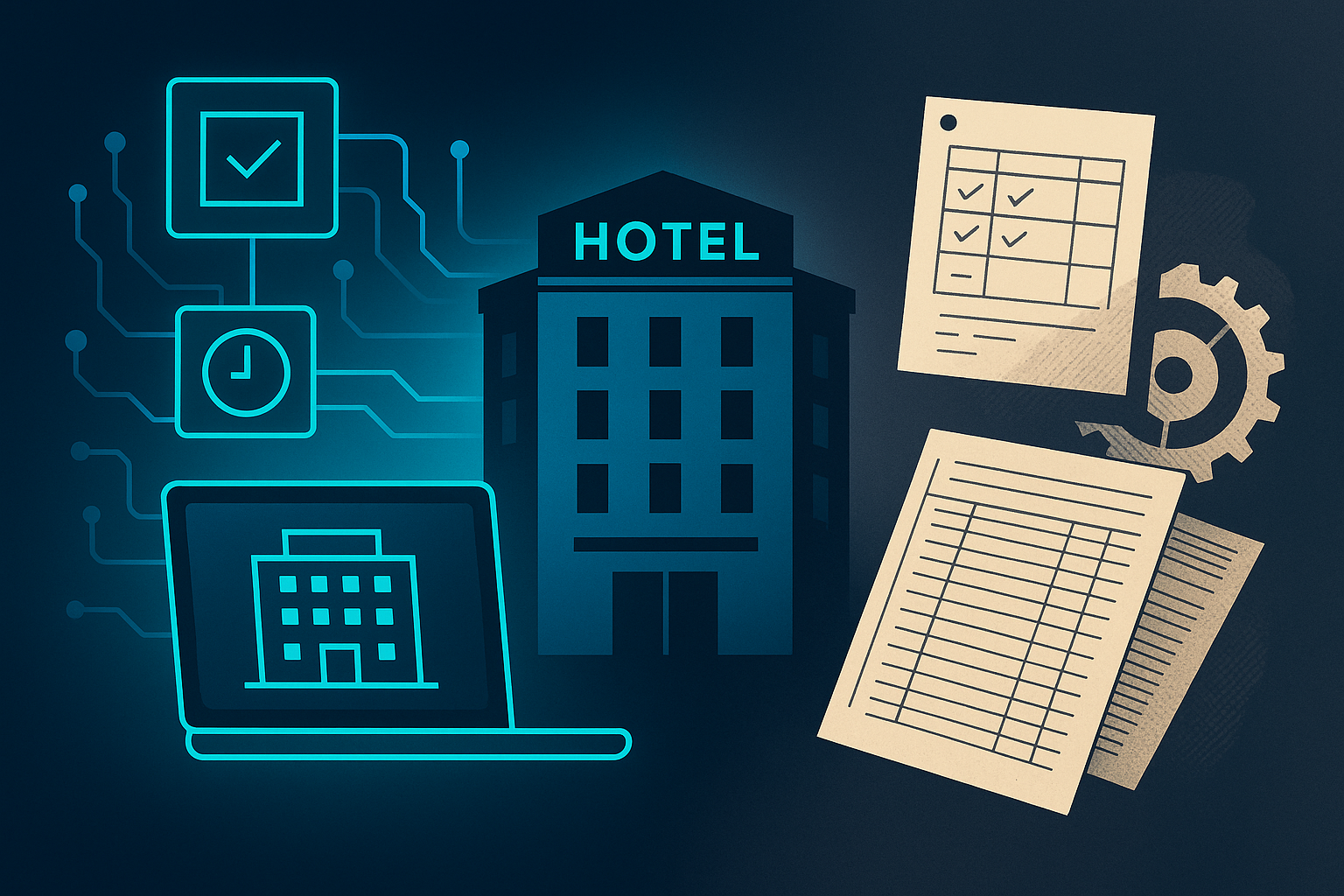
Hotel operation and management approaches vary significantly in implementation complexity, ongoing costs, and guest experience outcomes. Understanding these differences helps properties choose systems aligned with their operational scale and growth objectives.
| Criteria | Traditional Manual Management | Generic Cloud Platforms | Industry-Specific AI Automation |
|---|---|---|---|
| Implementation Time | Immediate (existing processes) | 3-6 months | 4-8 weeks |
| Staff Training Required | Minimal (current workflows) | Extensive (new systems) | Moderate (intuitive interfaces) |
| Guest Personalization | Limited by manual tracking | Basic segmentation | Advanced behavioral profiling |
| Error Reduction | Human-dependent | Moderate automation | 70-85% fewer manual errors |
| Scalability | Requires proportional staffing | Limited customization | Grows with property needs |
Traditional Manual Management works for small properties with stable guest volumes. However, labor costs increase proportionally with occupancy, and personalization remains limited by staff memory and paper-based tracking systems.
Generic Cloud Platforms offer standardized solutions across industries. While cost-effective initially, they require extensive customization for hospitality-specific workflows. Integration challenges often emerge when connecting reservation systems, housekeeping management, and guest communication tools.
Industry-Specific AI Automation like Vynta delivers hospitality-focused solutions that understand guest journey nuances. These systems integrate seamlessly with existing PMSs while adding intelligent automation for reservation management, guest communication, and upselling. Properties typically see 40% faster implementation compared to generic platforms because workflows align with hospitality best practices.
Vynta’s partnership approach differentiates from technology vendors by providing ongoing optimization based on property performance data. Rather than selling software, Vynta becomes a strategic operations partner, continuously refining automation to improve guest satisfaction and revenue outcomes.
Frequently Asked Questions
How can strategic automation improve efficiency and guest experience in hotel operations?
Strategic automation streamlines repetitive tasks such as reservation management, guest communication, and housekeeping coordination, reducing errors and freeing staff to focus on personalized service. By automating upselling and no-show prevention, hotels can enhance guest satisfaction while optimizing revenue and operational costs.
What are the key performance metrics used to measure hotel operational success?
Key metrics include Average Daily Rate (ADR), Revenue Per Available Room (RevPAR), occupancy rate, guest satisfaction scores, and average length of stay. These indicators provide a comprehensive view of financial performance, operational efficiency, and customer experience quality.
How do operational strategies differ between boutique hotels, chain properties, and resort operations?
Boutique hotels prioritize personalized guest experiences and flexible service, often leveraging automation to maintain intimacy at scale. Chain properties focus on standardized processes and brand consistency, using automation for efficiency across multiple locations. Resorts balance high-volume guest services with diverse amenities, requiring integrated systems to optimize both guest satisfaction and operational complexity.
What role does data-driven decision-making play in achieving sustainable profitability in hotel management?
Data-driven decision-making enables hospitality leaders to identify trends in guest preferences, optimize pricing strategies, and allocate resources effectively. By continuously analyzing operational and financial data, hotels can improve RevPAR, reduce costs, and adapt quickly to market changes, ensuring long-term profitability and competitive advantage.
About The Author
Anas Moujahid is the chief contributing writer & Operations Director for the Vynta Blog, where he turns cutting-edge AI automation into measurable business outcomes for mid-market companies.
Vynta designs enterprise-grade AI agents that augment rather than replace people, freeing teams to focus on higher-value work while the bots handle the busywork.
We specialise in four service-heavy verticals where AI can move the revenue needle fast: real estate, recruitment, fundraising and hospitality.
Anas started his career architecting AI and automation systems; today he leads operations at Vynta, making sure every deployment lands real-world ROI, whether that’s more booked viewings for estate agents, faster placements for recruiters, warmer investor pipelines for fundraisers or happier guests for hotels and restaurants.
Vynta delivers results by:
- Building industry-specific agents pre-trained on real-world workflows, no generic chatbots here.
- Integrating seamlessly with existing CRMs, ATSs, PMSs and fundraising platforms, zero rip-and-replace.
- Measuring success in business KPIs (lead-to-close rates, time-to-hire, donor retention, RevPAR) not vanity metrics.
- Providing transparent implementation plans so clients know exactly what to expect, when and why.
- Pairing every AI agent with human-in-the-loop controls to keep quality, compliance and brand voice on point.
Since launch, Vynta has helped agencies slash lead qualification time by up to 70 %, recruitment firms cut screening hours in half, fundraising teams triple investor touchpoints and hospitality brands lift guest satisfaction scores by double digits, all while keeping human expertise firmly in the loop.
Anas writes with the same ethos that drives Vynta: outcome-focused, jargon-free and grounded in real business value. Expect data-backed insights, practical implementation guides and a clear-eyed view of what AI can, and can’t, do for your organisation.
2026 Update: What to Recheck Before Acting on hotel operations
This refresh adds a current decision framework for readers comparing options around hotel operations. Recheck the offer, implementation requirements, pricing model, support expectations, and proof points before choosing a provider or product.
For the best result, compare practical fit instead of relying on feature lists alone: how quickly the solution can be implemented, what data or integrations it needs, where it creates measurable value, and whether it fits the workflow your team will actually use.