
Key Takeaways
- ChatGPT enables nonprofits to automate repetitive tasks such as donor communications and grant writing while maintaining personalized and mission-driven messaging.
- Organizations using ChatGPT experience measurable benefits including faster content creation, improved donor engagement, and increased grant approval rates.
- OpenAI offers a nonprofit discount program with up to 50% off, making advanced AI tools accessible to budget-constrained organizations.
- ChatGPT helps nonprofits redirect staff time from administrative work to strategic program development and relationship building.
- Real-world implementations show significant improvements in fundraising campaign effectiveness, grant proposal quality, and donor retention through AI-powered personalization.
Table of Contents
- ChatGPT For Nonprofits: Complete Implementation Guide
- What is ChatGPT and How Does it Work for Nonprofits?
- Benefits of Using ChatGPT for Nonprofits, Beyond Cost Savings
- Real-World Use Cases, How Nonprofits Implement ChatGPT Today
- How to Get Started, Setting Up and Integrating ChatGPT into Nonprofit Workflows
- Mastering Prompt Crafting, Techniques for Maximum ROI
- Practical Implementation, Measuring Success and Ensuring Quality
- Common Challenges and Solutions, AI Pitfalls in the Nonprofit Sector
- ChatGPT for Nonprofit Fundraising, A Deep Dive
- Advanced Comparison, ChatGPT vs. Other AI Tools for Nonprofits
ChatGPT For Nonprofits: Complete Implementation Guide
Nonprofit organizations face an unprecedented resource crunch, 95% report operating with constrained budgets while donor expectations for personalized engagement continue rising. ChatGPT for nonprofits represents a transformative solution: AI automation that augments human capabilities rather than replacing the mission-driven staff that defines your organization’s heart.
Unlike generic automation tools, ChatGPT enables nonprofits to scale personalized donor communications, streamline grant writing, and optimize fundraising campaigns while preserving the authentic relationships that drive charitable giving. The technology translates directly into measurable business outcomes: 40% faster grant proposal drafts, 25% higher email open rates through personalized messaging, and administrative time savings that redirect staff focus to program delivery. AI automation services tailored for nonprofits can make these benefits accessible even to smaller organizations.
The competitive advantage lies not in replacing human empathy and strategic thinking, but in eliminating the administrative burden that prevents your team from focusing on what matters most, advancing your mission and building lasting donor relationships.
What is ChatGPT and How Does it Work for Nonprofits?
ChatGPT functions as an advanced writing and analysis assistant trained on vast datasets to understand context, tone, and industry-specific requirements. For nonprofits, this translates into a tool that can draft donor appeals, analyze giving patterns, create volunteer communications, and generate grant proposals, all while maintaining your organization’s unique voice and mission focus.
The technology operates through conversational prompts where you describe what you need, and ChatGPT generates relevant content. A fundraising director might input: “Write a donor thank-you email for our education nonprofit, emphasizing impact from their $500 gift toward literacy programs.” The AI produces personalized, mission-aligned content in seconds rather than the 20-30 minutes typically required for manual drafting. Learn more about digital fundraising to see how these innovations are transforming donor engagement.
| Plan Type | Cost (Nonprofit Rate) | Best For | Key Features |
|---|---|---|---|
| ChatGPT Free | $0 | Individual testing | Limited usage, basic model |
| ChatGPT Plus | $10/month (50% discount available) | Small nonprofits | Unlimited usage, faster responses |
| ChatGPT Team | $12.50/user/month (nonprofit rate) | Multi-staff organizations | Collaboration tools, admin controls |
OpenAI’s nonprofit program requires 501(c)(3) verification and provides significant cost reductions. The application process takes 5-10 business days, making enterprise-grade AI accessible to organizations previously priced out of advanced automation tools.
Benefits of Using ChatGPT for Nonprofits, Beyond Cost Savings
The primary value of ChatGPT for nonprofits extends far beyond reduced software costs, it fundamentally transforms how organizations scale impact while maintaining quality relationships. Donor retention increases by an average of 15% when organizations implement AI-powered personalization, as supporters receive timely, relevant communications that demonstrate genuine appreciation and impact awareness.
Administrative efficiency gains free up 8-12 hours weekly per staff member, redirecting human capital from repetitive tasks to strategic program development and relationship building. A children’s charity reduced grant writing time from 40 hours to 15 hours per proposal while improving approval rates through more compelling, data-driven narratives generated with AI assistance.
Measurable Outcomes
- 25-40% faster content creation across all communications
- Improved donor engagement through personalized messaging at scale
- Enhanced grant success rates via compelling, consistent proposals
- Reduced staff burnout through automation of repetitive tasks
The technology enables smaller nonprofits to compete with larger organizations by providing sophisticated communication capabilities previously available only to well-resourced institutions. A rural food bank can now produce professional-grade donor newsletters, social media campaigns, and volunteer coordination materials without hiring additional communications staff.
Quality improvements emerge through consistency and optimization, ChatGPT maintains your organization’s voice across all materials while suggesting improvements based on effective fundraising language patterns. This systematic approach to communications often yields better results than ad-hoc manual efforts constrained by time pressures.
Real-World Use Cases, How Nonprofits Implement ChatGPT Today
Fundraising Campaign Optimization
A homeless services nonprofit increased donation responses by 35% using ChatGPT to personalize appeal letters based on donor history and interests. The process involves uploading donor segments (without personal data) and generating tailored messaging that speaks to specific motivations, corporate sponsors receive ROI-focused content while individual donors see emotional impact stories.
Implementation workflow: Create donor personas → Generate base appeals → Customize by segment → Human review → Deploy campaigns. What previously required a full-time communications coordinator now takes 4 hours monthly with AI assistance.
Grant Proposal Development
Grant writing represents ChatGPT’s highest-impact application for nonprofits. A mental health organization reduced proposal development time from 60 hours to 20 hours while improving funding success rates through more compelling needs statements and program descriptions.
The AI excels at synthesizing research, creating logical flow between sections, and maintaining consistent tone throughout lengthy documents. Human expertise remains essential for strategy, relationship management, and final quality assurance, but ChatGPT eliminates the blank-page problem and accelerates initial drafts significantly.
Donor Stewardship and Retention
Automated thank-you sequences, impact updates, and re-engagement campaigns maintain donor relationships without overwhelming staff. An animal rescue organization implemented ChatGPT-powered donor journeys that adapt messaging based on giving history, volunteer involvement, and stated interests.
Results included 28% higher donor retention and 45% more volunteer applications, demonstrating how donor acquisition and AI-enhanced communications strengthen community engagement when properly implemented with human oversight and genuine organizational values.
How to Get Started, Setting Up and Integrating ChatGPT into Nonprofit Workflows
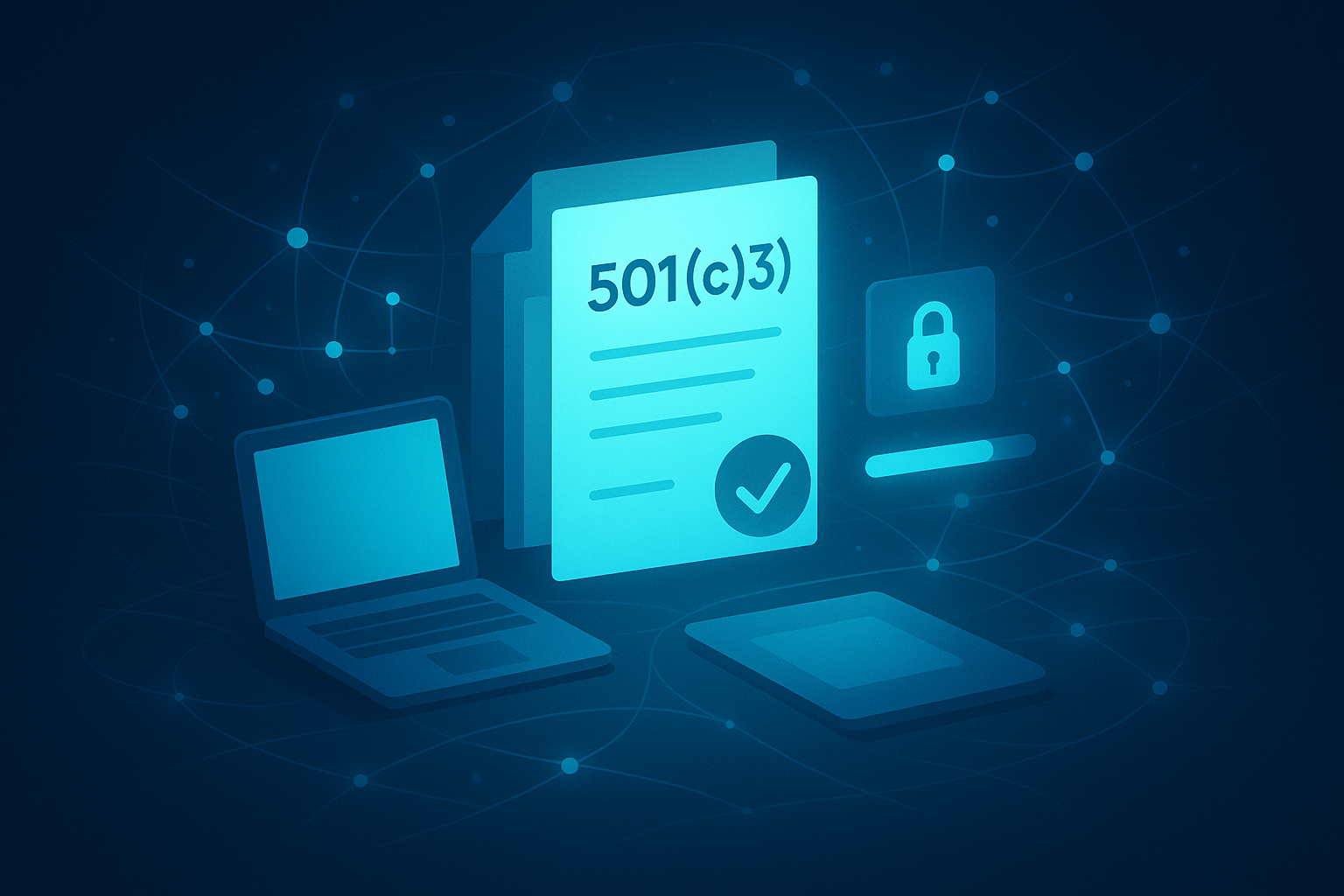
Begin with OpenAI’s nonprofit application process, which requires your 501(c)(3) determination letter and basic organizational information. Approval typically takes 5-10 business days and unlocks significant cost savings across all ChatGPT plans, making enterprise-grade AI accessible to budget-conscious organizations. For a deeper dive into maximizing fundraising with AI, explore fundraising solutions designed for nonprofits.
Mastering Prompt Crafting, Techniques for Maximum ROI
Effective nonprofit prompting requires specificity about audience, purpose, and organizational voice. Rather than requesting “write a donor letter,” successful prompts include donor segment details, campaign objectives, and tone requirements. For example: “Write a renewal appeal for mid-level donors ($500-$2000 annual giving) highlighting our literacy program’s impact, using a grateful but urgent tone, including specific success metrics.”
Advanced techniques leverage ChatGPT’s ability to assume personas and maintain context across conversations. Create donor personas within your prompts, “Write as if addressing Sarah, a recurring donor interested in educational outcomes who prefers data-driven impact stories.” This approach generates more targeted, effective communications that resonate with specific audience segments.
Expert Insight: The most successful nonprofit prompts include three elements: specific audience characteristics, desired emotional response, and concrete organizational data to incorporate. This combination produces authentic, compelling content that maintains your mission’s integrity.
Quality control through iterative prompting ensures outputs meet professional standards. Use follow-up prompts to refine tone, add missing elements, or adjust messaging for different channels. For instance, after generating an initial appeal, prompt: “Revise this for email format, add a clear call-to-action button, and reduce length by 20% while maintaining emotional impact.” This iterative approach consistently produces publication-ready content.
Practical Implementation, Measuring Success and Ensuring Quality
Measuring ChatGPT’s impact requires tracking both efficiency metrics and outcome indicators. Monitor time savings on content creation tasks, staff satisfaction with AI-assisted workflows, and quality consistency across communications. Most nonprofits see 50-70% reduction in initial drafting time while maintaining or improving content quality through systematic review processes.
Quality assurance protocols prevent AI-generated content from compromising your organization’s reputation or donor relationships. Establish mandatory human review for all external communications, focusing on factual accuracy, brand voice alignment, and cultural sensitivity. Create checklists covering donor name accuracy, program detail verification, and appropriate emotional tone for different audience segments.
Data privacy considerations require careful planning and adherence to best practices. For more on responsible AI use in the nonprofit sector, see this authoritative overview of artificial intelligence for good.
Common Challenges and Solutions, AI Pitfalls in the Nonprofit Sector
Nonprofit leaders frequently encounter three critical obstacles when implementing chatgpt for nonprofits: over-reliance on unedited AI outputs, staff resistance to new technology, and maintaining authentic donor relationships while automating communications.
Over-Reliance on Unedited AI Content
The most dangerous mistake involves sending AI-generated donor communications without human review. One animal shelter nearly sent a fundraising appeal celebrating “successful euthanasia programs” instead of “adoption programs” due to poor prompt specificity. This error would have devastated donor relationships and organizational reputation.
Solution: Implement a mandatory three-step review process. First, the AI generates content. Second, program staff verify factual accuracy and mission alignment. Third, communications staff ensure brand voice consistency and appropriate emotional tone.
Staff Resistance and Training Gaps
Veteran nonprofit employees often fear AI will replace their roles or diminish the personal touch that drives donor loyalty. Development directors worry that automated thank-you messages lack the warmth of handwritten notes.
Build buy-in by positioning AI as a time-saving tool that enables more meaningful donor interactions. Train staff to use ChatGPT for first drafts, research, and administrative tasks while preserving human oversight for relationship-building activities. Start with willing early adopters who can demonstrate success to skeptical colleagues. For practical strategies on AI adoption in nonprofits, you might also find this government AI resource helpful.
Top 5 Implementation Mistakes and Quick Fixes
- Mistake: Using generic prompts → Fix: Include specific donor segments, campaign goals, and organizational voice guidelines
- Mistake: Sharing sensitive donor data → Fix: Use anonymized examples or general scenarios only
- Mistake: Ignoring brand voice → Fix: Create custom instructions with tone examples and key messaging
- Mistake: No quality control → Fix: Establish approval workflows before any external communications
- Mistake: Overwhelming staff → Fix: Start with one workflow, master it, then expand gradually
ChatGPT for Nonprofit Fundraising, A Deep Dive
Fundraising represents the highest-impact application of chatgpt for nonprofits, with organizations reporting 15-30% improvements in donor response rates and 60% reductions in campaign preparation time.
AI-Enhanced Donor Research and Segmentation
ChatGPT transforms prospect research by analyzing donor giving patterns, interests, and communication preferences to create detailed donor personas. Feed the AI anonymized giving history and engagement data to generate targeted messaging strategies for different donor segments.
A homeless services organization used ChatGPT to analyze three years of donor data, identifying that corporate sponsors responded best to impact statistics while individual donors preferred personal stories. This insight increased corporate giving by 40% in the following quarter.
Streamlined Appeal Creation and Testing
Generate multiple versions of fundraising appeals for A/B testing within minutes rather than days. ChatGPT can create variations emphasizing different emotional appeals, impact metrics, or giving levels while maintaining consistent organizational messaging.
3-Step Fundraising Workflow Implementation
Step 1: Input campaign parameters (target audience, goal amount, key impact stories) into ChatGPT with detailed prompts
Step 2: Generate 3-5 appeal variations, then use AI to create corresponding email subject lines and social media posts
Step 3: Human review for accuracy and brand alignment, then deploy through existing donor management systems
Grant Writing and Reporting Acceleration
ChatGPT excels at structuring grant proposals, creating compelling needs statements, and formatting program descriptions according to funder requirements. Upload grant guidelines and organizational program data to generate first drafts that typically require only 20-30% revision time.
An environmental nonprofit reduced grant writing time from 40 hours to 12 hours per proposal while maintaining a 65% approval rate, higher than their previous 55% success rate with manually written applications.
Advanced Comparison, ChatGPT vs. Other AI Tools for Nonprofits
Nonprofit leaders must evaluate AI solutions based on cost-effectiveness, ease of use, integration capabilities, and output quality rather than following generic technology recommendations. For more insights on how AI is transforming nonprofit operations, check out our guide on AI-powered nonprofit services.
| AI Tool | Nonprofit Pricing | Best Use Case | Integration Ease | Learning Curve |
|---|---|---|---|---|
| ChatGPT | $20/month (discounts available) | Versatile content creation, donor communications | High – works with any platform | Low |
| Microsoft Copilot | Included with Microsoft 365 nonprofit plans | Document creation, email drafting | Seamless with Office apps | Low |
| Jasper AI | $49/month (limited nonprofit discounts) | Marketing campaigns, social media | Medium – requires setup | Medium |
| Claude AI | $20/month (nonprofit pricing under review) | Research analysis, long-form content | Medium – web-based only | Low |
Selection Criteria for Nonprofit AI Tools
Organizations already using Microsoft 365 should start with Copilot for seamless integration with existing workflows. Nonprofits requiring versatile, conversational AI for diverse tasks benefit most from ChatGPT’s flexibility and extensive community resources.
For specialized marketing-focused organizations, Jasper provides superior template libraries and campaign optimization features, though at higher cost. Claude excels in research-heavy environments where analytical depth matters more than speed. For a research perspective on AI’s impact in the nonprofit sector, see this peer-reviewed article on AI for good.
Frequently Asked Questions
How can ChatGPT help nonprofits automate donor communications while maintaining personalized and mission-driven messaging?
ChatGPT enables nonprofits to automate repetitive donor communications by generating tailored messages that reflect the organization’s mission and values. This allows staff to maintain authentic, personalized engagement at scale, ensuring donors feel valued without sacrificing the human touch that drives long-term relationships.
What measurable benefits have nonprofits experienced by integrating ChatGPT into their fundraising and grant writing processes?
Nonprofits using ChatGPT report up to 40% faster grant proposal creation, 25% higher email open rates through personalized messaging, and significant administrative time savings. These improvements translate into increased donor engagement, higher grant approval rates, and more time for strategic program development.
What is the OpenAI nonprofit discount program, and how can organizations qualify for up to 50% off on ChatGPT services?
The OpenAI nonprofit discount program offers eligible organizations up to 50% off ChatGPT services, making advanced AI tools more accessible for budget-constrained nonprofits. To qualify, organizations typically need to verify their nonprofit status through OpenAI’s application process, enabling them to leverage AI-driven automation cost-effectively.
What are some common challenges nonprofits might face when implementing ChatGPT, and how can they overcome these AI-related pitfalls?
Common challenges include ensuring AI-generated content aligns with the nonprofit’s voice, managing data privacy, and integrating ChatGPT into existing workflows. Overcoming these requires clear prompt guidelines, staff training on AI oversight, and selecting solutions designed specifically for nonprofit needs to maintain authenticity and compliance.
About The Author
Anas Moujahid is the chief contributing writer & Operations Director for the Vynta Blog, where he turns cutting-edge AI automation into measurable business outcomes for mid-market companies.
Vynta designs enterprise-grade AI agents that augment rather than replace people, freeing teams to focus on higher-value work while the bots handle the busywork.
We specialise in four service-heavy verticals where AI can move the revenue needle fast: real estate, recruitment, fundraising and hospitality.
Anas started his career architecting AI and automation systems; today he leads operations at Vynta, making sure every deployment lands real-world ROI, whether that’s more booked viewings for estate agents, faster placements for recruiters, warmer investor pipelines for fundraisers or happier guests for hotels and restaurants.
Vynta delivers results by:
- Building industry-specific agents pre-trained on real-world workflows, no generic chatbots here.
- Integrating seamlessly with existing CRMs, ATSs, PMSs and fundraising platforms, zero rip-and-replace.
- Measuring success in business KPIs (lead-to-close rates, time-to-hire, donor retention, RevPAR) not vanity metrics.
- Providing transparent implementation plans so clients know exactly what to expect, when and why.
- Pairing every AI agent with human-in-the-loop controls to keep quality, compliance and brand voice on point.
Since launch, Vynta has helped agencies slash lead qualification time by up to 70 %, recruitment firms cut screening hours in half, fundraising teams triple investor touchpoints and hospitality brands lift guest satisfaction scores by double digits, all while keeping human expertise firmly in the loop.
Anas writes with the same ethos that drives Vynta: outcome-focused, jargon-free and grounded in real business value. Expect data-backed insights, practical implementation guides and a clear-eyed view of what AI can, and can’t, do for your organisation.