
AI Workers: Redefining Business Productivity
The rise of AI workers is transforming how growth-focused companies scale, optimize, and compete in today's market. These autonomous digital agents aren't just another tech trend,they're delivering measurable business outcomes that directly impact your bottom line.
Key Takeaways
- AI workers are autonomous digital agents that enhance business productivity.
- They help growth-focused companies scale and optimize operations effectively.
- AI workers contribute to measurable business outcomes that improve the bottom line.
- These technologies represent a significant shift beyond typical tech trends.
Table of Contents
For mid-market SMEs in real estate, recruitment, fundraising, and hospitality, AI workers offer a direct path to higher revenue, improved efficiency, and enhanced customer satisfaction without expanding headcount. While your competitors struggle with manual processes and resource constraints, AI workers can handle lead qualification in real estate, candidate screening in recruitment, investor outreach in fundraising, and guest engagement in hospitality,all while your human experts focus on relationship-building and strategic decision-making.
Key Insight: Companies implementing industry-specific AI workers report significant improvements in operational efficiency, with real estate agencies seeing faster lead response times, recruitment firms achieving better placement rates, and hospitality businesses increasing guest satisfaction scores.
At Vynta, we serve as your strategic partner in deploying outcome-driven, industry-specific AI workers that augment,not replace,your people. Our approach combines deep technical expertise with practical business understanding across the four verticals where AI automation delivers the highest ROI.
Understanding AI Workers: Core Concepts and Capabilities
What Are AI Workers?
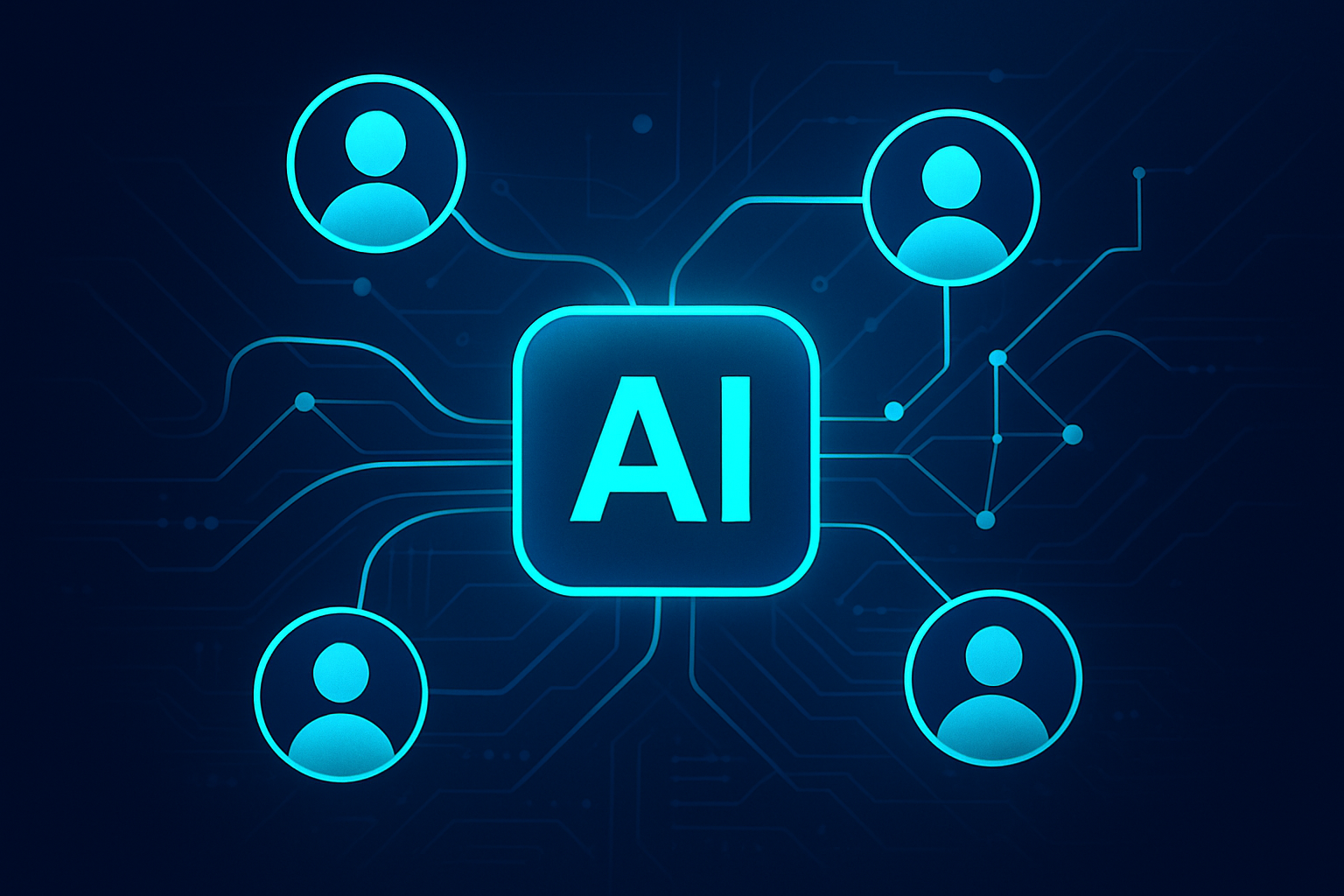
AI workers are autonomous, digital agents designed to execute, optimize, and scale business processes across core functions. Unlike traditional automation tools, these sophisticated systems combine artificial intelligence with industry-specific knowledge to deliver outcomes that directly impact your revenue and operational efficiency.
The core capabilities that set AI workers apart include:
- Autonomy: Initiate and complete complex tasks without manual prompting or constant supervision
- Learning & Adaptation: Continuously improve performance through data analysis and feedback loops
- Industry-Specific Knowledge: Built with deep understanding of real estate, recruitment, fundraising, and hospitality processes
- Human-in-the-loop Collaboration: Designed to work alongside your team, enhancing rather than replacing human expertise
In practical terms, an AI worker in real estate might automatically qualify incoming leads, match properties to buyer preferences, and update your CRM,all while learning from successful conversions to improve future performance. For recruitment firms, an AI worker could screen CVs against job requirements, schedule interviews, and maintain candidate databases with unprecedented accuracy and speed.
AI Workers vs. Bots, Chatbots & Digital Assistants
Understanding the distinction between AI workers and traditional automation tools is crucial for making informed technology investments. Here's how they compare across key business capabilities:
| Capability | AI Worker | Chatbot | Digital Assistant | RPA Bot |
|---|---|---|---|---|
| Autonomy Level | High - Independent decision-making | Low - Scripted responses only | Medium - Limited task execution | High - But rule-based only |
| Reasoning Ability | Yes - Context-aware decisions | No - Pattern matching only | Sometimes - Basic logic | No - Follows preset rules |
| Learning & Adaptation | Yes - Continuous improvement | Limited - Manual updates | Limited - Predefined learning | No - Static programming |
| Industry Context | Deep - Sector-specific expertise | None/Low - Generic responses | Moderate - Basic customization | None - Process-focused only |
| Business Impact | Strategic - Revenue generation | Tactical - Customer service | Operational - Task assistance | Efficiency - Cost reduction |
This comparison reveals why AI workers deliver greater business impact: they combine the autonomy of RPA with the intelligence to understand context, learn from outcomes, and make strategic decisions that directly affect your business results.
Types and Classifications of AI Workers
Understanding the different categories of AI workers helps you identify which solutions will deliver the greatest impact for your specific business needs. Each type is designed to handle distinct operational challenges while integrating seamlessly with your existing workflows.
- Process Automation Agents: Handle repetitive administrative tasks, data entry, and workflow management with precision and consistency
- Customer Service Agents: Personalize responses, manage reservations, and resolve customer issues at scale while maintaining service quality
- Data Analysis Agents: Transform raw business data into actionable insights, forecasts, and strategic recommendations
- Content Creation Agents: Generate high-quality, industry-specific communications, proposals, and marketing materials
- Decision Support Agents: Provide intelligent recommendations for lead qualification, candidate evaluation, and revenue optimization
The real power emerges when these AI workers are tailored to specific industry verticals. In real estate, process automation agents handle lead qualification and property matching, while decision support agents help prioritize prospects based on conversion probability. Recruitment firms benefit from data analysis agents that identify top candidates and content creation agents that personalize outreach messages, as discussed in director content marketing.
For fundraising organizations, customer service agents manage donor communications while decision support agents identify high-potential investors. In hospitality, process automation agents handle reservation management while data analysis agents optimize pricing and identify upselling opportunities.
Why AI Workers Matter: Business Outcomes Across Four Verticals
Real Estate: Accelerating Deal Velocity
Real estate agencies face a persistent challenge: manual lead qualification reduces speed-to-deal and limits agent productivity. When leads pour in from multiple sources, agents spend valuable hours on initial screening instead of building relationships with qualified prospects.
Vynta workers solve this by automatically qualifying leads, matching properties to buyer preferences, and updating CRM systems in real-time. Our clients report significant improvements in response times and conversion rates, with agents saving hours weekly that can be redirected to high-value client interactions.
Human-AI Collaboration in Action: While AI workers handle the initial qualification and data management, agents focus on what they do best,building trust, negotiating deals, and providing expert market guidance that closes transactions.
Recruitment: Streamlining Talent Acquisition
Recruitment firms struggle with screening bottlenecks and scheduling conflicts that delay placements and frustrate both clients and candidates. The manual process of reviewing CVs, coordinating interviews, and managing candidate pipelines creates inefficiencies that directly impact revenue.
Our AI digital workers transform this process by screening CVs against job requirements, scheduling interviews automatically, and integrating seamlessly with existing ATS systems. Recruitment agencies using our solutions achieve faster time-to-hire and improved candidate matching accuracy.
The human element remains crucial,recruiters focus on relationship-building, cultural fit assessment, and strategic client consultation while AI workers handle the administrative heavy lifting.
Fundraising: Systematic Investor Engagement
Fundraising organizations often struggle with inefficient investor outreach that lacks personalization and systematic follow-up. Manual processes limit the number of potential investors that can be effectively engaged, reducing overall fundraising success.
Vynta workers identify qualified investors, automate personalized outreach campaigns, and manage follow-up sequences that maintain engagement throughout the fundraising cycle. Organizations report faster investor matching and increased engagement rates that translate to successful funding rounds.
Fundraising professionals can then prioritize strategy development and high-touch relationship management with the most promising prospects identified by AI workers.
Hospitality: Scaling Personalized Service
Hospitality businesses face the challenge of scaling personalized guest experiences while managing operational costs. Maria, managing her boutique hotel and upscale restaurant, exemplifies this challenge,she needs to provide exceptional service while optimizing reservations and reducing no-shows.
| Business Challenge | Traditional Approach | AI Worker Solution | Business Impact |
|---|---|---|---|
| Reservation Management | Manual booking, phone calls | Automated booking, preference tracking | Reduced no-shows, optimized capacity |
| Guest Communication | Generic messages, limited personalization | Personalized outreach, preference-based offers | Higher guest satisfaction scores |
| Upselling Opportunities | Inconsistent, staff-dependent | Data-driven recommendations, automated offers | Increased average revenue per guest |
| Service Recovery | Reactive, manual follow-up | Proactive issue identification, automated resolution | Improved NPS scores, repeat bookings |
| Verdict | AI workers enable hospitality businesses to maintain the personal touch while automating backend operations | Measurable ROI through efficiency and revenue optimization | |
This comparison demonstrates how AI workers address core hospitality challenges while preserving the human elements that define exceptional service. Maria keeps the personal touch that guests value while AI workers handle reservation optimization, personalized communications, and revenue management tasks that would otherwise require additional staff.
Implementing AI Workers: A Step-by-Step Business Guide

Identifying Automation Opportunities
The first step in deploying AI workers is conducting a thorough audit of your current business processes. Look for tasks that are routine, repetitive, or data-heavy,these represent the highest-impact automation opportunities.
In real estate, this might include lead qualification workflows, property matching processes, and CRM data entry. Recruitment firms should examine CV screening procedures, interview scheduling, and candidate communication sequences. Fundraising organizations can identify investor research, outreach personalization, and follow-up management as prime automation targets.
ROI Assessment Framework: Use Vynta's diagnostic approach to quantify potential time savings, error reduction, and revenue impact for each identified process. This creates a clear business case for AI worker deployment.
For hospitality businesses like Maria's boutique hotel, automation opportunities typically include reservation management, guest communication sequences, upselling workflows, and service recovery processes. The key is mapping current manual touchpoints that could benefit from consistent, scalable AI execution.
Choosing the Right AI Worker for the Job
Once you've identified automation opportunities, the next step is matching business needs to specialized AI agent capabilities. This requires understanding both your technical infrastructure and operational requirements.
Consider integration complexity with existing systems,your CRM in real estate, ATS in recruitment, donor management system in fundraising, or property management system in hospitality. AI digital workers must seamlessly connect with these platforms to deliver maximum value.
- Process Mapping: Document current workflows, decision points, and data flows
- Integration Assessment: Evaluate API availability and data compatibility
- Compliance Review: Ensure AI workers meet industry regulations and data privacy requirements
- Scalability Planning: Design for growth and expanding automation scope
Data privacy and compliance considerations are particularly critical in recruitment and fundraising, where sensitive personal and financial information is processed. Vynta workers are built with enterprise-grade security and compliance frameworks to address these requirements.
Seamless Deployment: Integration and Rollout
Vynta's deployment approach prioritizes rapid implementation with minimal business disruption. Our methodology combines custom solution design with proven integration patterns across real estate, recruitment, fundraising, and hospitality verticals.
Vynta Deployment Process
- Process Walkthrough: Map current workflows and identify pain points with your team
- Solution Design: Define clear roles for human-AI collaboration and success metrics
- Build & Testing: Custom agent development with business-user validation cycles
- Go-Live Support: Full deployment with staff training and ongoing optimization
The integration phase focuses on preserving existing business processes while enhancing them with AI capabilities. In real estate, this means AI workers integrate with your existing CRM while maintaining agent workflows. For recruitment firms, AI workers enhance ATS functionality without disrupting established candidate management processes.
Change management is crucial during rollout. Teams need clear communication about how AI workers will augment their capabilities rather than replace their expertise. This is particularly important in hospitality, where staff worry about maintaining the personal service that defines their industry.
Measuring and Managing Performance
Successful AI worker implementation requires establishing clear KPIs before deployment and monitoring results through real-time dashboards. The specific metrics vary by industry vertical but should always connect to measurable business outcomes.
Real estate agencies should track lead response times, conversion rates, and agent productivity metrics. Recruitment firms need to monitor time-to-hire, candidate quality scores, and placement success rates. Fundraising organizations should measure investor engagement rates, meeting conversion, and overall fundraising velocity.
| Industry Vertical | Primary KPIs | Secondary Metrics | Success Indicators |
|---|---|---|---|
| Real Estate | Lead response time, conversion rates | Agent productivity, CRM data quality | Increased deal velocity, higher close rates |
| Recruitment | Time-to-hire, candidate quality | Interview scheduling efficiency, ATS utilization | Faster placements, improved client satisfaction |
| Fundraising | Investor engagement, meeting conversion | Outreach personalization, follow-up consistency | Accelerated funding cycles, higher success rates |
| Hospitality | Guest satisfaction scores, revenue per guest | No-show rates, upselling success | Enhanced guest experience, optimized profitability |
| Verdict | Industry-specific KPIs ensure AI workers deliver measurable business value | Continuous optimization drives compounding ROI | |
For hospitality businesses, guest satisfaction scores (NPS), average revenue per guest, and operational efficiency metrics provide comprehensive performance visibility. Maria can track how AI workers impact both guest experience and business profitability. For further reading on the impact of AI in business, see this external resource.
Continuous optimization is essential for maximizing AI worker performance. Regular review cycles, feedback incorporation, and fine-tuning ensure that AI workers evolve with your business needs and market conditions. This iterative approach delivers compounding returns on your AI investment. For additional insights into AI-driven business transformation, consult this external resource.
Ready for the AI-Powered Workplace?
AI workers represent more than a technological advancement,they're a strategic business transformation that's available today. For mid-market SMEs in real estate, recruitment, fundraising, and hospitality, AI workers offer a proven path to scaling revenue, enhancing service quality, and improving operational efficiency without expanding headcount.
The evidence is clear across all four verticals: businesses that deploy industry-specific AI workers gain measurable competitive advantages. Real estate agencies accelerate deal velocity, recruitment firms improve placement rates, fundraising organizations increase investor engagement, and hospitality businesses optimize both guest satisfaction and profitability.
Strategic Partnership Approach: Vynta serves as your industry-specialist partner, delivering measurable results through AI workers designed specifically for real estate, recruitment, fundraising, and hospitality challenges. Our solutions augment human expertise rather than replacing it, creating sustainable competitive advantages.
The future of business operations isn't about choosing between human expertise and AI capabilities,it's about combining them strategically. AI workers handle the repetitive, data-intensive tasks that consume valuable time, while your skilled professionals focus on relationship-building, strategic decision-making, and the high-value activities that drive business growth.
Whether you're managing lead qualification like a real estate agency, streamlining candidate screening like a recruitment firm, optimizing investor outreach like a fundraising organization, or scaling personalized service like Maria's hospitality business, AI workers can become your most strategic new hires.
The question isn't whether AI workers will transform your industry,it's whether you'll lead that transformation or follow others who've already gained the competitive advantage. Schedule a consultation with Vynta today to discover how AI workers can deliver measurable business outcomes for your specific operational challenges.
Frequently Asked Questions
What is an AI worker?
An AI worker refers to an artificial intelligence system or software agent designed to perform specific tasks that traditionally require human intervention. These workers automate repetitive, data-driven processes such as lead qualification in real estate, candidate screening in recruitment, donor outreach in fundraising, or reservation management in hospitality. They augment human capabilities by handling routine functions, allowing human employees to focus on higher-value, personalized activities that drive business growth.
What jobs are in danger due to AI?
Jobs that involve repetitive, rule-based tasks with predictable patterns are most at risk of automation by AI. This includes roles like data entry clerks, basic customer service agents, and routine administrative positions across industries. However, in sectors like hospitality and recruitment, AI primarily supports rather than replaces roles by handling volume-driven tasks such as initial screening or booking confirmations, preserving human roles centered on complex decision-making and personalized interactions.
How much do AI workers get paid?
AI workers, being software-driven systems, do not receive salaries in the traditional sense. Instead, the cost associated with AI workers is tied to licensing fees, subscription models, or implementation and maintenance expenses. From an ROI perspective, investing in AI workers should be evaluated based on cost savings, efficiency gains, and revenue improvements they enable rather than direct salary comparisons.
What are AI jobs?
AI jobs encompass roles involved in the development, deployment, and management of artificial intelligence systems. This includes AI architects, data scientists, machine learning engineers, and AI operations managers who design and maintain AI workflows. In business contexts, AI jobs also refer to positions where professionals leverage AI tools for enhanced productivity, such as sales agents using AI-driven lead scoring or hospitality managers optimizing guest experiences through AI-powered analytics.
What is the salary of an AI person?
Salaries for AI professionals vary widely depending on expertise, role, and geography but generally range from $80,000 to over $150,000 annually in mid-market sectors. Specialized roles like AI architects or machine learning engineers command higher salaries due to their technical skillsets. For SMEs adopting AI, partnering with vendors or consultants often offers a more cost-effective approach than hiring full-time AI specialists in-house.
What jobs would be taken by AI?
AI is poised to take over jobs characterized by high-volume, repetitive tasks such as lead qualification in real estate, initial candidate screening in recruitment, routine investor communications in fundraising, and reservation confirmations or upsell prompts in hospitality. These functions benefit from automation by improving speed and accuracy while freeing human workers to focus on relationship-building and strategic decisions. However, AI adoption emphasizes augmentation over outright replacement, preserving roles that require empathy, creativity, and complex problem-solving.
About The Author
Anas Moujahid is the chief contributing writer & Operations Director for the Vynta Blog, where he turns cutting-edge AI automation into measurable business outcomes for mid-market companies.
Vynta designs enterprise-grade AI agents that augment rather than replace people,freeing teams to focus on higher-value work while the bots handle the busywork.
We specialise in four service-heavy verticals where AI can move the revenue needle fast: real estate, recruitment, fundraising and hospitality.
Anas started his career architecting AI and automation systems; today he leads operations at Vynta, making sure every deployment lands real-world ROI,whether that’s more booked viewings for estate agents, faster placements for recruiters, warmer investor pipelines for fundraisers or happier guests for hotels and restaurants.
Vynta delivers results by:
- Building industry-specific agents pre-trained on real-world workflows,no generic chatbots here.
- Integrating seamlessly with existing CRMs, ATSs, PMSs and fundraising platforms,zero rip-and-replace.
- Measuring success in business KPIs (lead-to-close rates, time-to-hire, donor retention, RevPAR) not vanity metrics.
- Providing transparent implementation plans so clients know exactly what to expect, when and why.
- Pairing every AI agent with human-in-the-loop controls to keep quality, compliance and brand voice on point.
Since launch, Vynta has helped agencies slash lead qualification time by up to 70 %, recruitment firms cut screening hours in half, fundraising teams triple investor touchpoints and hospitality brands lift guest satisfaction scores by double digits,all while keeping human expertise firmly in the loop.
Anas writes with the same ethos that drives Vynta: outcome-focused, jargon-free and grounded in real business value. Expect data-backed insights, practical implementation guides and a clear-eyed view of what AI can,and can’t,do for your organisation.