

Core Types of Recruitment Alternatives (Internal vs External)
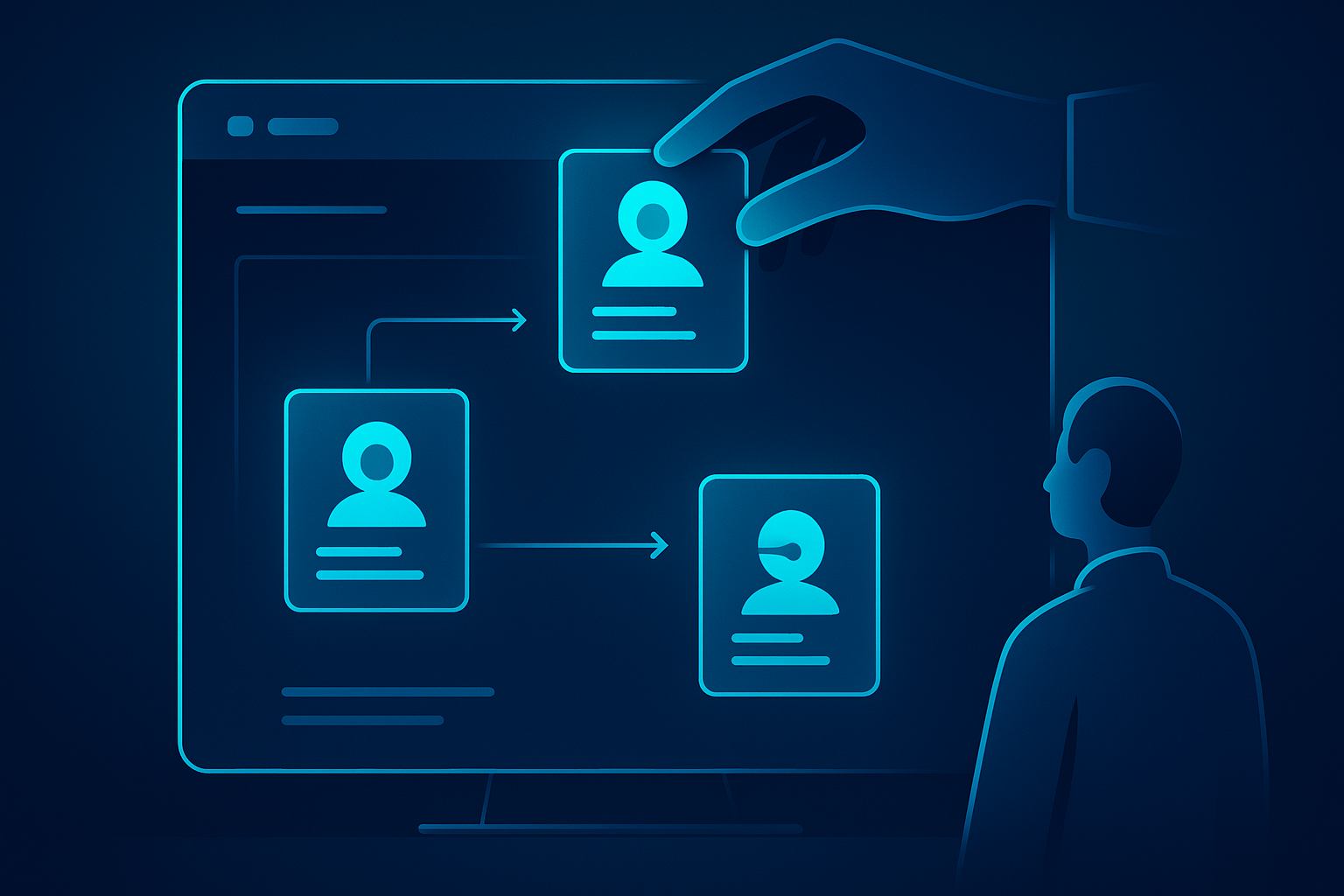
Internal Recruitment Alternatives
Internal promotions and lateral transfers represent the fastest path to filling roles, executable in 3-10 days when talent data is properly organized. Boomerang employees – rehiring former staff – cut onboarding time by 30-50% since cultural alignment and core competencies are pre-validated.
Overtime and workload redistribution serve as short-term alternatives to net new hires, though sustained use beyond 8 weeks risks burnout and escalating labor costs. Best deployed for project spikes or seasonal demand rather than permanent capacity gaps.
External Recruitment Alternatives
Employee referrals deliver 25-40% higher retention at 12 months compared to job board hires. Talent pools from previous hiring cycles provide pre-qualified candidates for future roles. Internships and apprenticeships create conversion pipelines at lower upfront costs, while temp-to-perm arrangements allow extended evaluation periods.
| Method | Typical Time-to-Fill | Cost Profile | Best For | Key Risk |
|---|---|---|---|---|
| Internal Move | 3-10 days | Minimal direct cost | Known skill gaps | Creating new vacancy |
| Referral | 7-21 days | Fixed bonus | Cultural fit roles | Limited diversity |
| Temp/Contract | 5-14 days | Hourly premium | Project work | Knowledge transfer |
| Agency | 20-45 days | 15-25% salary | Specialized roles | High cost per hire |
Employee Referrals & Networks – High-Conversion, Low-Cost Hiring Channels
Why Referrals Outperform Cold Applicants
Referrals convert at 2-3x higher rates than job board applicants because they arrive pre-screened for cultural fit and role requirements. Decision cycles compress from 20-30 days to 7-10 days, reducing recruiter workload per hire by 40-60%. The referring employee acts as an initial quality filter and cultural ambassador.
How to Implement a Referral Program in 30 Days
Define 3-5 priority roles with clear success criteria and compensation ranges. Set fixed bonus structures (typically $1,000-$5,000 paid after 90 days in role) to avoid percentage-based complications. Create one-page role briefs with referral forms distributed via email, Slack, or Teams.
Maintain monthly reminder cadence with weekly leaderboards showing active referrals and recent hires. Track conversion rates by referring employee to identify your best talent scouts for future priority roles.
Using Social Media & Alumni Networks as Extended Referrals
LinkedIn and niche community posts generate passive candidate interest when posted 2-3 times weekly with role-specific content. Alumni networks from previous companies provide warm outreach opportunities for senior roles requiring industry experience.
For boomerang employees, create a 3-step reapproach process: role alignment verification, exit reason review, and expedited re-onboarding plan executable within 2 weeks of offer acceptance.
Temporary, Contract, and Staff Leasing Options When You Need Capacity Fast
Temp, Contract, and Temp-to-Hire Explained
Temporary employment covers short-term assignments (1-6 months) for project spikes or coverage needs. Fixed-term contracts span 6-18 months for specific projects or seasonal needs. Temp-to-hire arrangements let you evaluate candidates for 3-6 months before offering permanent positions, reducing hiring risk by up to 60%.
Each option serves different capacity needs: temporary for immediate coverage, contracts for defined project scope, and temp-to-hire when you need extended evaluation periods before committing to full-time headcount.
Staff Leasing & Subcontracting as Alternatives to Building In-House Teams
Staff leasing means a third-party employer handles payroll, benefits, and compliance while workers operate under your day-to-day management. Subcontracting outsources entire functions—like finance teams or sourcing operations—to specialized providers who manage both the work and the workers.
The key difference lies in control and legal responsibility. With staff leasing, you direct daily activities but the leasing company remains the legal employer. Subcontracting transfers both management and employment responsibility to the provider, giving you outcomes-focused relationships rather than people management.
| Method | Duration | Onboarding Time | Management Control | Best For |
|---|---|---|---|---|
| Temporary | 1-6 months | 1-3 days | Direct daily management | Coverage, seasonal spikes |
| Contract | 6-18 months | 1-2 weeks | Project oversight | Defined projects, skills gaps |
| Staff Leasing | Ongoing | 2-4 weeks | Daily management only | Compliance-heavy roles |
| Subcontracting | 3-24 months | 4-8 weeks | Outcomes-focused | Entire function outsourcing |
Internal Mobility, Overtime, and Boomerang Employees – Maximizing Your Existing Talent

Internal recruitment alternatives often deliver the fastest time-to-productivity since existing employees already understand your culture, systems, and standards. Internal moves can be executed within 3-10 days compared to 30-60 days for external hires, while reducing onboarding costs by 40-70%.
Promotions, Lateral Moves, and Cross-Training
Internal promotions eliminate external sourcing time while boosting employee retention and morale. Run internal-only postings for 5-7 days before going external, ensuring transparent criteria and development paths to avoid resentment among non-selected candidates.
Cross-training creates internal flexibility, allowing teams to redistribute workload during peak periods or coverage gaps. Document skills matrices and rotation schedules to maximize internal mobility opportunities while maintaining operational continuity.
Overtime & Workload Rebalancing as a Short-Term Alternative
Overtime provides instant capacity without hiring cycles, making it efficient for short-term spikes under 8 weeks. However, sustained overtime beyond 15% of regular hours often costs more than temporary staff while risking burnout and quality degradation.
Use overtime strategically: for urgent projects under 6 weeks, seasonal peaks with defined end dates, or bridge coverage while permanent recruitment alternatives are being implemented. Monitor productivity metrics weekly to ensure overtime remains cost-effective.
Rehiring Former Employees (Boomerangs)
Boomerang employees often reduce onboarding time by 30-50% and reach full productivity 40% faster than external hires. They understand your processes, culture, and expectations, making them valuable recruitment alternatives for roles they previously performed successfully.
Before rehiring, review: role-fit alignment with current needs, original exit reasons and resolution, cultural or process changes since departure, and updated reference checks. Successful boomerang programs maintain relationships with high-performing alumni through quarterly check-ins and company updates.
Internships, Apprenticeships & Early-Talent Pipelines
Early-talent programs create sustainable recruitment alternatives by building future capacity at 30-50% lower cost-per-hire than experienced external candidates. These programs work best for roles with structured learning paths and measurable outcomes over 3-24 month timeframes.
When Internships Make Sense for SMEs
Internships excel for roles requiring 3-6 months of skill development: junior analyst positions, marketing coordination, research support, and administrative functions. They provide extended evaluation periods while building relationships with universities and professional programs in your industry.
Focus internships on specific deliverables rather than general exposure. Define 2-3 concrete projects with measurable outcomes, ensuring both learning value for interns and business value for your organization.
How to Set Up an Internship Program that Converts to Hires
Structure internships for conversion success:
- Define 1-2 roles with tightly scoped 12-week outcomes and success metrics
- Assign named mentors
- Provide regular feedback and mid-point reviews
- Offer conversion interviews in the final 2 weeks
- Track conversion rates and adjust program structure annually
Digital Recruitment Channels: Job Boards, Social Media, and Remote Hiring
Digital recruitment alternatives expand your candidate pool beyond local talent constraints while reducing dependency on traditional agencies. These channels work best when combined strategically—job boards for volume hiring, social media for passive candidate discovery, and remote hiring to bypass geographic limitations entirely.
Job Boards vs Social Media Recruiting
Job boards excel at capturing active job seekers with immediate availability, typically generating 20-50 applications per posting within 72 hours. Social media recruiting targets passive candidates who aren’t actively job hunting but might consider the right opportunity, often yielding higher-quality matches for senior or specialized roles.
Cost structures differ significantly: job boards charge per posting ($200-800) with predictable application volumes, while social media requires ongoing content investment but builds long-term employer brand recognition. LinkedIn InMail costs $10-15 per direct message but reaches candidates unavailable through traditional postings.
Remote Hiring as a Structural Alternative to Local Headcount Constraints
Remote recruitment alternatives eliminate geographic talent shortages while reducing office space requirements by 40-60%. This approach works particularly well for roles requiring specialized skills where local candidate pools are limited or prohibitively expensive.
Implement structured remote hiring processes: standardized video interview formats, skills-based online assessments completed within 48 hours, and clear remote onboarding protocols covering technology setup, communication cadences, and 30-60-90 day milestone tracking.
Tools & Light Automation for Digital Recruiting
Basic ATS systems reduce manual candidate tracking time by 50-70% while automated email sequences keep candidates engaged between interview stages. Simple scheduling tools eliminate back-and-forth coordination, cutting time-to-interview from 7-10 days to 2-3 days.
Start with essential automation: application acknowledgment emails, interview reminder sequences, and rejection notifications. These foundational tools create professional candidate experiences while freeing recruiting time for relationship-building and assessment activities.
Where AI Recruitment Automation Fits Among These Alternatives
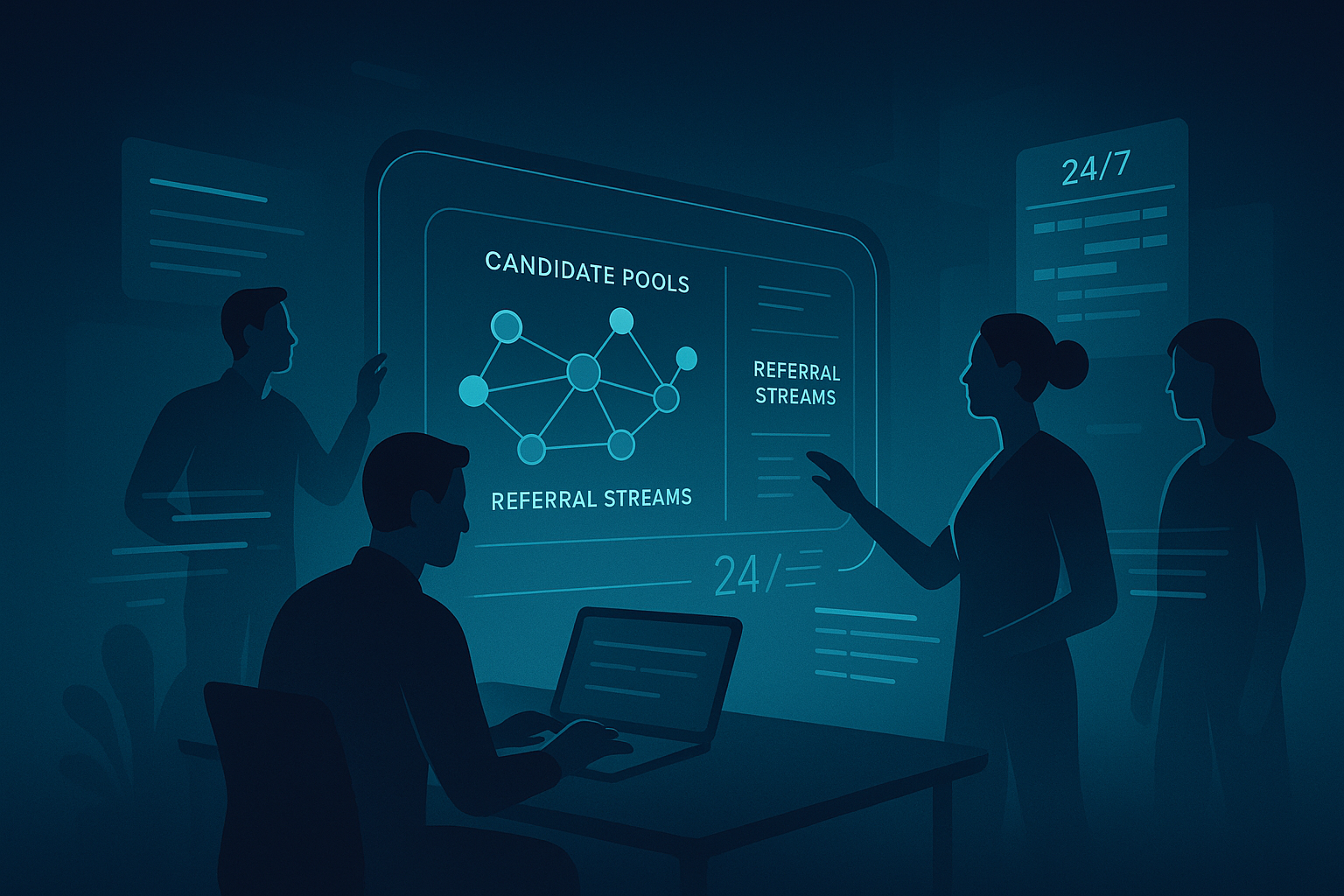
AI recruitment automation doesn’t replace these recruitment alternatives—it amplifies their effectiveness. AI agents can screen referrals 24/7, maintain talent pools from multiple sources, and automate scheduling across all channels, increasing your team’s capacity to manage 3-5x more candidates simultaneously without additional headcount.
Augmenting Recruiters, Agencies, and Fractional Teams
AI agents enhance every recruitment alternative by handling time-intensive screening tasks. They can process 100+ CV reviews in minutes, automatically shortlist candidates based on predefined criteria, and schedule interviews while maintaining personalized communication touchpoints.
This automation reduces recruiter workload by 50-70% on administrative tasks, allowing focus on relationship-building, cultural assessment, and strategic talent planning. Fractional recruiters become more cost-effective when AI handles initial screening, extending their capacity across multiple clients.
Industry-Specific Use Cases
AI recruitment automation delivers measurable results across Vynta’s core verticals. Real estate agencies use AI to qualify property consultants and support staff faster during market expansion periods. Recruitment firms leverage AI agents to source and pre-screen candidates before human review, increasing placement velocity by 40-60%.
Fundraising organizations benefit from AI-powered hiring for donor relations and outbound teams, ensuring consistent candidate quality during rapid scaling. Hospitality businesses use AI to screen seasonal staff efficiently before peak seasons, reducing time-to-hire from 3-4 weeks to 7-10 days.
Implementation Reality Check
AI recruitment automation requires ATS/CRM integration and 2-4 weeks for workflow customization. However, the human-in-the-loop design ensures final hiring decisions remain with your team while AI handles repetitive qualification tasks. Typical results include 30-40% faster time-to-hire and 50% more qualified candidates reviewed per week. For further reading on the impact of AI and fairness in hiring, see this new research on AI and fairness in hiring.
Choosing the Right Recruitment Alternative: A Simple Decision Framework
Select recruitment alternatives based on three primary constraints: timeline urgency, budget limitations, and quality requirements. This framework helps you match specific hiring scenarios to the most effective combination of internal and external recruitment alternatives.
Start from Constraints: Time, Budget, and Risk
Need someone in ≤2 weeks: Prioritize internal moves, overtime arrangements, temp staff, or boomerang employees. These options bypass lengthy screening processes while providing immediate capacity.
Need someone in 2-6 weeks: Combine employee referrals with AI-powered screening, fractional recruiters, or temp-to-hire arrangements. This timeframe allows for proper evaluation while maintaining urgency.
Building 6-12 month pipeline: Focus on internship programs, apprenticeships, talent pool development, and strategic agency partnerships. Longer timelines enable comprehensive candidate development and cultural integration. For additional insights on inclusion and transparency in AI-powered recruitment, refer to this authoritative resource from the World Economic Forum.
Quick Selection Matrix
Match your situation to optimal recruitment alternatives:
- Scaling fast with limited HR: Fractional recruiter + AI automation for screening efficiency
- Short peak season spike: Temporary staff + strategic overtime management
- Strategic senior hire: Employee referrals + specialist agency partnership
- Ongoing volume hiring: Internship pipeline + AI-powered job board sourcing
- Specialized skills shortage: Remote hiring and digital sourcing channels
Frequently Asked Questions
What are the main benefits of using recruitment alternatives compared to traditional job boards and agency recruiters?
Recruitment alternatives reduce time-to-hire from the typical 30-60 days and cut agency fees that often range between 15-25% per hire. They leverage internal talent, external partnerships, and technology to improve match quality while lowering overall hiring costs, making them ideal for growth-focused SMEs seeking faster, more cost-effective recruitment.
How can internal mobility strategies like boomerang employees and lateral transfers reduce time-to-hire and costs?
Internal mobility strategies such as boomerang employees and lateral transfers significantly shorten hiring timelines—often to 3-10 days—by utilizing existing talent familiar with company culture and processes. This reduces onboarding time by up to 50%, lowers recruitment expenses, and improves retention by promoting proven performers.
In what ways do employee referrals and early-talent pipelines improve retention and hiring quality?
Employee referrals and early-talent pipelines tap into trusted networks and develop future candidates, resulting in hires with better cultural fit and higher engagement. These channels typically deliver 25-40% higher retention rates and reduce hiring costs by 50-70% compared to agency fees, enhancing both quality and long-term workforce stability.
How does AI-powered recruitment automation enhance the screening process and overall hiring efficiency?
AI-powered recruitment automation multiplies screening capacity by 3-5 times and cuts time-to-hire by 20-40% by automating candidate evaluation and engagement. This allows recruiters to focus on high-value decision-making, improves match accuracy, and accelerates the hiring cycle without sacrificing quality.
About The Author
Anas Moujahid is the chief contributing writer & Operations Director for the Vynta AI Blog, where he turns cutting-edge AI automation into measurable business outcomes for mid-market companies.
Vynta AI designs enterprise-grade AI agents that augment rather than replace people—freeing teams to focus on higher-value work while the bots handle the busywork.
We specialise in four service-heavy verticals where AI can move the revenue needle fast: real estate, recruitment, fundraising and hospitality.
Anas started his career architecting AI and automation systems; today he leads operations at Vynta AI, making sure every deployment lands real-world ROI—whether that’s more booked viewings for estate agents, faster placements for recruiters, warmer investor pipelines for fundraisers or happier guests for hotels and restaurants.
Vynta AI delivers results by:
- Building industry-specific agents pre-trained on real-world workflows—no generic chatbots here.
- Integrating seamlessly with existing CRMs, ATSs, PMSs and fundraising platforms—zero rip-and-replace.
- Measuring success in business KPIs (lead-to-close rates, time-to-hire, donor retention, RevPAR) not vanity metrics.
- Providing transparent implementation plans so clients know exactly what to expect, when and why.
- Pairing every AI agent with human-in-the-loop controls to keep quality, compliance and brand voice on point.
Since launch, Vynta AI has helped agencies slash lead qualification time by up to 70 %, recruitment firms cut screening hours in half, fundraising teams triple investor touchpoints and hospitality brands lift guest satisfaction scores by double digits—all while keeping human expertise firmly in the loop.
Anas writes with the same ethos that drives Vynta AI: outcome-focused, jargon-free and grounded in real business value. Expect data-backed insights, practical implementation guides and a clear-eyed view of what AI can—and can’t—do for your organisation.