
What Are Three Examples of Automation? (2026 Guide)

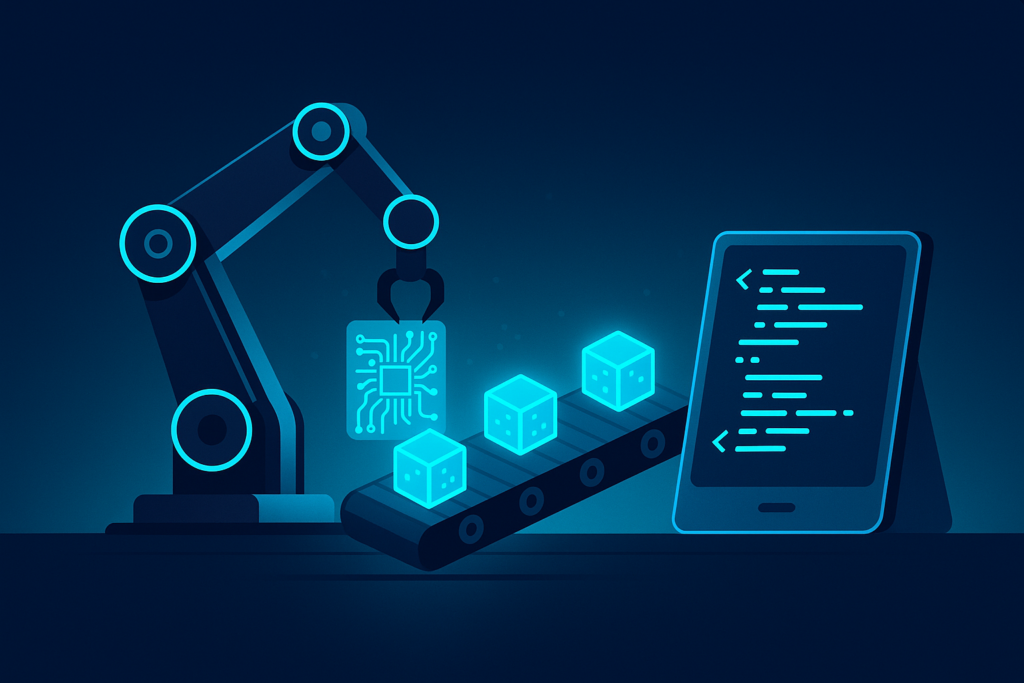
Futuristic workspace with robotic arm, conveyor belt, and touchscreen displaying data in neon blue tones.

What are three examples of automation?

Key Takeaways

  • Automation converts repetitive tasks into machine-driven processes that ensure consistent outcomes.
  • Manufacturing robots can assemble products rapidly, significantly speeding up production.
  • AI agents efficiently qualify leads and screen candidates, reducing the time required for these tasks.
  • Hospitality systems automate reservation management while also promoting premium services.
  • Automation allows human workers to focus on more strategic and creative work.

What Are Three Examples of Automation?

Automation transforms repetitive tasks into machine-powered processes that deliver consistent results while freeing human talent for strategic work. What are three examples of automation? Manufacturing robots assembling products in seconds, AI agents qualifying leads and screening candidates in minutes rather than hours, and hospitality systems managing reservations while automatically upselling premium services.

Manufacturing robots, AI-driven lead qualification, and automated hospitality reservation systems are three key examples of automation enhancing efficiency and accuracy.

Defining Automation: Concepts, Scope, and Business Impact

Automation transfers human-performed tasks to machines or AI systems that execute them consistently without manual intervention. This shift eliminates human error, accelerates task completion, and allows teams to focus on relationship-building and strategic decisions that drive revenue growth.

For mid-market SMEs, automation delivers measurable ROI through reduced operational costs and increased throughput. Companies implementing AI-driven automation report 40%+ returns on investment within the first year, primarily through time savings and improved conversion rates across sales, marketing, and operations functions.

Automation Type Primary Application Time Savings Key Benefit
Manufacturing Physical production 80% labor reduction Consistent quality
Workflow Business processes 20+ hours/week Faster conversions
Service Customer interactions 10+ hours/week Enhanced experience

Example 1 – Manufacturing Automation: Robots, CNC Systems & Intelligent Conveyors
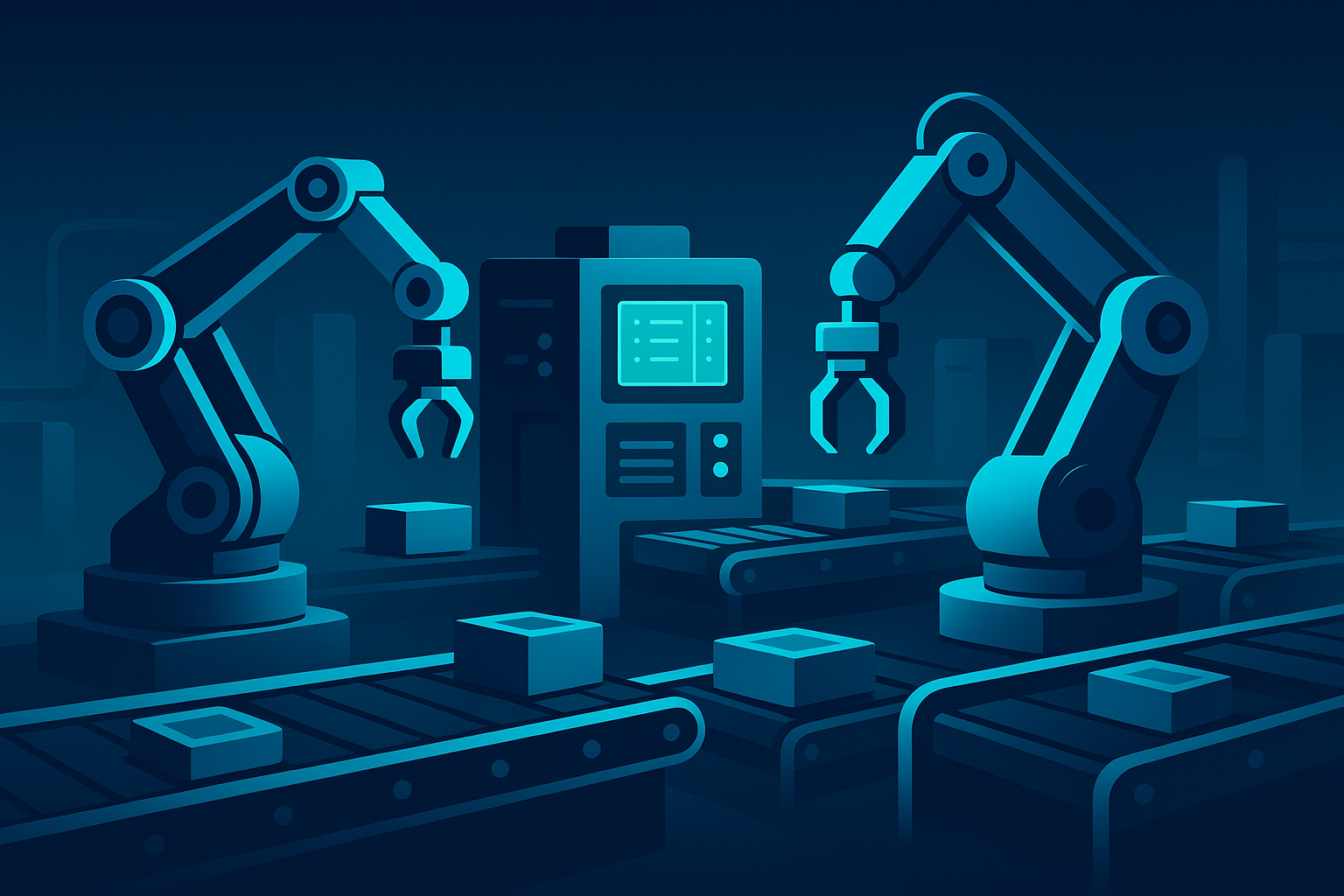
Robotic arms on a manufacturing floor

Manufacturing automation employs physical machines, robotic arms, computer numerical control (CNC) systems, and automated guided vehicles, to execute production tasks with programmed precision. These systems operate continuously, completing assembly operations in seconds that would require minutes of manual labor.

Automotive production lines exemplify this automation, achieving 500+ units per hour while reducing manual labor requirements by 80%. Robotic arms mount components in under three minutes each, maintaining consistent torque specifications and placement accuracy that human workers cannot match over extended periods.

The technology distinguishes between fixed automation for high-volume single products, flexible systems that adapt to multiple product variations, and programmable automation that handles batch production with setup changes. Each approach optimizes different manufacturing scenarios based on volume requirements and product complexity.

Example 2 – Workflow Automation in Business: AI Agents, CRM Integration & Candidate Screening

Workflow automation deploys AI agents that integrate with existing business systems, CRMs, applicant tracking systems, and property management platforms, to execute repetitive processes autonomously. These agents qualify leads, screen candidates, manage investor outreach, and handle reservation confirmations while flagging exceptions for human review.

The measurable impact spans multiple industries. Real estate agencies reduce lead qualification time by 70%, transforming hours-long manual processes into minutes of automated analysis. Recruitment firms achieve double-digit improvements in placement rates through faster candidate screening and interview scheduling. Fundraising organizations systematize investor outreach with personalized follow-up sequences that maintain relationship quality.

Industry-Specific Time Savings:

  • Real Estate: AI matches properties to leads and automates showing bookings
  • Recruitment: Instant CV screening with candidate ranking and interview scheduling
  • Fundraising: Automated investor outreach with personalized messaging sequences
  • Hospitality: Reservation flow management with automatic premium service upselling

Implementation success requires mapping high-frequency manual tasks and defining clear human-in-the-loop scenarios for compliance and quality control. Teams save 20+ hours weekly by automating routine processes while maintaining oversight of strategic decisions and relationship management activities.

Example 3 – Hospitality Service Automation: Reservation, Guest Experience & Upselling

Hospitality automation integrates AI agents with property management systems to handle routine guest interactions, booking confirmations, pre-arrival communications, upgrade offers, and feedback requests. These systems execute personalized messaging sequences that enhance guest experience while driving additional revenue opportunities.

Boutique hotels implementing comprehensive automation reduce no-shows by 30% through automated confirmation sequences and pre-arrival engagement. The systems identify upselling opportunities based on guest preferences and special occasions, increasing revenue per guest through targeted offers for room upgrades, dining reservations, and premium amenities.

Guest satisfaction scores improve through consistent, timely communications that arrive within three minutes of booking confirmation. Automated feedback collection enables rapid response to service issues while positive reviews drive referrals and repeat bookings. The strategic advantage lies in maintaining the personal touch that defines hospitality excellence while systematically optimizing operational efficiency behind the scenes.

Implementation requires careful integration with existing property management systems and staff training to ensure seamless guest experiences. Hotels typically see measurable improvements in guest satisfaction scores within 30 days, with revenue per guest increasing as upselling opportunities become more systematic and personalized. The key is positioning automation as an enhancement to human service rather than a replacement, ensuring that technology amplifies rather than diminishes the hospitality experience.

Types of Automation – Manufacturing, Workflow, and Service Compared
Modern workspace with robotics and digital interfaces

Understanding the fundamental differences between automation types enables SMEs to select solutions that align with their specific operational needs and growth objectives. Manufacturing automation excels in high-volume, standardized production environments where consistency and speed drive value. Workflow automation transforms knowledge work by eliminating repetitive administrative tasks across sales, marketing, and operations. Service automation enhances customer-facing processes while maintaining the human connection essential for relationship-based industries.

The selection criteria vary significantly across automation types. Manufacturing automation requires substantial upfront investment but delivers predictable ROI through reduced labor costs and increased output capacity. Workflow automation offers faster implementation timelines and immediate productivity gains, making it ideal for service-based SMEs seeking quick wins. Hospitality automation balances operational efficiency with guest experience enhancement, requiring careful calibration to maintain service quality standards.

Criteria Manufacturing Automation Workflow Automation Service Automation
Initial Investment High ($50K-500K+) Moderate ($5K-50K) Low-Moderate ($2K-25K)
Implementation Time 3-12 months 2-8 weeks 1-6 weeks
Flexibility Limited once configured Highly adaptable Moderate adaptability
Human Oversight Minimal during operation Strategic guidance required Quality monitoring essential
ROI Timeline 12-36 months 1-6 months 3-12 months

The decision framework centers on process characteristics and business priorities. Manufacturing automation suits businesses with standardized, high-volume production where quality consistency and speed matter more than flexibility. Workflow automation benefits organizations handling repetitive administrative tasks that consume significant staff time while requiring human judgment for exceptions. Service automation works best for customer-facing operations where systematic processes can enhance rather than replace human interaction.

SMEs should evaluate their primary value drivers when choosing automation types. Revenue-focused businesses often benefit most from workflow automation that accelerates sales processes and lead conversion. Cost-focused operations may find manufacturing automation delivers the greatest long-term savings. Customer experience-focused organizations typically see the highest returns from service automation that enhances satisfaction while reducing operational overhead.

The Tangible Business Benefits of Automation in 2025

Productivity improvements represent the most immediate and measurable benefit of automation implementation. Manufacturing automation typically increases output by 200-400% while reducing per-unit costs by 15-30%. Workflow automation saves teams 20+ hours per week on administrative tasks, allowing focus on high-value activities that drive revenue growth. Service automation enables hospitality businesses to handle 50% more guest interactions without proportional staff increases, improving both efficiency and service quality.

Error reduction delivers compound benefits across all automation types. Manufacturing systems achieve 99.9% accuracy rates compared to 95-98% for manual processes, eliminating costly rework and quality issues. AI-powered workflow automation reduces data entry errors by 90% while ensuring consistent follow-up on leads and candidates. Service automation prevents booking conflicts and missed upselling opportunities that cost hospitality businesses thousands in lost revenue annually.

Industry-Specific ROI Metrics

  • Real Estate: 70% faster lead qualification, 40% higher conversion rates
  • Recruitment: 60% reduction in time-to-hire, 35% improvement in placement quality
  • Fundraising: 3x increase in investor outreach capacity, 25% higher response rates
  • Hospitality: 30% reduction in no-shows, 45% increase in upselling success
Cost savings extend beyond labor reduction to include operational efficiencies and resource optimization. Automated systems operate 24/7 without breaks, overtime pay, or benefits costs. Energy consumption often decreases through optimized processes and reduced waste. Compliance costs drop as automated systems maintain consistent documentation and audit trails, reducing regulatory risks and associated penalties.

The scalability benefits become apparent as businesses grow. Automated systems handle volume increases without proportional cost increases, enabling profitable expansion. A real estate agency can process 10x more leads with the same core team. A recruitment firm can manage multiple client searches simultaneously without hiring additional researchers. A hotel can optimize revenue management across peak and off-peak periods without constant manual intervention.

For a deeper understanding of the principles behind business process automation, see this authoritative overview of business process automation.

Common Challenges and Solutions for Automation Adoption

High upfront investment concerns represent the primary barrier for mid-market SMEs considering automation implementation. Manufacturing automation requires significant capital expenditure, while workflow and service automation offer more accessible entry points. The solution involves phased implementation strategies that demonstrate ROI quickly, allowing businesses to reinvest early gains into further automation initiatives.

Another common challenge is staff resistance due to fears of job displacement or unfamiliarity with new technologies. Transparent communication about the role of automation in augmenting, not replacing, human capabilities is essential. Providing comprehensive training and involving staff in the automation planning process fosters buy-in and smooth adoption.

Integration with legacy systems can also pose difficulties, especially in industries with established processes and software. Selecting automation solutions with robust integration capabilities and working with experienced partners like Vynta AI ensures seamless deployment and minimal disruption.

Finally, maintaining quality and compliance in automated processes requires clear human-in-the-loop protocols. Regular monitoring, exception handling, and continuous optimization help ensure that automation delivers consistent, high-quality outcomes aligned with business objectives.

How to Implement Automation – Step-by-Step for Mid-Market SMEs

Digital workspace with flowcharts and interconnected nodes

Successful automation implementation follows a structured approach that minimizes disruption while maximizing results. The discovery phase involves mapping current workflows to identify repetitive, time-consuming tasks with clear success metrics. Real estate teams might discover that lead qualification consumes 15+ hours weekly, while recruitment agencies find candidate screening represents their biggest bottleneck.

Step 1: Workflow Assessment and ROI Analysis begins with documenting current processes and measuring baseline performance. Track metrics like lead response times, candidate screening duration, or guest check-in processes. This data becomes essential for measuring automation success. Professional discovery calls, like those offered by Vynta AI, provide expert analysis of automation opportunities across different business functions.

Step 2: Solution Selection and Integration Planning involves choosing automation types aligned with specific business needs. Manufacturing processes benefit from fixed automation systems, while service industries require flexible AI agents that adapt to varying customer interactions. Integration planning ensures new automation tools work seamlessly with existing CRM, ATS, or PMS systems.

Step 3: Pilot Implementation and Testing starts with a single department or process to validate the automation approach. Hospitality businesses might automate reservation confirmations first, while recruitment firms could begin with initial candidate screening. This phase typically lasts 2-4 weeks and provides real-world performance data.

Step 4: Training and Change Management ensures team members understand their new roles in the automated workflow. Staff learn to work alongside AI agents, focusing on high-value activities while automation handles routine tasks. Comprehensive training reduces resistance and accelerates adoption.

Step 5: Scaling and Optimization expands successful automation to additional processes based on pilot results. Performance monitoring continues throughout this phase, with regular adjustments to improve efficiency. Most SMEs achieve full automation deployment within 8-12 weeks of starting implementation.

Timeline expectations vary by automation complexity. Simple workflow automation often shows immediate time savings within the first week, while manufacturing automation may require several months for full optimization. The key lies in setting realistic expectations and celebrating incremental improvements throughout the process.

For a practical guide on integrating automation into your business, check out how Vynta AI supports SMEs with automation implementation.

Strategic Automation for Business Transformation

Understanding what are three examples of automation, manufacturing systems, workflow AI agents, and hospitality service automation, provides the foundation for strategic business transformation. Each automation type serves different business needs, but the most successful SMEs combine multiple approaches to create comprehensive operational improvements. Manufacturing automation excels at high-volume, repetitive tasks, while AI-powered workflow automation transforms knowledge work across sales, marketing, and operations.

The evolution of automation technology has democratized sophisticated capabilities for mid-market businesses. Where enterprise-grade automation once required massive investments and technical teams, modern AI agents integrate seamlessly with existing systems and deliver measurable results within weeks. This accessibility shift means SMEs can now compete with larger organizations by leveraging the same automation advantages that previously required extensive resources.

Success in automation implementation depends on selecting the right combination of technologies for your specific industry challenges. Real estate agencies benefit most from lead qualification and property matching automation, while recruitment firms see dramatic improvements from candidate screening and interview scheduling systems. Hospitality businesses transform guest experiences through automated reservation management and personalized upselling, creating both operational efficiency and revenue growth.

The future of business automation lies in human-AI collaboration rather than replacement. The most effective implementations augment human capabilities, allowing teams to focus on strategic, creative, and relationship-building activities while automation handles routine tasks. This approach preserves the personal touch that defines excellent service while dramatically improving operational efficiency and business outcomes.

Ready to discover how automation can transform your business operations? Schedule a discovery call with Vynta AI to explore ROI-driven automation opportunities tailored to your industry’s specific challenges and growth objectives.

For further reading on the latest advancements in intelligent automation, see this NIST publication on intelligent automation.

Frequently Asked Questions

What are the main types of automation and how do they differ in application?

The main types of automation are manufacturing, workflow, and service automation. Manufacturing automation focuses on physical production tasks using robots and CNC systems to improve speed and consistency. Workflow automation streamlines business processes like lead qualification and candidate screening through AI agents integrated with CRM systems. Service automation enhances customer interactions, such as managing reservations and upselling in hospitality, to improve guest experience and operational efficiency.

How does automation improve efficiency and accuracy in manufacturing processes?

Automation in manufacturing replaces manual labor with robots and intelligent machinery that perform repetitive tasks consistently and at high speed. This reduces human error, lowers labor costs by up to 80%, and ensures consistent product quality, enabling faster production cycles and reliable output that supports scalable growth.

What are the measurable business benefits of implementing AI-driven workflow automation for mid-market SMEs?

AI-driven workflow automation delivers measurable ROI by saving over 20 hours per week on repetitive tasks like lead qualification and candidate screening. This accelerates conversion rates, reduces time-to-hire, and improves accuracy in matching prospects or candidates, ultimately boosting revenue and operational efficiency without requiring extensive internal AI resources.

What challenges might businesses face when adopting automation and how can they be addressed?

Common challenges include resistance to change, integration complexity, and concerns about AI replacing human roles. These can be addressed by focusing on automation that augments rather than replaces staff, choosing industry-specific solutions tailored to existing systems, and providing clear communication about measurable business outcomes to build trust and encourage adoption.

About The Author

Anas Moujahid is the chief contributing writer & Operations Director for the Vynta AI Blog, where he turns cutting-edge AI automation into measurable business outcomes for mid-market companies.

Vynta AI designs enterprise-grade AI agents that augment rather than replace people, freeing teams to focus on higher-value work while the bots handle the busywork.

We specialise in four service-heavy verticals where AI can move the revenue needle fast: real estate, recruitment, fundraising and hospitality.

Anas started his career architecting AI and automation systems; today he leads operations at Vynta AI, making sure every deployment lands real-world ROI, whether that’s more booked viewings for estate agents, faster placements for recruiters, warmer investor pipelines for fundraisers or happier guests for hotels and restaurants.

Vynta AI delivers results by:

  • Building industry-specific agents pre-trained on real-world workflows, no generic chatbots here.
  • Integrating seamlessly with existing CRMs, ATSs, PMSs and fundraising platforms, zero rip-and-replace.
  • Measuring success in business KPIs (lead-to-close rates, time-to-hire, donor retention, RevPAR) not vanity metrics.
  • Providing transparent implementation plans so clients know exactly what to expect, when and why.
  • Pairing every AI agent with human-in-the-loop controls to keep quality, compliance and brand voice on point.

Since launch, Vynta AI has helped agencies slash lead qualification time by up to 70 %, recruitment firms cut screening hours in half, fundraising teams triple investor touchpoints and hospitality brands lift guest satisfaction scores by double digits, all while keeping human expertise firmly in the loop.

Anas writes with the same ethos that drives Vynta AI: outcome-focused, jargon-free and grounded in real business value. Expect data-backed insights, practical implementation guides and a clear-eyed view of what AI can, and can’t, do for your organisation.

Last reviewed: October 30, 2025 by the Vynta AI Team